The 15 festivals not to be missed in Southeast Asia in 2025


Southeast Asia is a region rich in cultures and traditions, celebrating life through vibrant and colorful festivities. In 2025, numerous opportunities await you to enjoy unique moments and create wonderful memories. From Thailand with its iconic Songkran water festival, to Vietnam’s fireworks displays, and Bali’s Day of Silence in Indonesia, each festival offers a window into the soul of a nation and its people.
In this article, we have gathered our favorite and most celebrated festivals. And no worries if you travel on a tight budget, attending them is entirely free! So get ready to immerse yourself in a spectacular universe, with the 15 most vibrant and captivating Southeast Asian festivals of 2025:
Chinese New Year – Thailand
Songkran – Thailand
Loy Krathong – Thailand
Khmer New Year – Cambodia
Bon Om Touk – Cambodia
Tet Nguyen Dan – Vietnam
International Fireworks Festival – Vietnam
Pi Mai – Laos
Boun Bang Fai – Laos
Boun Suang Heua – Laos
Ati-Atihan Festival – Philippines
Navam Perahera – Sri Lanka
Kandy Esala Perahera Festival – Sri Lanka
Bali Arts Festival – Indonesia
Nyepi – Indonesia
Thailand
Thai people love celebrations and never miss an opportunity to party. Their festivals always offer magical sights and festive atmospheres. But what are Thailand’s best festivals in 2025? Let us explain!
Chinese New Year
Thailand has a significant Chinese community, especially in Bangkok, home to one of the world’s largest Chinatowns. For this Chinese New Year, beginning on January 29, 2025, the year of the Wood Snake will be celebrated. During this period, you can witness spectacular parades, houses decorated in red, streets adorned with Chinese symbols, and performers doing dragon dances.
The atmosphere will be especially festive in the Chinese neighborhoods of major cities, like Yaowarat in Bangkok or Old Town in Phuket. It is the perfect occasion to learn about this culture, taste traditional dishes, and dance to traditional music.
Songkran
Every year, April 13 marks the Buddhist and Thai New Year, based on the lunisolar calendar. For historical context, their year zero is 543 years ahead of our Gregorian calendar, marking the date when Buddha reached Parinirvana, the world beyond death. Thus, 2025 corresponds to the year 2568 in Thailand.
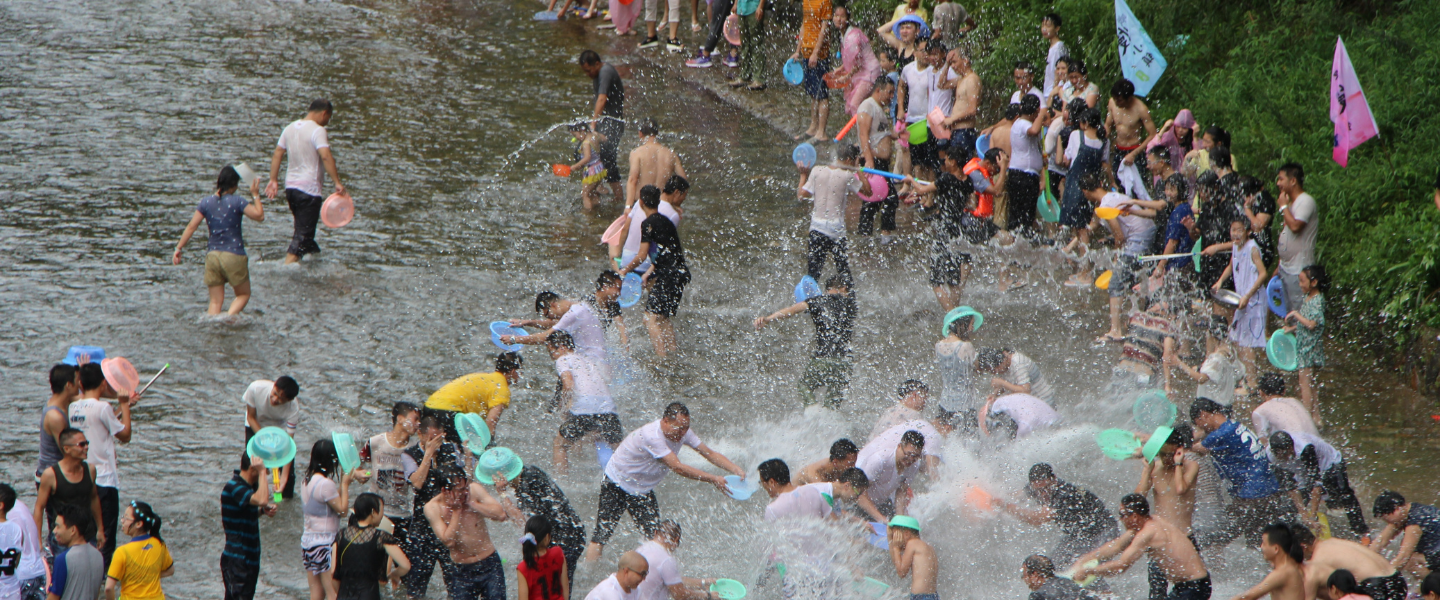
For this occasion, a giant water fight takes place in the streets. Everyone, young or old, carries water guns or buckets to splash passersby in a friendly, festive atmosphere. Where does this tradition originate? According to a Thai belief, splashing water purifies energies, bringing good luck and prosperity for the coming year, hence why it is called the "Water Festival."
This celebration is among Thailand’s most joyful and beloved. The festivities sometimes last just one day but can extend up to a week in certain provinces, particularly in the north, such as Chiang Mai. We highly recommend it, so do not hesitate and try this unique experience!
Loy Krathong
Loy Krathong, or the Festival of Lights, is celebrated annually on the evening of the full moon in the 12th month of the Thai calendar. This typically falls in November, and in 2025, you can attend this magical festival on November 5.
If you visit Thailand at this time, we highly recommend Chiang Mai, which offers the most grandiose celebrations in addition to its stunning national parks. For several days, streets are decorated with beautiful colorful lanterns, temples host unique ceremonies, and a night market emerges along the Ping River with traditional souvenir and food stalls.
But why is it called the Festival of Lights? On the day itself, expect an incredible release of lanterns into the sky, illuminating it with countless lights soaring so high they resemble thousands of stars. Do not forget to make a wish as your lantern floats away!
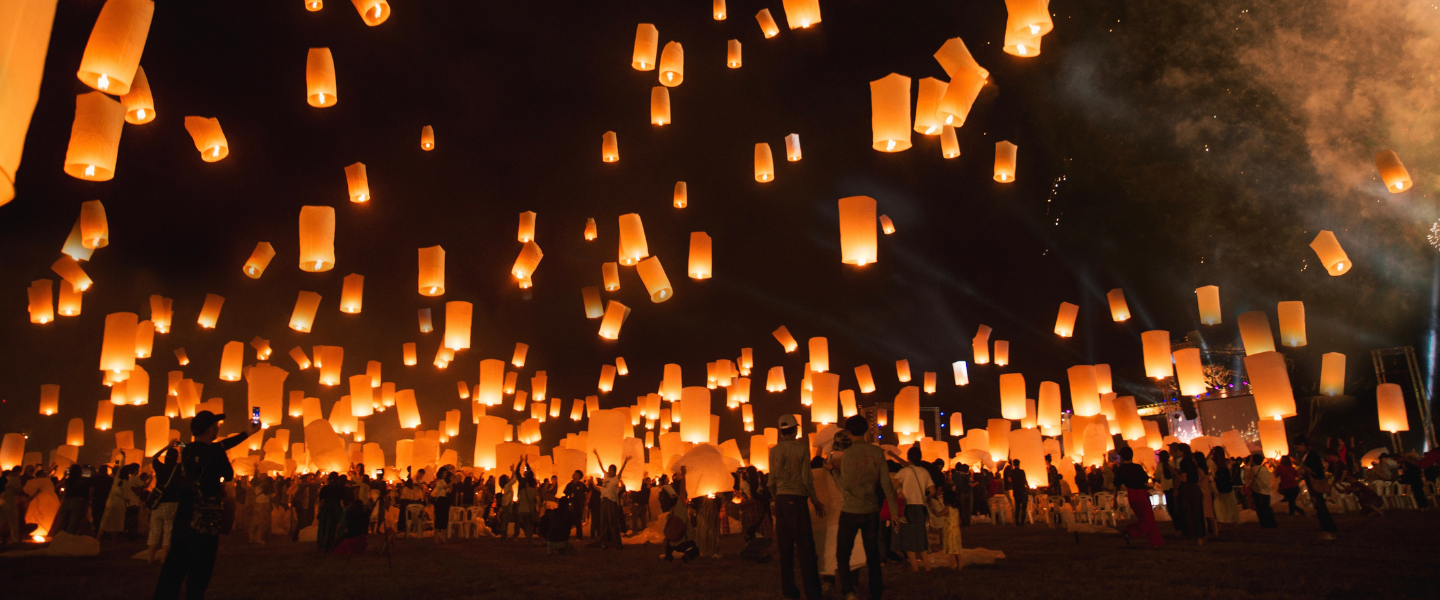
Another tradition involves placing a krathong (small floating boats made from banana leaves, flowers, and candles) on waterways. These are offerings to the goddess of water and rivers, Khongkha. You can make your own or buy one for a few baht at a riverside stall.
Loy Krathong is a moment filled with magic and sharing, undoubtedly ranking among our favorite festivals. See it for yourself, it is worth it!
Cambodia
Khmer New Year
Like Thailand, Cambodia celebrates its New Year based on the lunisolar calendar, originally celebrated in November but later moved to April to coincide with the harvest season's end. Exact dates vary slightly each year but typically fall between April 13 and 15, as in 2025.
Traditions resemble those of Thailand: water fights, offerings, donations, and traditional games like tug-of-war. The traditional New Year is always an excellent opportunity to immerse yourself in the country’s culture, sharing moments with locals and experiencing their customs firsthand.
Bon Om Touk
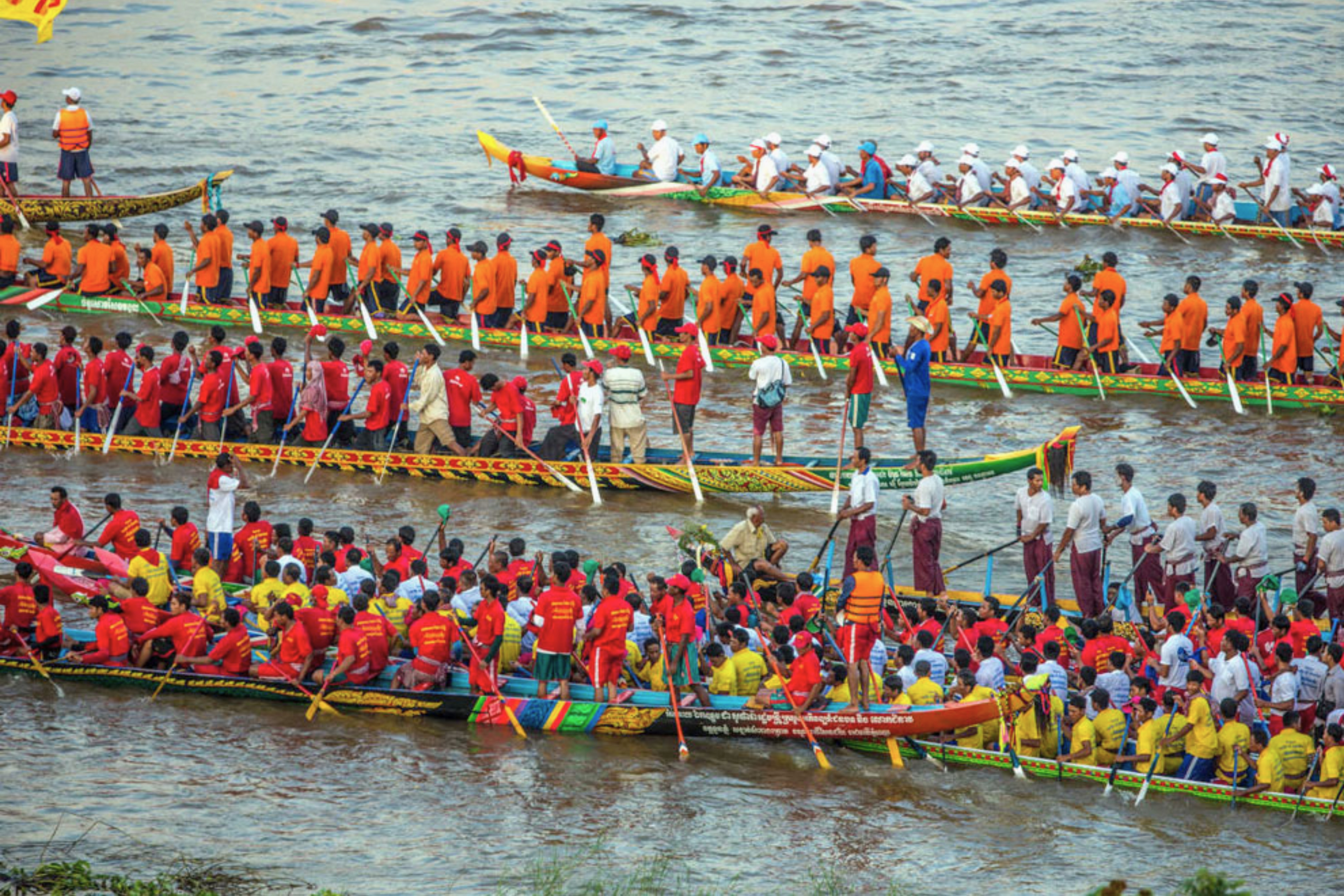
Celebrate Cambodia’s Water Festival from November 4 to 6, 2025. Marking the end of the monsoon season, it aims to ensure abundant harvests. The celebrations' highlight is colorful boat races featuring long, slender boats, specially illuminated and decorated, accommodating up to 100 paddlers.
 |  |
© Hong Menea, The Phnom Penh Post
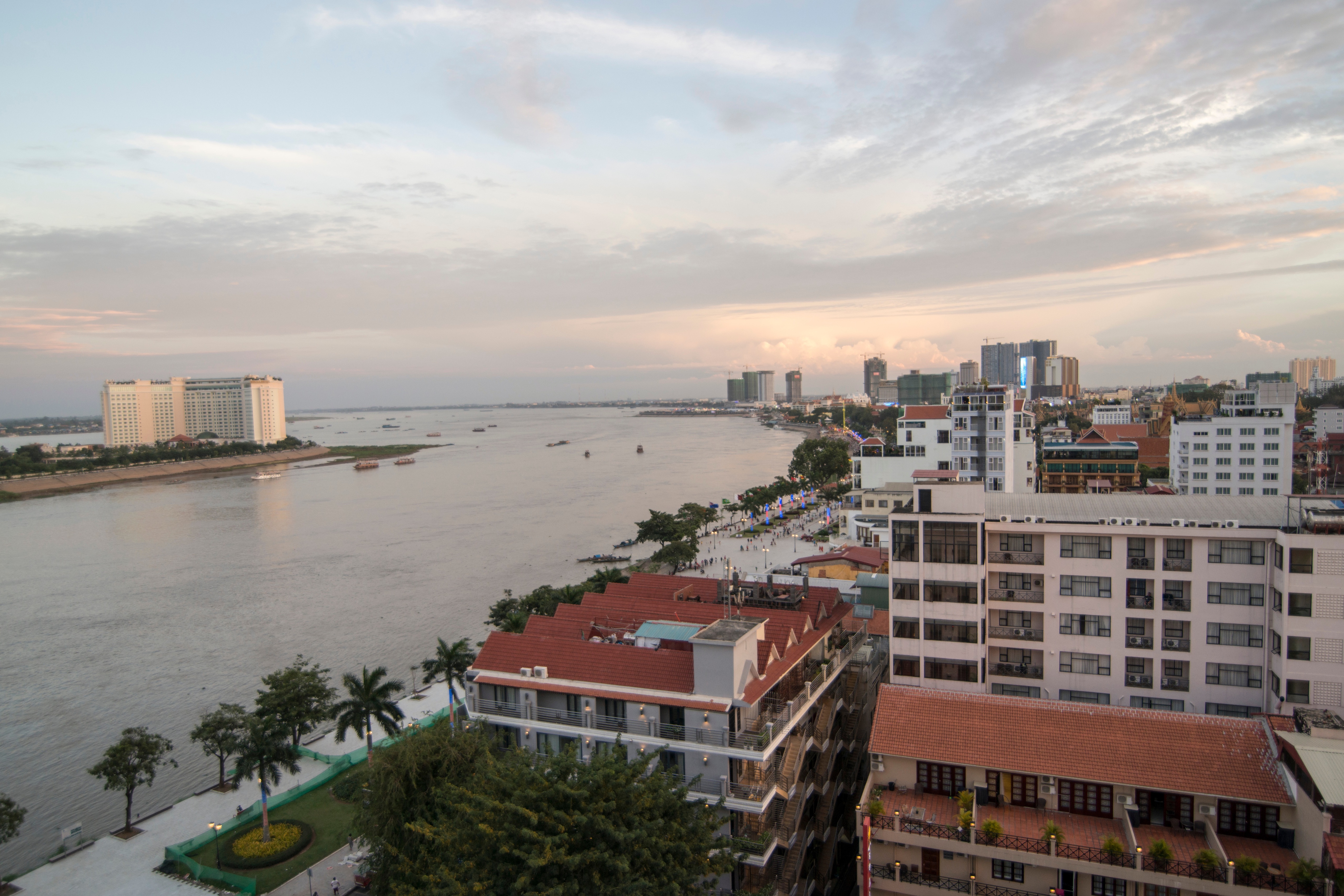
The gathering point for watching the races is in the capital city, Phnom Penh. Many people gather along the banks of the Tonle Sap River to enjoy typical dishes while cheering on their favorite competitors. In addition to the races, you can enjoy fireworks displays, illuminated boat parades, offering ceremonies, or even taste culinary specialties such as Ambok (a snack made from flattened rice, bananas, and coconut), prepared exclusively for this event.
Vietnam
Tet Nguyen Dan
This celebration is one of the most important in Vietnam, as it marks the new year and the arrival of spring. It falls on the same day as the Chinese New Year, January 29, since both use the same calendar. As in most countries, it is customary to gather with family and loved ones to celebrate this transition. Some also take this opportunity to honor their ancestors and offer prayers.
A small cultural note: the first day of the new year is highly significant for Vietnamese people, as it is believed to determine how the rest of their year will unfold. Due to this belief, shared with Chinese culture, they wear new clothes and adopt respectful behavior, hoping to attract the best possible energies for the upcoming year. In short, the whole country is in celebration that day. Large meals are organized, fireworks are launched everywhere, and dragon dances parade through the streets.
International Fireworks Festival
This festival, first created in 2008 to bring people together through an intercultural activity, fireworks displays, is now internationally renowned. And believe us, it is really worth the trip! For several days, teams from all continents gather near the Han River in Da Nang, a coastal city in Vietnam, to light up the sky according to a given theme.
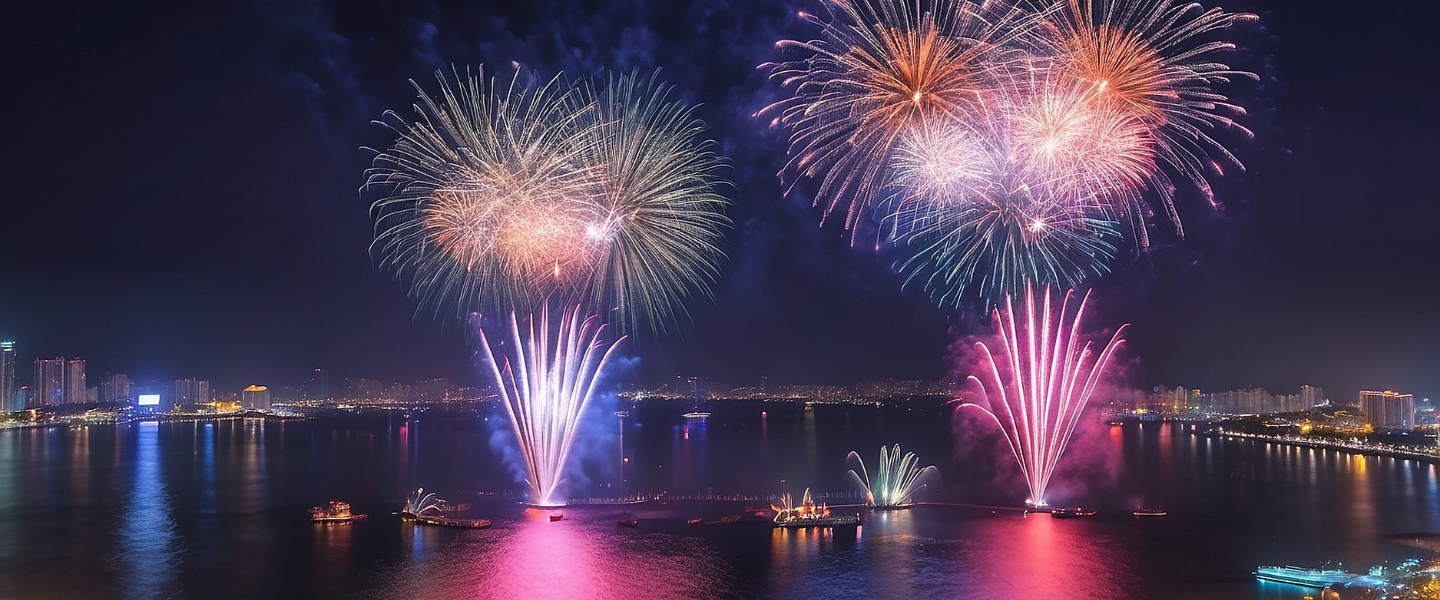
Last year, after 3 years without celebration due to Covid, the French team won with the theme “World without distance.” This year, the opening ceremony will take place on June 8, and the final competition on July 13. Each Saturday, every team will have 20 minutes to present their show based on the official theme, which is not yet confirmed but seems likely to be “Peace and harmony.” If, like us, you are a big fan of fireworks, do not miss this event!
Laos
Pi Mai
The Lao New Year, Pi Mai Lao, also follows the same calendar as Thailand and Cambodia. It will therefore be celebrated starting April 13 for three days. Once again, the traditions are similar: water fights, temple visits, prayers, offerings, and gatherings with loved ones.
Be prepared to be splashed with water by strangers on the streets if you visit Laos during this time. However, if you play along, this festival is very entertaining!
Boun Bang Fai
This festival is truly unique and somewhat surprising, as its main event involves launching homemade rockets. The celebration originated from the desire to attract rain and ensure abundant rice crops. It takes place just before the rainy season, typically between May and June. There is no fixed date, and each village can choose a different day.
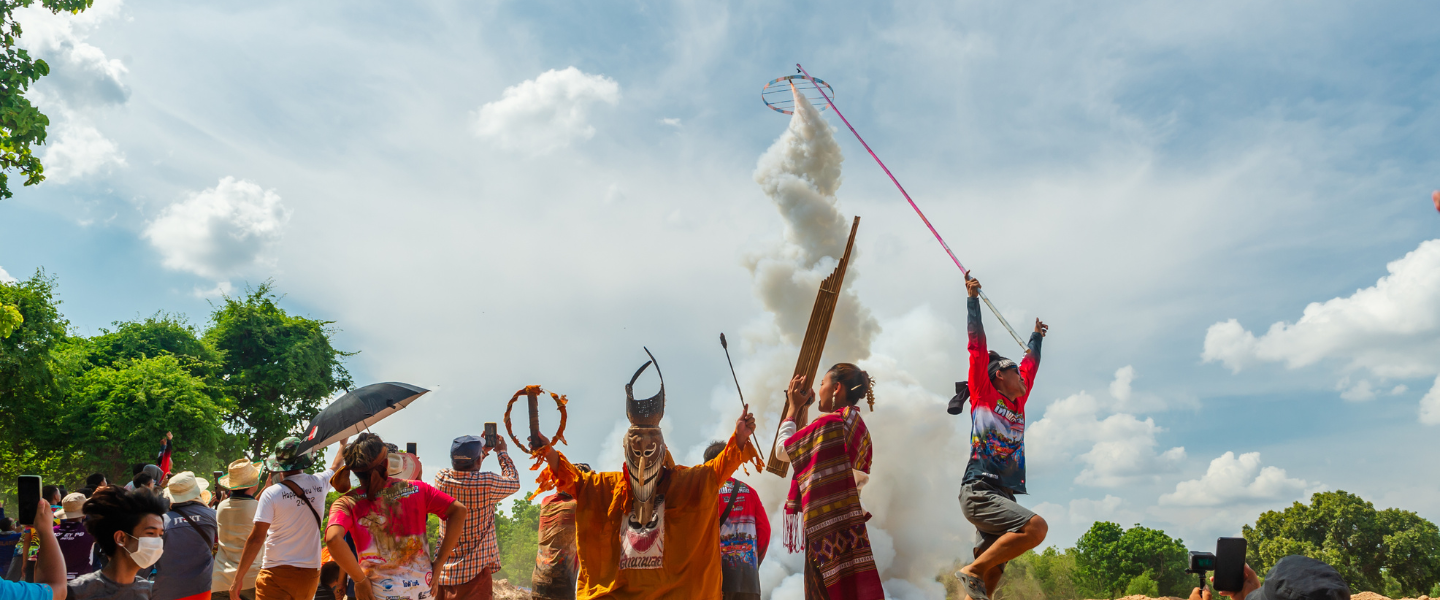
But what exactly happens? Actually, there are several customs. First, villagers create their own rockets from bamboo. Those who manage to launch their rocket the highest will receive a prize. For those whose rockets fail, a mud bath awaits! It is also entirely common to see men dressed as women, complete with wigs and dresses. This trick aims to provoke punishment from the rain god Phaya Thaen, who would send rain as a penalty.
So where should you go to experience these festivities? Each village organizes its own small gathering, usually easy to find due to the lively atmosphere. Bonfires, music, dancing, rockets in the sky, follow these signs and enjoy a fun experience.
Boun Suang Heua
In contrast to Boun Bang Fai, this festival celebrates the end of the rainy season. Similar to Cambodia's Bon Om Touk, boat races are the highlight of the event. Head to Luang Prabang, Vientiane, or any town along the Mekong River to experience it. Expect colorful boat parades, rhythmic races, singing, dancing to traditional music, and even fireworks.
If you are still unsure, know that it is one of the most popular festivals in Laos, and the festive atmosphere is guaranteed. Our advice: go for it!
Philippines
Ati-Atihan Festival
The majority of Filipinos are Christian, making the festivals celebrated in the country somewhat different from those previously mentioned. This particular festival, which is notably the oldest in the country, is celebrated for several days leading up to its key date: the third Sunday of January, which falls on January 19 in 2025.
If you visit the area, join the festivities in Kalibo on Panay Island. Although celebrations occur across various islands in the Philippines, Kalibo is the central gathering point to fully experience this carnival and be amazed! Over several days, you will witness numerous parades and floats, colorful costumes, and dances performed to marching bands. Day and night, locals and visitors come together in a lively atmosphere.
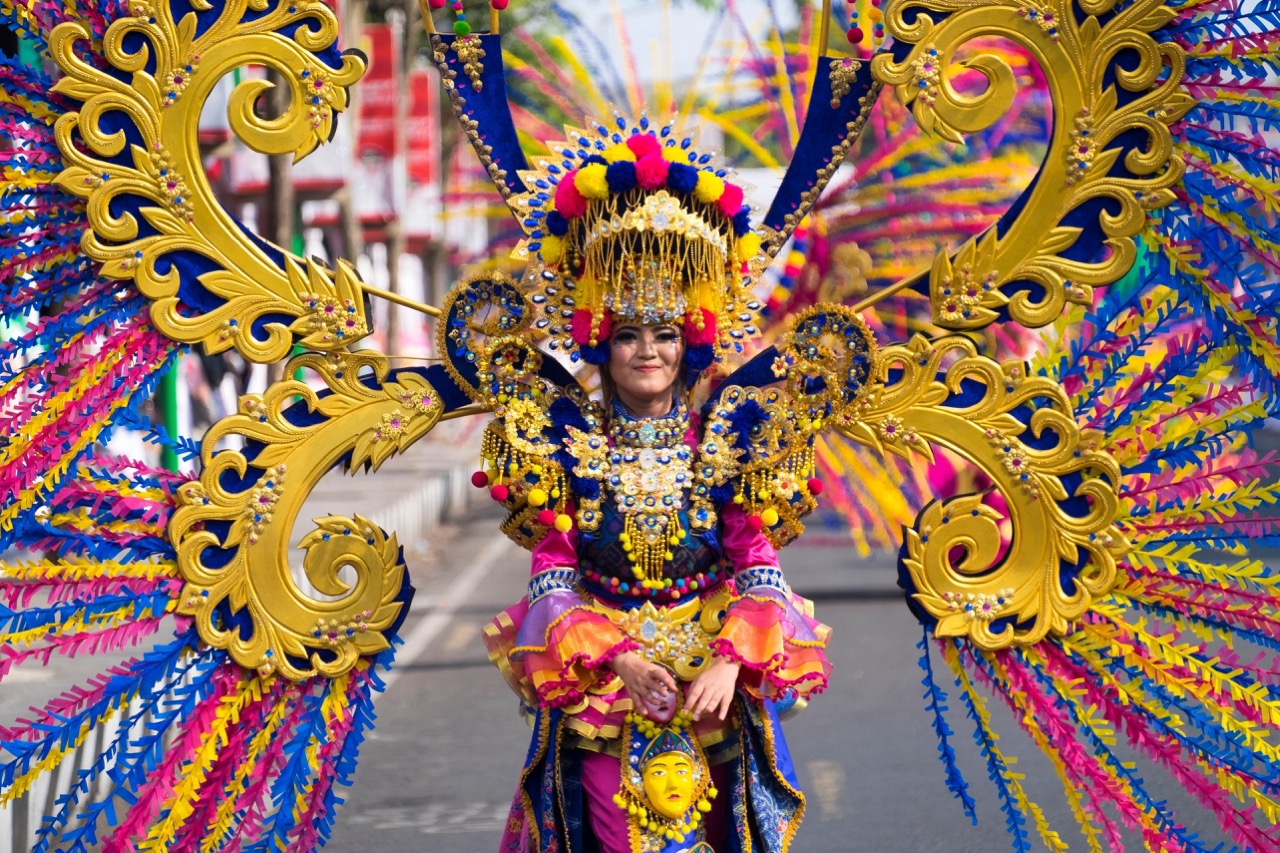 | 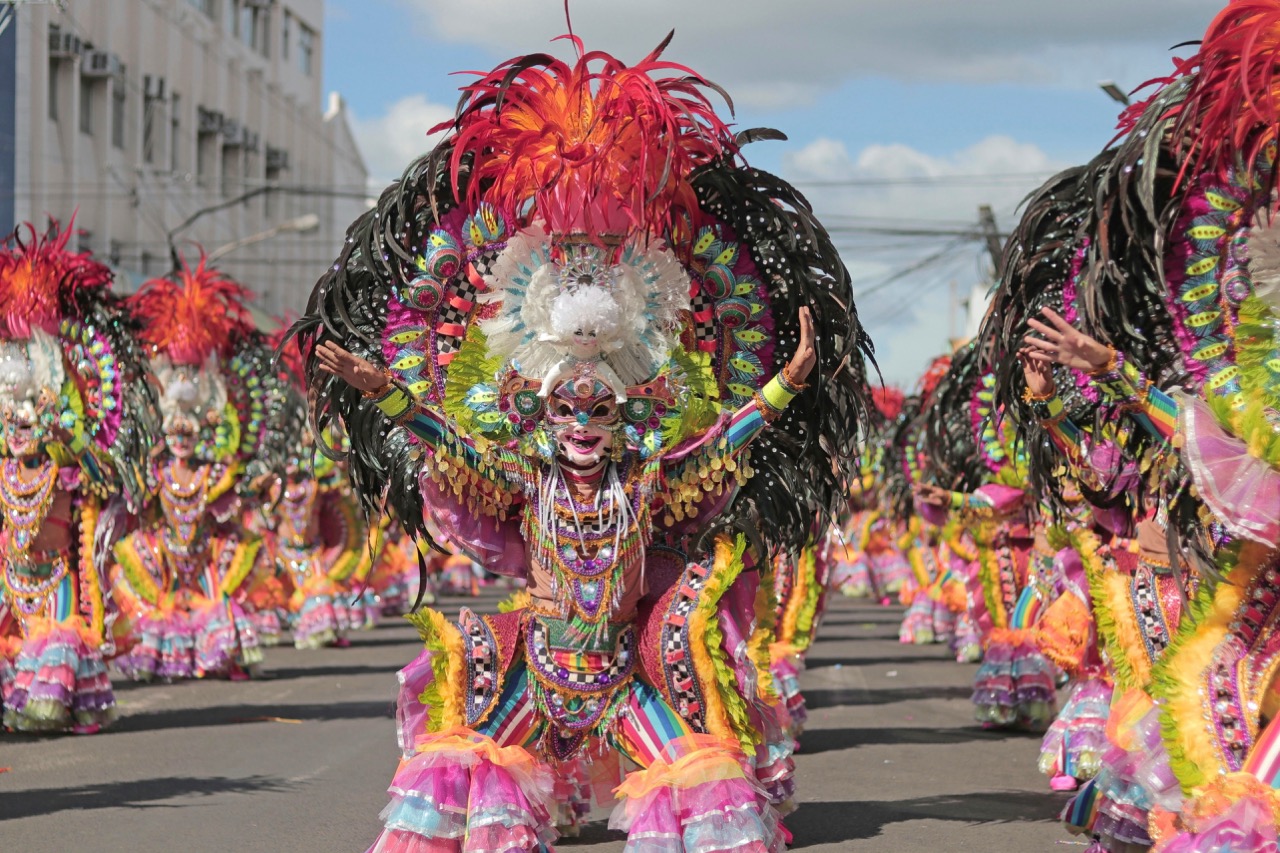 |
We highly recommend it, as it is one of the most dynamic and colorful festivals. If you enjoy dressing up and dancing, it is definitely worth planning your trip to the Philippines around this time. Do not wait any longer!
Sri Lanka
Navam Perahera
Navam Perahera is one of Sri Lanka’s most popular Buddhist festivals. It takes place on the first full moon day of February, which will be February 12 in 2025. Full moon days are very important in Sri Lanka, but this one is particularly special.
So, what happens during the celebrations? The capital, Colombo, hosts the festivities. Parades are organized through the main streets. Alongside elephants, performers juggle with fire, play drums, or walk on stilts, creating an incredible procession throughout the streets. Elephants travel from all over the country for this specific event, as they are the stars. Unfortunately, it is important to bear in mind that even though some animals are accompanied by caring handlers, others are still currently captive and mistreated.
Regardless, thousands of people from across the country and abroad gather to watch the spectacle. Everyone wears traditional clothing, including the elephants, and enjoys the joyful, festive moment.
Kandy Esala Perahera
This festival, also called the Festival of the Tooth, shares similarities with Navam Perahera but is celebrated in Kandy, as the name indicates. A small difference is that it lasts for 10 days, from July 30 to August 9 this year. Elephants parade in costumes alongside performers displaying fire shows. You will also find numerous prayers and processions held in temples.
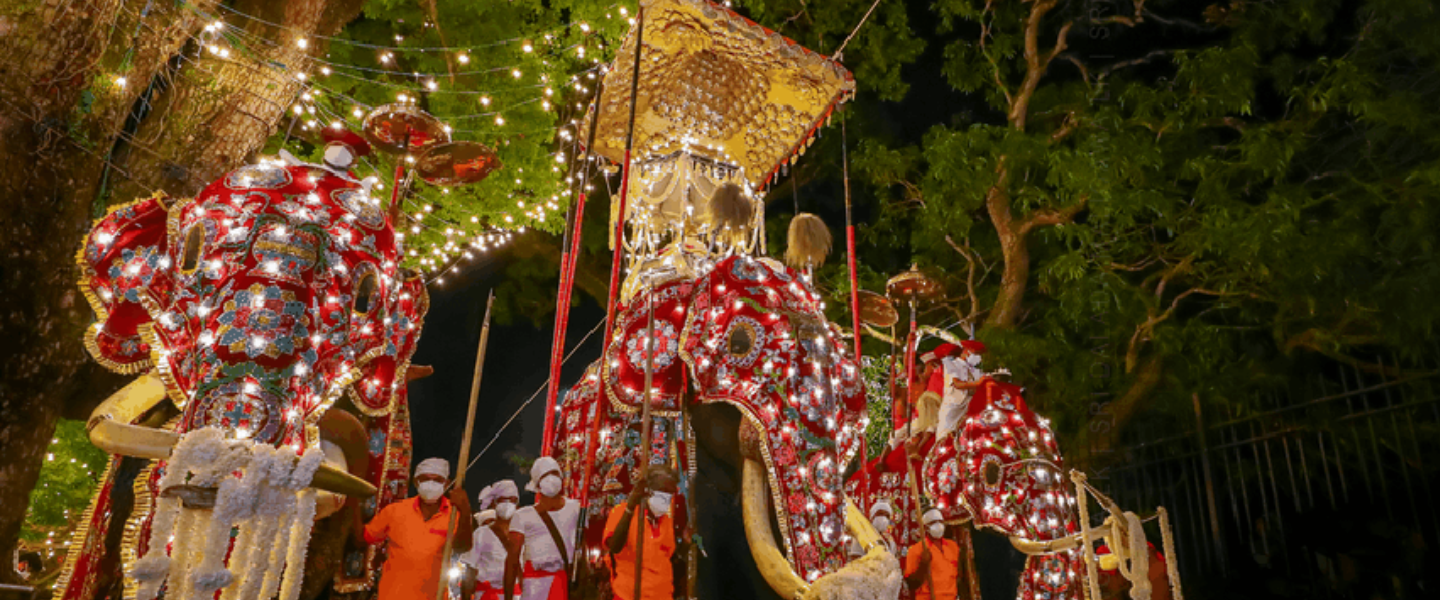
© Kandy Esala Perahera Official
Indonesia
Bali Arts Festival
As its name suggests, this festival takes place in Bali and primarily aims to preserve and showcase Balinese art and culture. A different theme is highlighted each year, giving rise to unique and exclusive creations. Usually spanning several weeks, the event features shows and competitions highlighting artists’ talents from across Indonesia and occasionally abroad. Each year, it occurs from mid-June to mid-July.
Exhibitions, performances, dances, handmade creations, traditional cuisine, and many other forms of art await you. If you wish to learn more about this beautiful culture, this festival is truly the perfect occasion!
Nyepi
Nyepi, or the Day of Silence, allows one to reconnect with oneself and one's beliefs through silence, fasting, and meditation. It occurs exclusively in Bali and will take place on March 29 and 30 next year.
But practically, what happens? For 24 hours, the island comes to a standstill. From 6 AM until the same time the next morning, the rules are clear: no lights, no noise, and no one on the streets. Locals and tourists alike must follow the protocol and stay indoors for 24 hours. This may seem restrictive, but it actually provides a true opportunity for relaxation. Use the time to read, watch a movie, or simply observe nature and the stars at night.
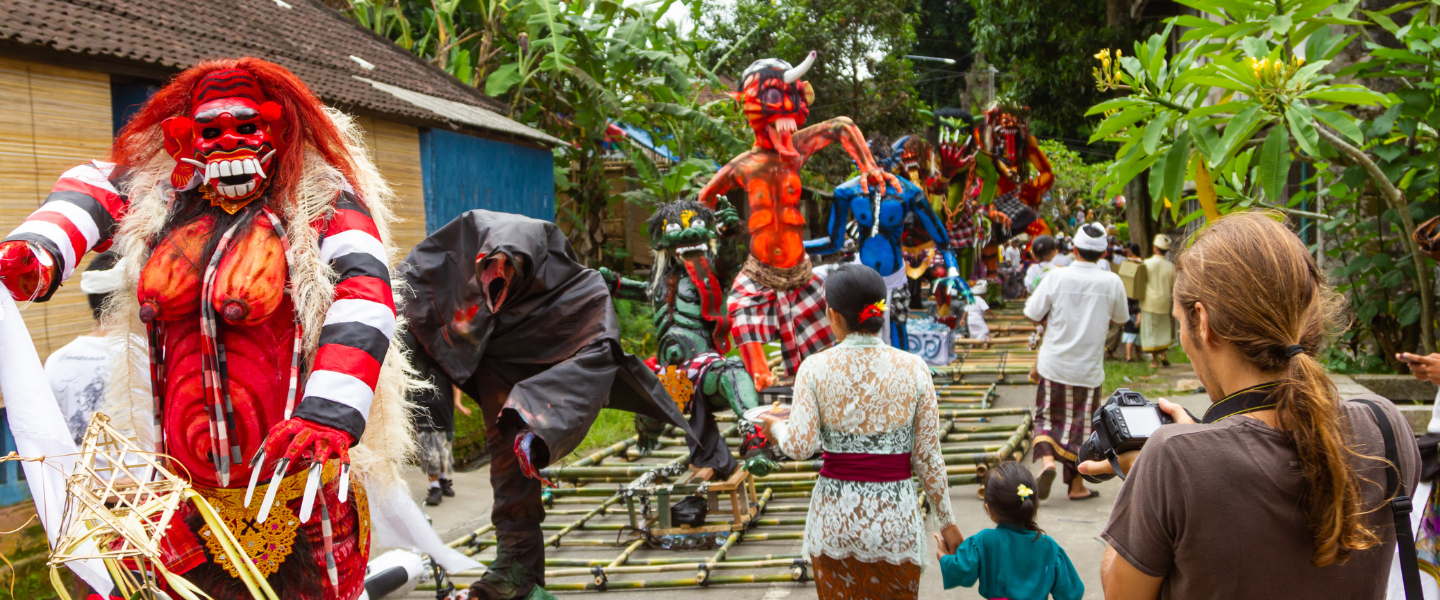
Is it worth it? Our answer is yes! Because Nyepi is not just about silence, it is also about the Ogoh-Ogoh parades, which are really worth seeing. On the evening preceding the day of silence, giant creatures constructed from various materials, standing several meters tall, appear in the streets of every Balinese neighborhood. Their purpose is to frighten away evil spirits from the island. Throughout the evening, parades are held featuring these monsters, accompanied by dances and chants to drive away negative energies.
So, what is your favorite festival, and which one do you not want to miss? We love them all, but we particularly favor Loy Krathong in Thailand and Ati-Atihan in the Philippines. Remember that if you wish to participate in any of these festivals, we can organize your tailor-made trip around this event, ensuring you leave with unique and unforgettable memories!
