Khao Sok or Phang Nga bay: which destination should you choose?


Between the two seas surrounding the Thai peninsula lie two of the country’s most beautiful landscapes: the ancient jungle of Khao Sok on one side, and the limestone karsts of Phang Nga Bay on the other. Although these destinations may seem similar, they actually appeal to very different types of travelers.
Khao Sok and Phang Nga : two jewels of Southern Thailand at a glance
Where is Khao Sok National Park located?
Khao Sok National Park is located in Surat Thani province, in the heart of Southern Thailand. Nestled between two seas, the Andaman Sea to the west and the Gulf of Thailand to the east, it stretches across nearly 740 km² of primary rainforest, considered one of the oldest in the world. At 160 million years old, it is even older than the Amazon rainforest.
In terms of accessibility, the park is easily reached from the main tourist destinations in the south:
From Phuket: around 2 hours by road,
From Krabi: around 1 hour 30 minutes,
From Surat Thani: around 1 hour.
From Southern Thailand, most travelers reach Khao Sok by private or shared minivan. From the capital Bangkok, it is also possible to combine an overnight train to Surat Thani followed by a road transfer.
Where is Phang Nga Bay located?
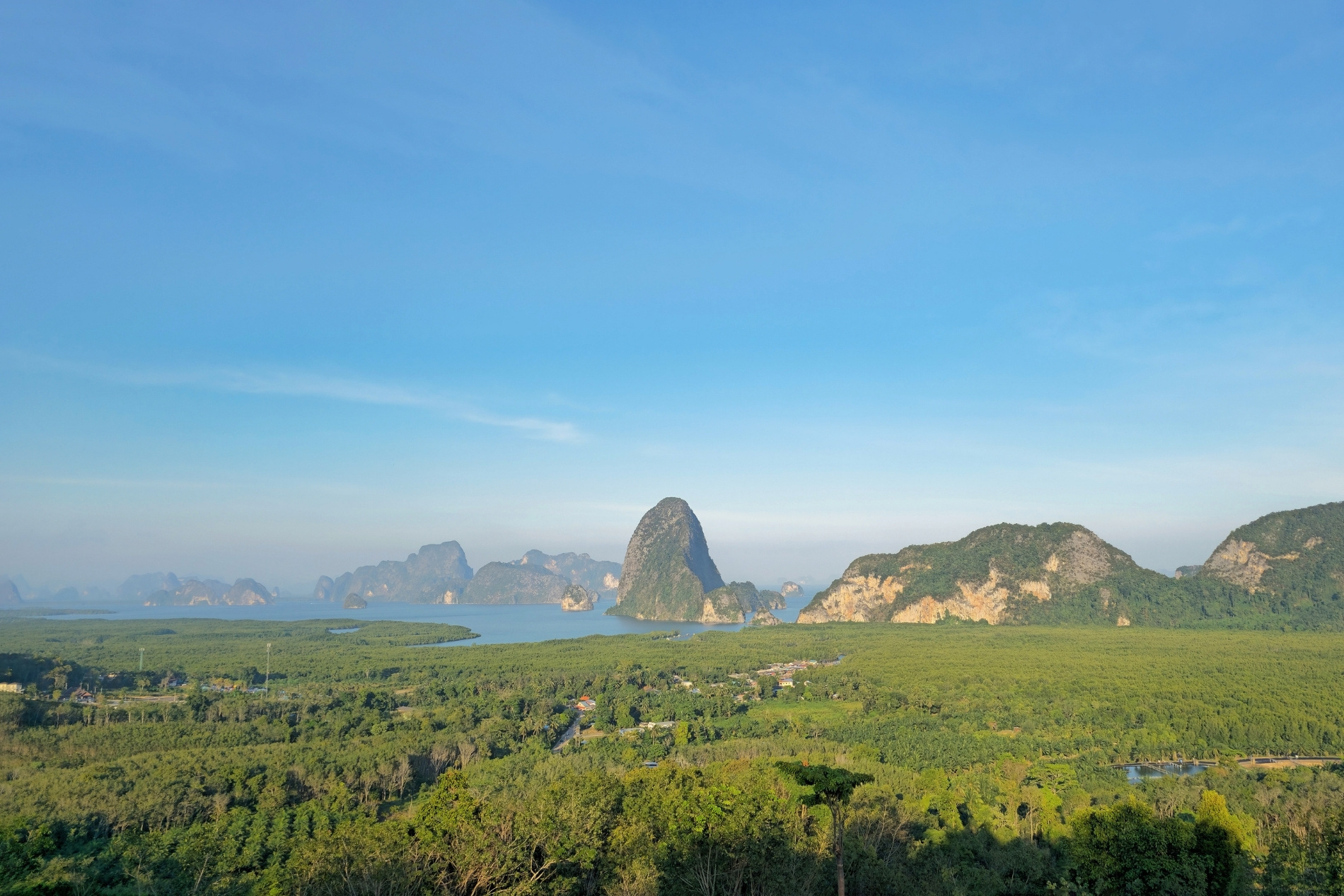
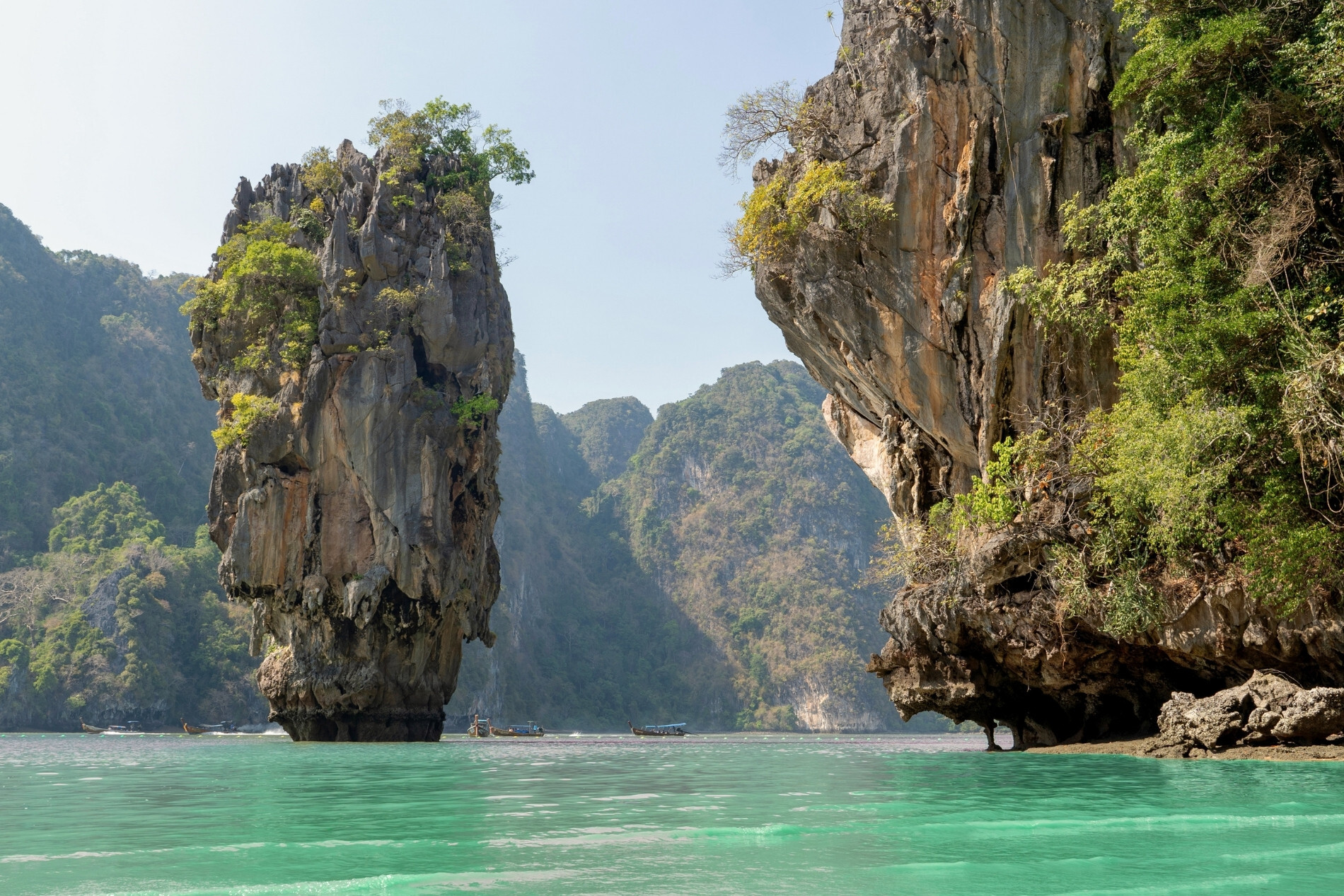
Phang Nga Bay opens onto the Andaman Sea, nestled between the provinces of Phuket and Krabi. Protected as a marine national park since 1981, it covers nearly 400 km² scattered with more than 40 islands and karst pinnacles rising from turquoise waters. A landscape made world-famous by the filming of The Man with the Golden Gun, which earned it the nickname “James Bond Bay.”
The area is easily accessible from nearby towns:
From Phuket: 1 to 1.5 hours by road to the Ao Po or Bang Rong piers,
From Krabi: around 1 hour 30 minutes to Surakul Pier,
From Phang Nga Town: only 30 minutes.
The bay can only be explored from the water. Most travelers choose a day trip aboard a traditional longtail boat or a speedboat, while more adventurous visitors opt for sea kayaking to venture into hidden lagoons nestled within the islands.
 |  |
Comparison table : duration, budget, atmosphere and traveler profiles
Criteria | Khao Sok | Phang Nga Bay |
| Landscape | Tropical jungle, emerald lake, limestone cliffs | Andaman Sea, marine karsts, mangroves |
| Atmosphere | Wild nature, calm and relaxation, adventure activities | Marine panoramas and limestone islands, floating village |
| Recommended duration | 1 to 2 nights | 1 day |
| Estimated budget | Around 7,000 THB (€180) per person for a 2 days / 1 night program | Around 3,000 THB (€80) per person for a day trip departing from Phuket |
| Couples | Ideal, especially with a romantic night in a floating hotel | Ideal, especially for sunset views over the karsts |
| Families | Suitable from 6–7 years old | Suitable from 4–5 years old |
| Seniors | Suitable if in good physical condition, or with modified activities | Suitable and comfortable |
| Crowds | Not very crowded | Very crowded between 10 a.m. and 2 p.m. |
| Best period | From January to April | From November to April |
What to do in Khao Sok? Between jungle and Cheow Lan Lake
Created in 1980, Khao Sok National Park covers 739 km² of primary tropical rainforest. Including the surrounding parks, it forms a protected territory of more than 4,400 km², making it one of the best-preserved natural areas in Southeast Asia.
One night on the lake is the minimum, but we recommend spending two nights there: the first in a village deep in the forest to fully immerse yourself in the tropical atmosphere, then a second in a floating raft house on the lake.
Sleeping in the floating houses on Cheow Lan Lake
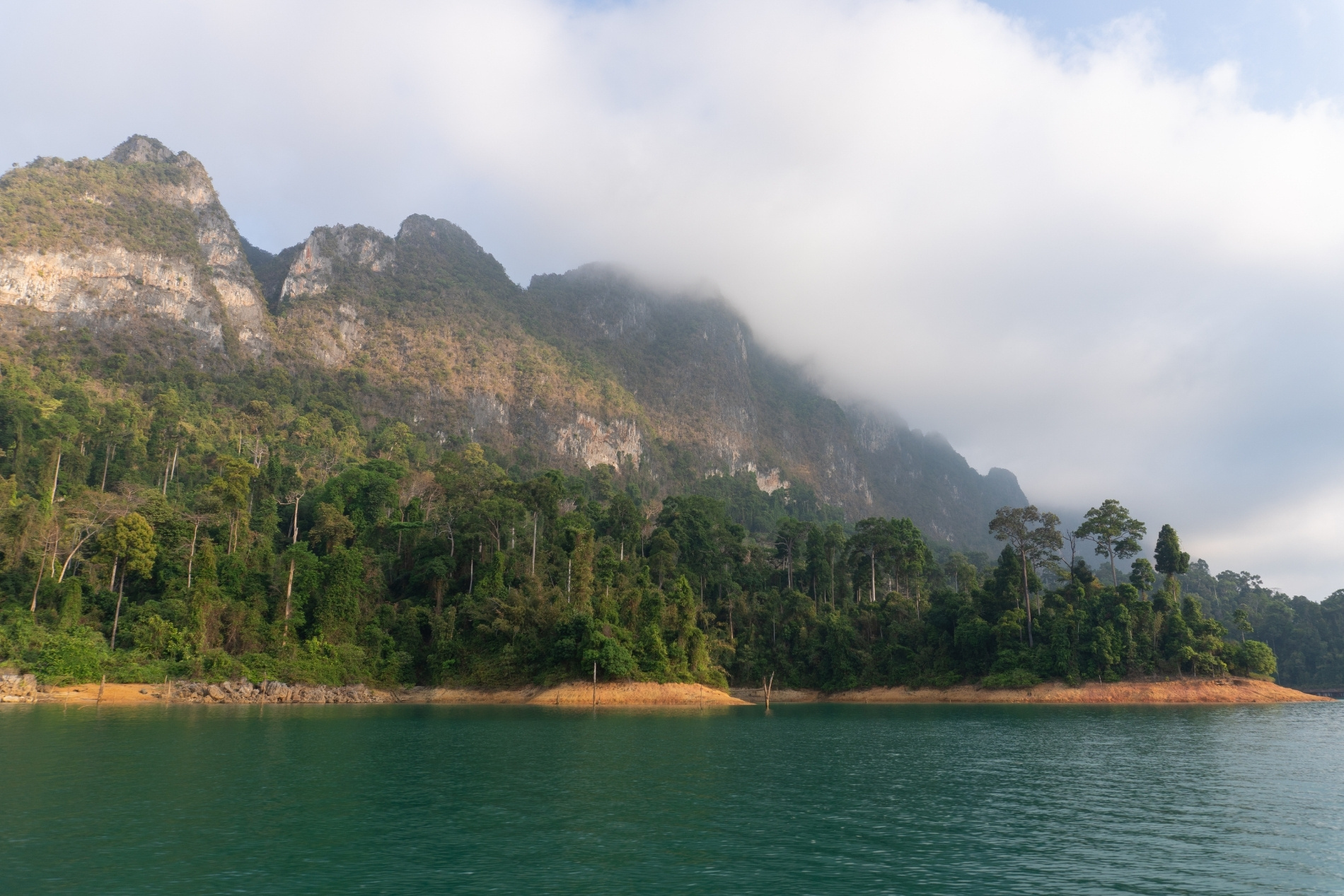
In 1987, the construction of the Ratchaprapha Dam flooded entire forest valleys, creating a 165 km² artificial lake with emerald-green waters surrounded by hundreds of limestone islets. The result resembles the landscapes of Guilin in China, but in the heart of a living jungle.
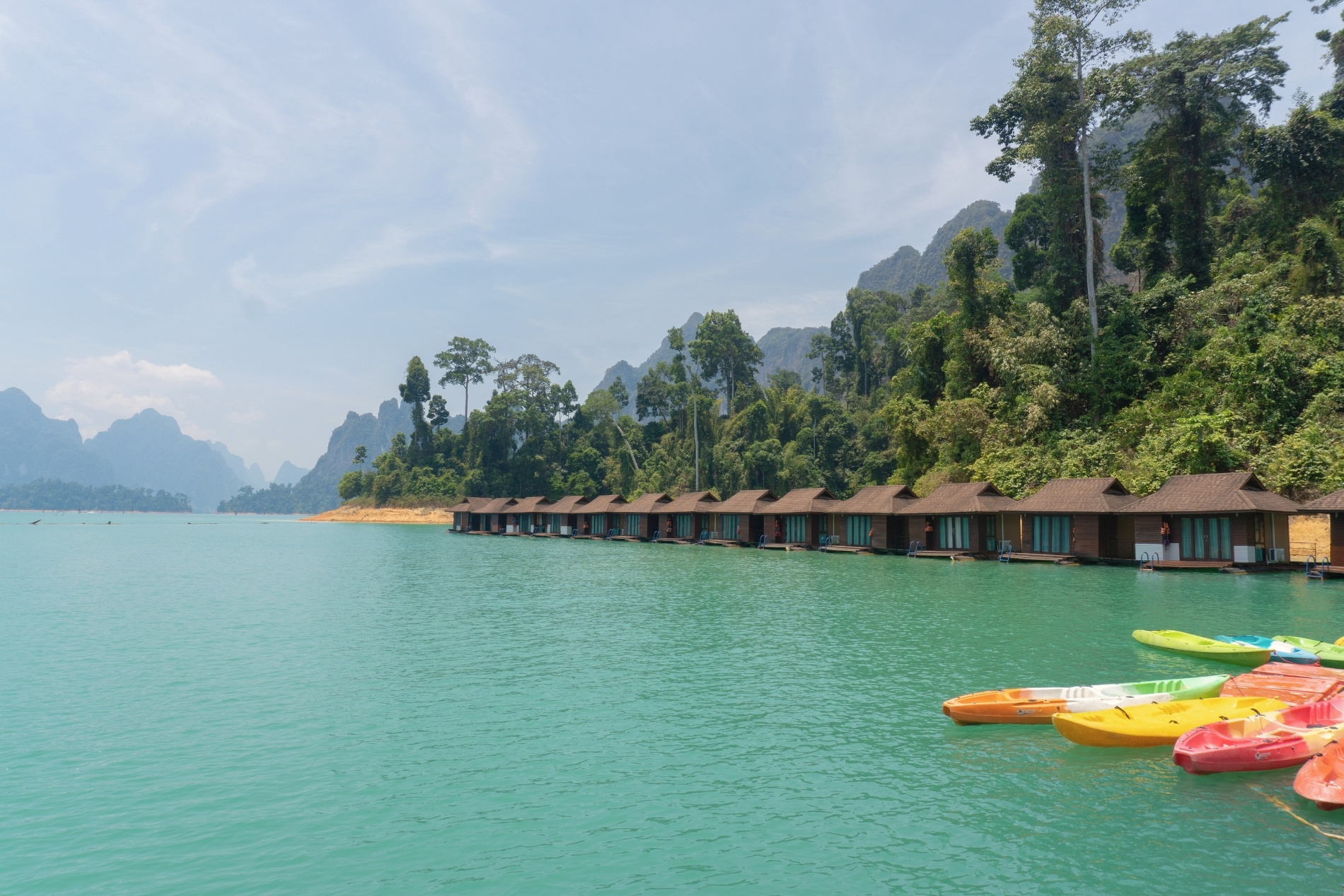
The central experience on the lake is spending the night in a raft house, a bungalow built on floating platforms anchored in the middle of the water. Waking up in the morning mist to the sound of gibbons echoing at dawn remains one of the strongest memories Thailand can offer.
Several accommodation options are available:
Simple accommodations with a fan start from 800 to 1,200 THB (€20 to €30) per person
Structures with air conditioning and private bathrooms are around 2,500 to 3,000 THB (€65 to €80)
Access to the floating accommodations is by longtail boat from the dam pier. Expect a 45- to 60-minute journey through spectacular limestone formations that are worth the trip on their own.
 |  |
Trekking through the oldest tropical rainforest in the world
The forest of Khao Sok is estimated to be more than 160 million years old, making it one of the oldest rainforests in the world, even older than the Amazon. Several marked trails lead to the Bang Lea Nam, Wing Hin, or Ton Kloy waterfalls with hikes ranging from 2 to 4 hours, but the most popular itinerary remains the hike to a limestone cave combined with bamboo rafting.
The program includes 30 minutes to 1 hour of walking on relatively flat terrain through the jungle, followed by a traditional bamboo rafting trip along the river, between karst cliffs and tropical vegetation. Upon arrival, visitors explore the cave wearing headlamps, in a soft and mineral atmosphere. It is an ideal option for families, couples, and seniors in good physical condition, combining moderate effort and exploration.
Between January and March, the Rafflesia kerrii briefly blooms in the jungle. Measuring up to 90 cm in diameter, it is the largest flower in the world. The luckiest visitors may have the chance to observe it during their walk through the forest.
Any hike in remote areas must be done with a licensed guide, both as a park requirement and a practical necessity. And on the way back to the hotel, keep your eyes open: it is not uncommon to spot macaques, hornbills, or monitor lizards along the riverbanks.
Wildlife observation: gibbons, elephants and hornbills
Khao Sok is home to a total of 112 species of mammals and 412 species of birds, making it one of the richest biodiversities in Southeast Asia. One of the most memorable experiences is therefore the boat safari on Cheow Lan Lake, at dawn or dusk. It is at these times that wildlife approaches the shores to drink, while boats glide silently across the water with their engines switched off.
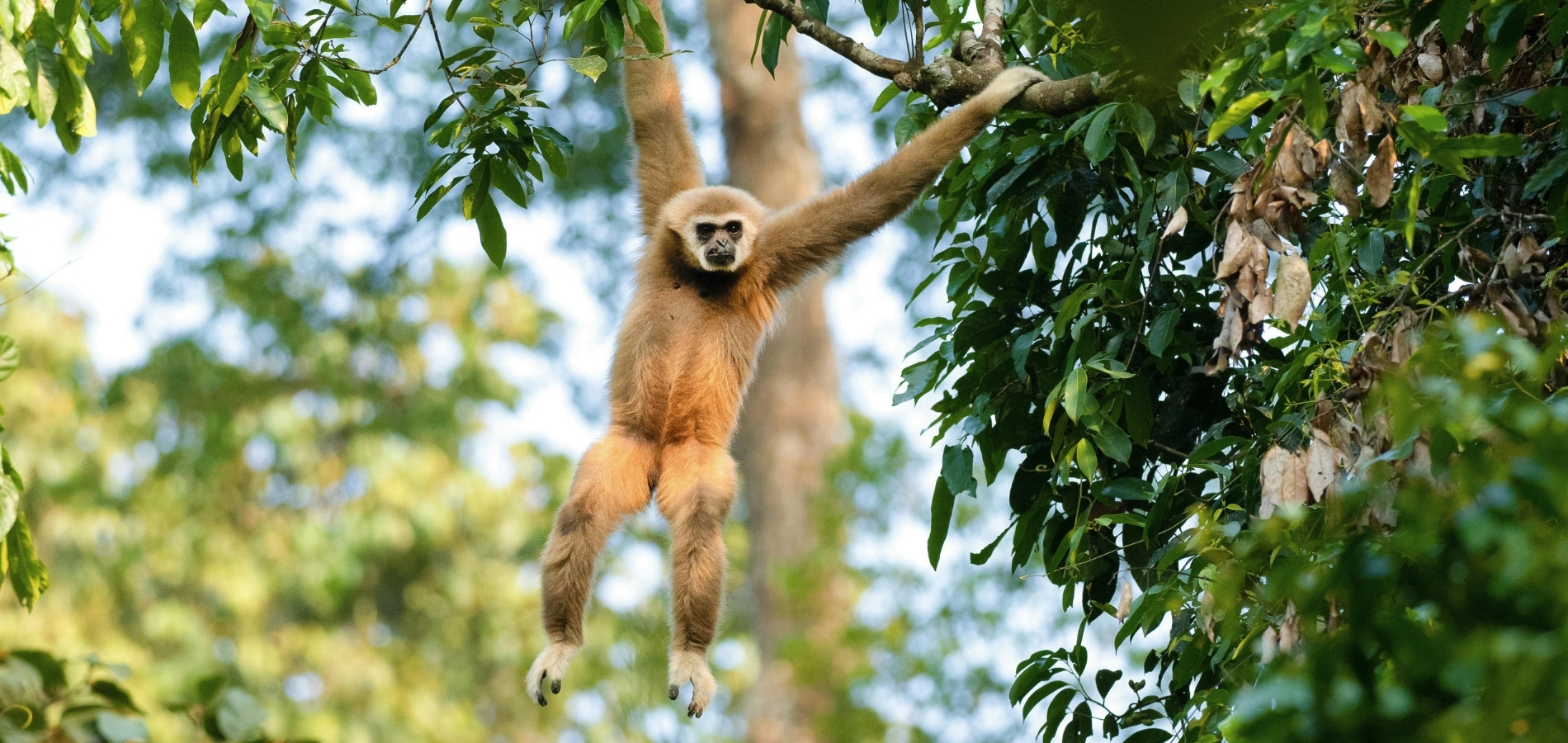
During the excursion, you may observe macaques hanging from branches, white-handed gibbons whose calls echo for several kilometers, or great hornbills flying overhead, recognizable by their 1.5-meter wingspan and distinctive casque. With a bit of luck, it is also possible to spot herds of wild elephants, as around two hundred individuals live in the remote areas of the park.
What to do in Phang Nga Bay ? Karst pinnacles and the Andaman Sea
Phang Nga Bay owes part of its worldwide fame to its appearance in the film The Man with the Golden Gun in 1974, but its treasures go far beyond this cinematic anecdote. The bay can only be explored from the water, during a day trip generally departing from Phuket or Krabi. Expect to pay around 3,000 THB per person (€80) for a group excursion from Phuket including James Bond Island, kayaking in the lagoons, and lunch at Koh Panyee.
Boat excursion around James Bond Island
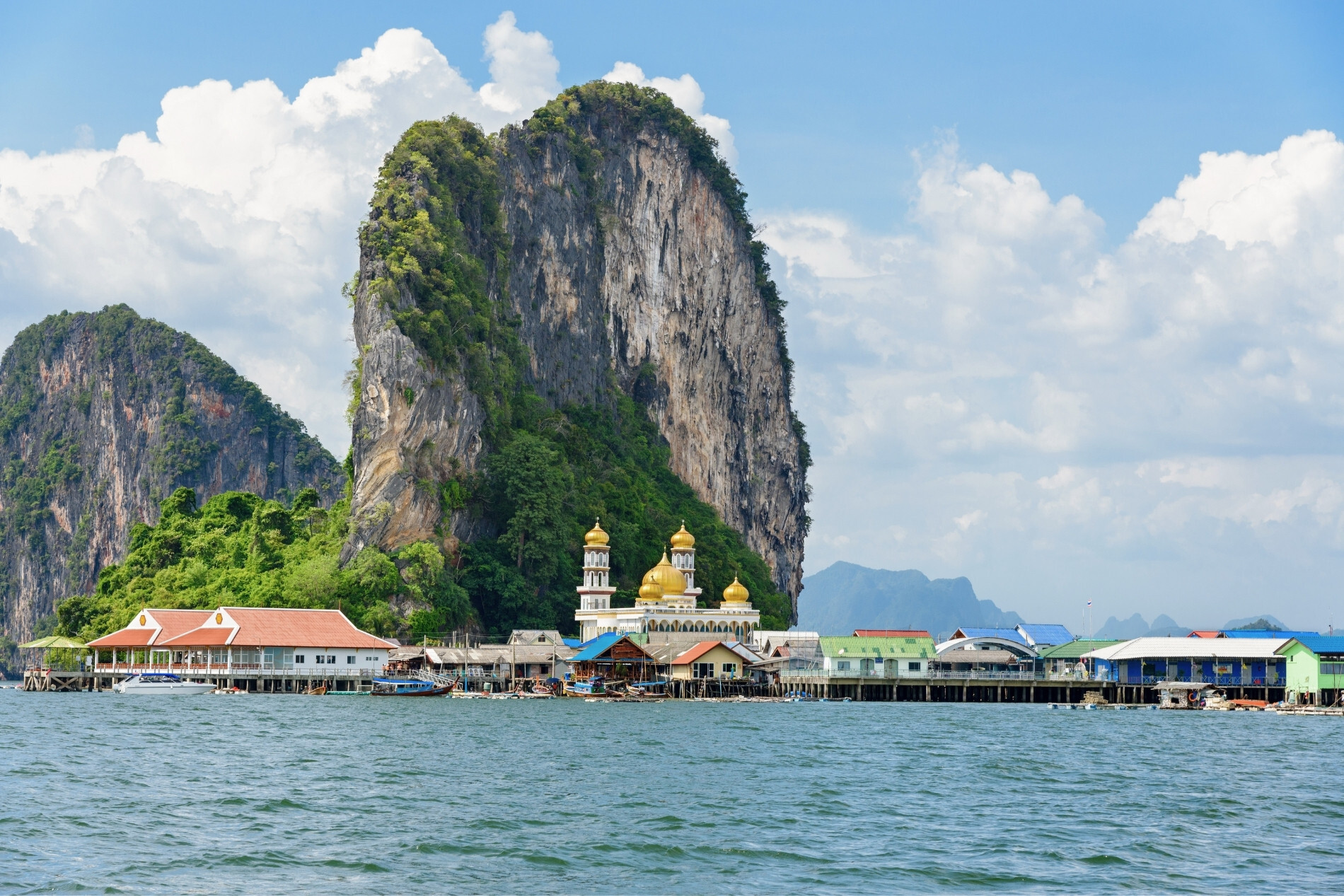
James Bond Island, known as Khao Phing Kan in Thai, is a must-see in Phang Nga Bay. What immediately catches the eye upon arrival is Ko Tapu, a narrow twenty-meter-high rock balanced on a tiny base. Plan for around 45 minutes on site. The island itself is tiny, barely 20 meters in diameter. You can walk around it very quickly, but it is the perfect opportunity for the iconic souvenir photo facing James Bond Rock.
The site becomes very crowded between 11 a.m. and 2 p.m.: it is best to leave early in the morning or choose a private excursion. The park entrance fee is 300 THB (€8) for foreign adults and 150 THB for children.
Kayaking through lagoons and sea caves
These inner lagoons, called hongs, are hidden within the karst islands. They can only be accessed at high tide, by canoe, through narrow passages carved into the rock. After several dozen meters in limestone darkness, visitors emerge into an open and silent lagoon inhabited by crabs and small fish.
The guide paddles while visitors simply relax and enjoy the scenery. An added bonus: children especially love this slightly mysterious passage. The most beautiful lagoons are located around Koh Hong and Koh Panak.
The floating village of Koh Panyee
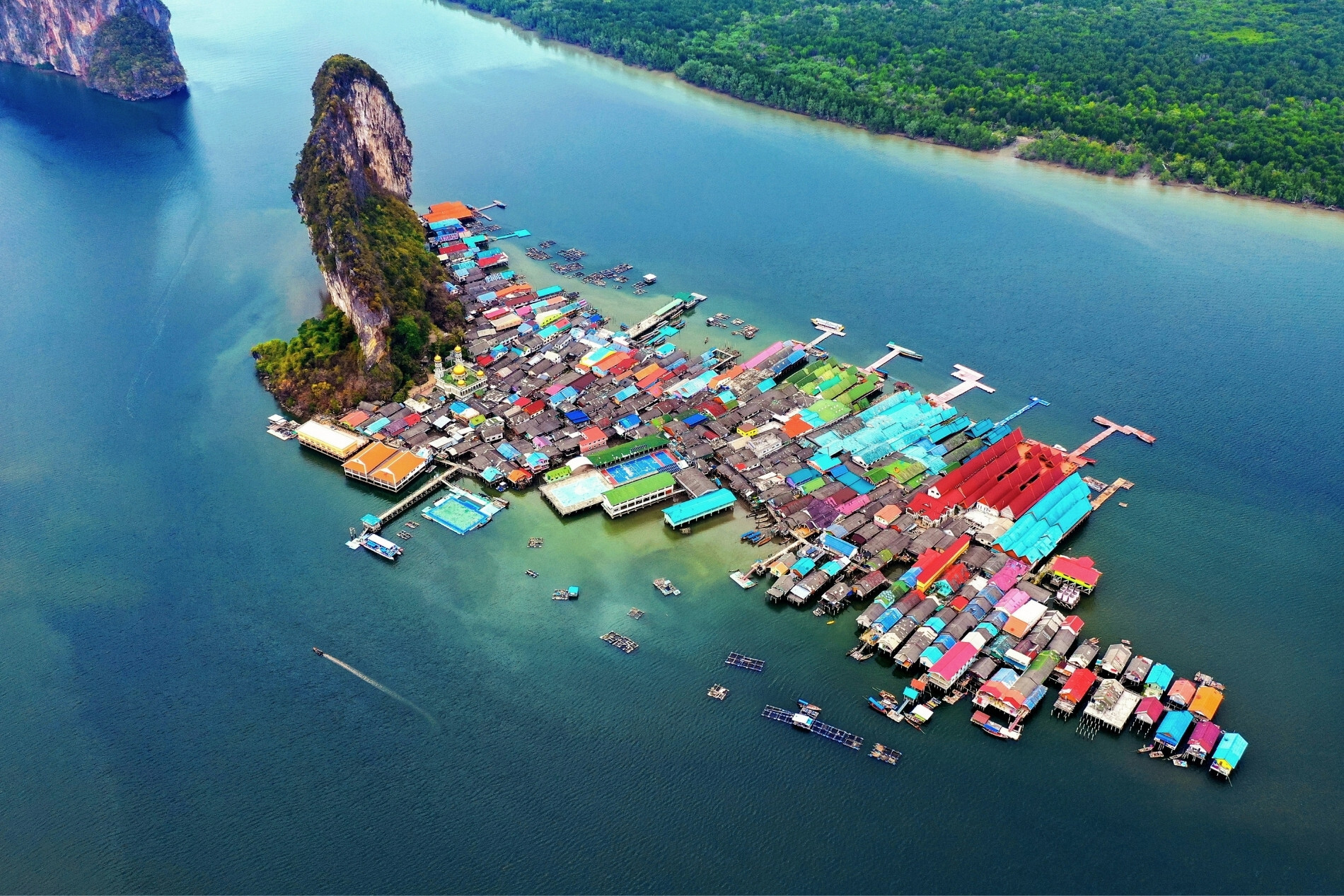
Koh Panyee is a Muslim fishing village of around 1,600 inhabitants, entirely built on stilts at the foot of a limestone cliff. There is no solid land beneath the houses: everything has rested on structures anchored in shallow waters for several centuries.
During a day excursion, visitors can enjoy fresh seafood and Thai curries for lunch. The village also features small souvenir shops and, above all, a floating football field built by the village children in the 1980s. With no solid ground available, they assembled wooden planks on floating supports, and this story later became famous worldwide through a well-known Thai advertisement.
 |  |
Do you really have to choose? The itinerary that combines Khao Sok and Phang Nga
There is no need to choose. The two destinations are located around 80 kilometers from each other, or approximately 1 hour and 30 minutes by car, and naturally fit together within a five- to seven-day itinerary with Phuket as the entry point.
Distance and travel time between the two sites
From Phuket Airport, reaching Khao Sok takes around 2 hours, while Phang Nga Bay is accessible in about one hour from the northern part of the island. An intermediate base such as Khao Lak, a peaceful seaside town located halfway, allows travelers to break up the journey comfortably.
Recommended 5- to 7-day itinerary
Day 1 : Arrival in Phuket.
Day 2 : Excursion to Phang Nga Bay: James Bond Island, kayaking through the lagoons, lunch at Koh Panyee, and return to Phuket for the night.
Day 3 : Transfer to Khao Sok: jungle walk and relaxation surrounded by nature.
Day 4 : Full day at Cheow Lan Lake: caves, swimming, and overnight stay in a raft house.
Day 5 : Sunrise over the lake and departure to Khao Lak.
Day 6 : Relaxing at the beach and free visit of Khao Lak National Park.
Day 7 : Optional extension to Koh Samui or Koh Tao from Surat Thani, or return to Phuket for your international flight.
In which order should you visit them, and why?
We recommend starting with Phang Nga Bay and ending with Khao Sok. The logistics support this choice: arriving through Phuket, the bay is the first natural stop before heading north. The progression in atmosphere also makes sense. The bay is best enjoyed as an accessible excursion, ideal for acclimatizing. Khao Sok, with its jungle nights and floating hotels offering very limited mobile network coverage, requires a level of disconnection that is better appreciated once you have already detached yourself from everyday life.
