Khao Yai, Thailand: 2 days between jungle and wine country

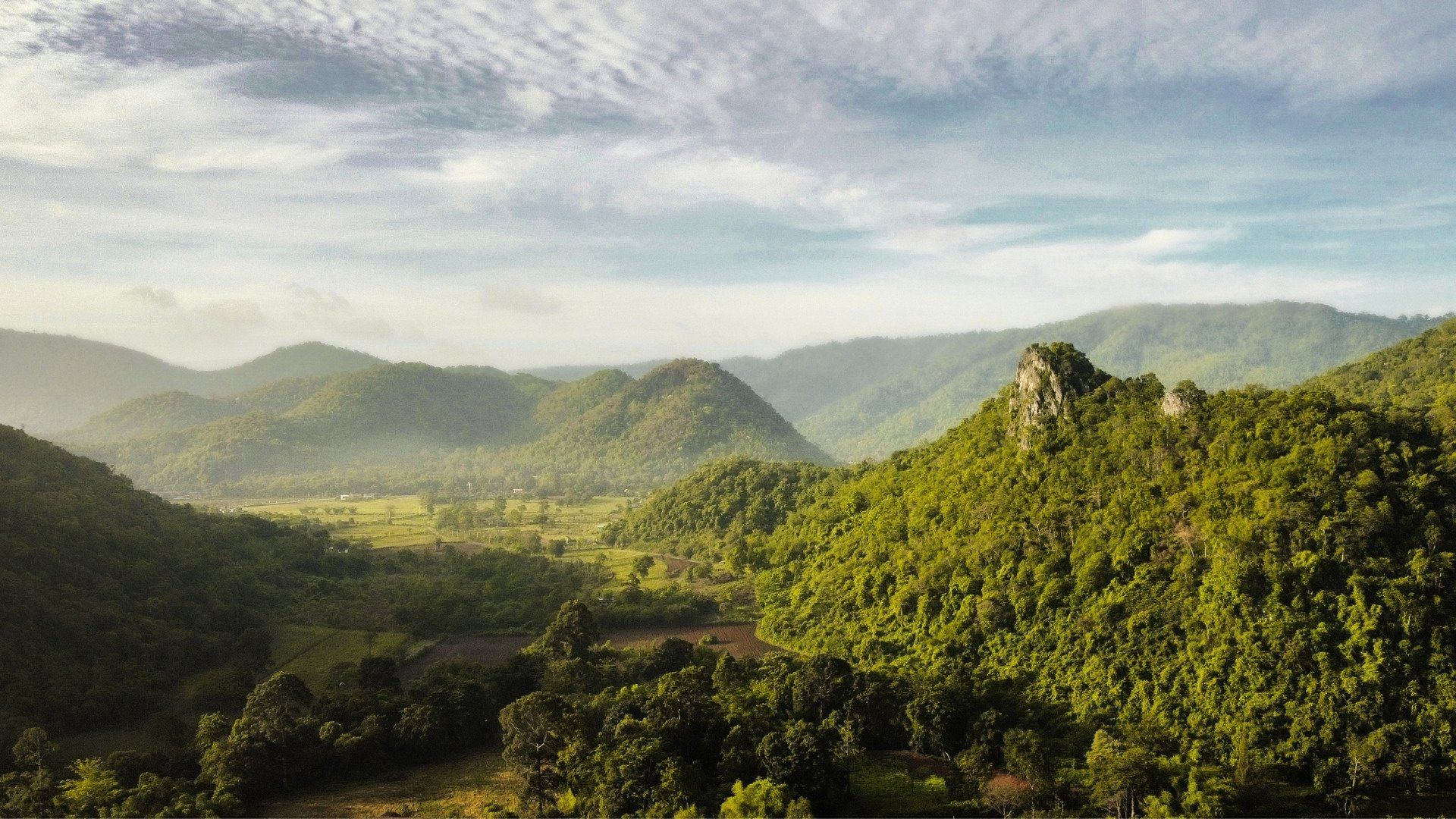
At three hours’ drive from Bangkok, the Khao Yai region hides a surprising contrast: wild elephants in a UNESCO-listed jungle, the country’s oldest national park, and, right at its foothills, vineyards producing award-winning wine. Yes, wine, in Thailand.
Most travellers think there is no nature near Bangkok and head either north or towards the southern islands. They miss out on one of the most beautiful weekends you can enjoy from the capital.
Khao Yai national park
Khao Yai means "big mountain" in Thai, and there is a good reason the park bears this name: it stretches across more than 2,000 km² of rainforest, grasslands and hills. It is the first national park established in Thailand and is part of the Dong Phayayen Forest Complex, listed as a UNESCO World Heritage Site.
Wildlife, flora and landscapes to discover
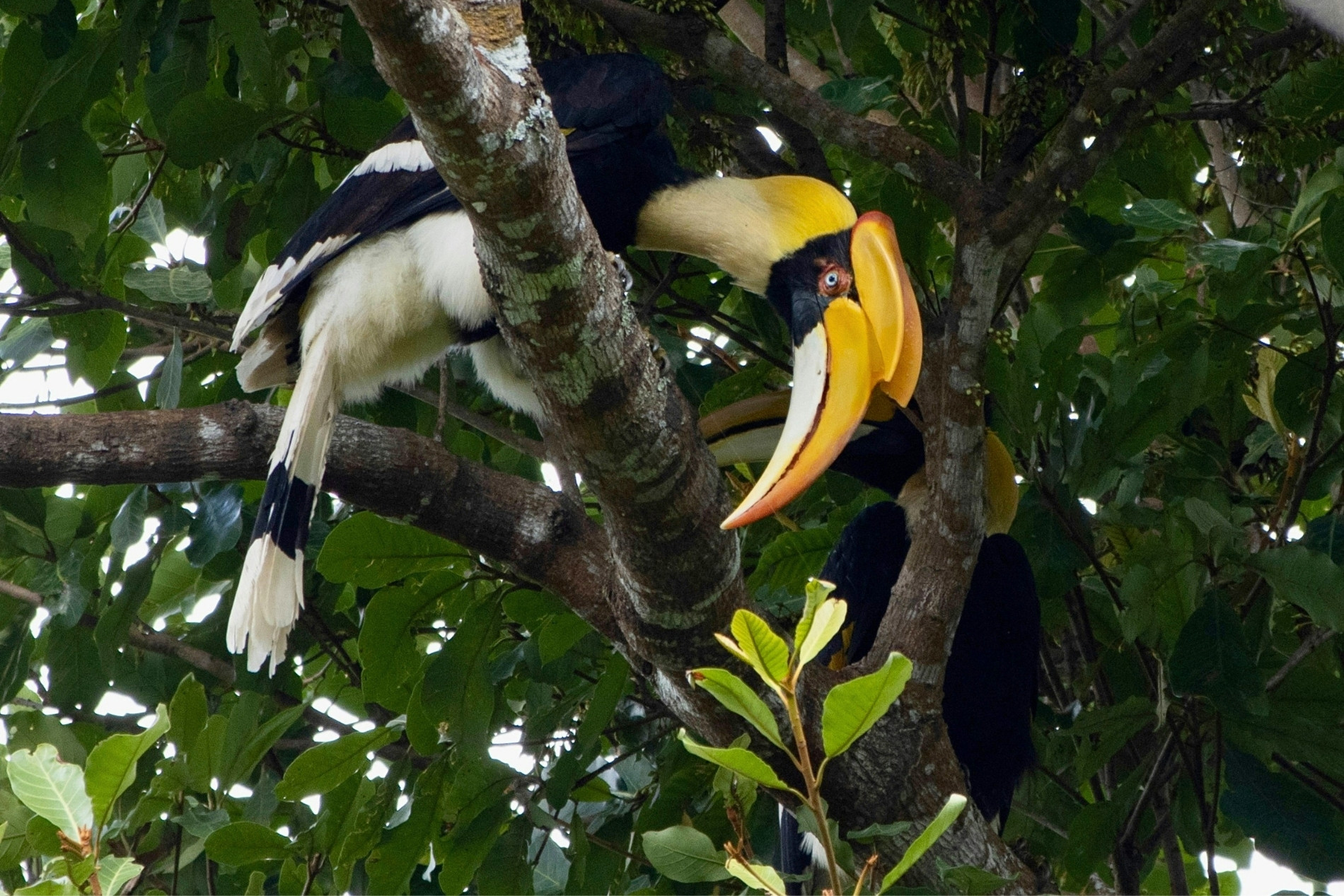
Khao Yai is a benchmark when it comes to wildlife: you can find most of the animals that can be seen in Thailand. The park is home in particular to a population of wild Asian elephants, gibbons whose calls carry for several kilometres at dawn, hornbills recognisable by their spectacular bills, deer, macaques and even gaurs, those large Indian bison that remain rare to spot. The animals live in complete freedom, with no enclosures or organised rides. Nothing is therefore guaranteed in a nature reserve of this size, but that is precisely what makes every sighting memorable.
As for the landscapes, the dense forest gives way to large open grasslands, with viewpoints overlooking valleys as far as the eye can see.
Hiking trails, waterfalls and viewpoints
The park is criss-crossed by trails, ranging from easy to more challenging. Some can be explored independently, while others require a ranger. In fact, taking a guide is really worthwhile: they spot animals where most visitors would see nothing but leaves. In general, for wildlife viewing, the Nong Pak Chi observation tower is a good spot, especially early in the morning or late in the day. The park also organises night safaris (to be booked in advance), but dawn remains the best time overall as the animals are more active.
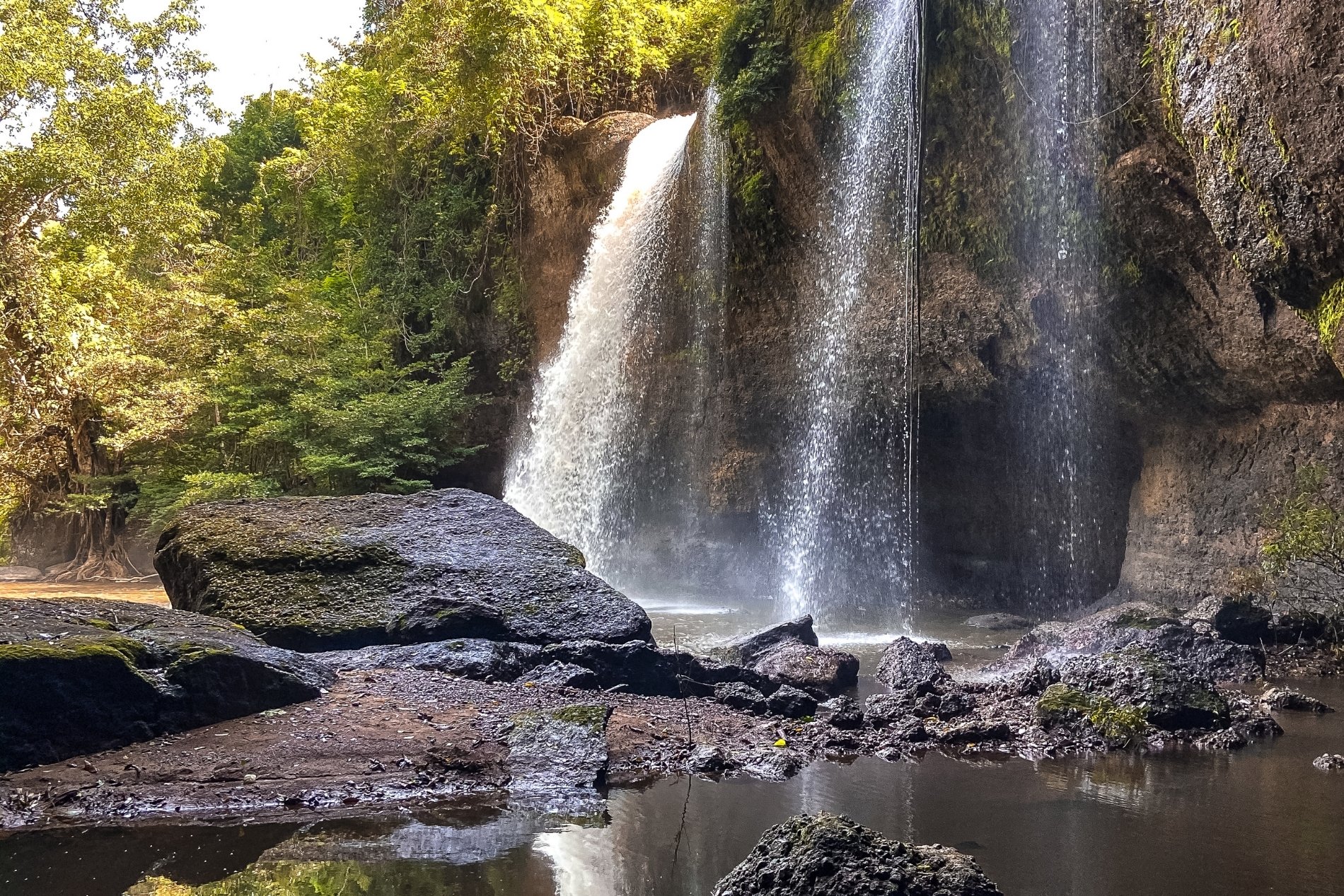
The two best-known waterfalls are Haew Suwat and Haew Narok. Haew Suwat was used as a setting for the film "The Beach", starring Leonardo DiCaprio. Haew Narok, the highest waterfall in the park, becomes particularly impressive during the rainy season, when its flow reaches its peak. In the middle of the dry season, between March and May, water is much scarcer.
The Pha Diao Dai viewpoint offers one of the most beautiful panoramas in the park, but it closes every year during the rainy season, from June 1 to September 30.
 |  |
Practical tips for your visit
Here is what we can tell you as of today:
Entrance: THB 400 per foreign adult, THB 200 for children under 14, THB 50 for the car.
Opening hours: the park is open every day from 6am to 6pm.
Ticket validity: one day only, unless you stay overnight in the park, in which case it becomes valid for three days.
Main entrances: in the north near Pak Chong, in Nakhon Ratchasima province, and in the south on the Prachinburi side.
The park is enormous and the distances between sites are long. If you do not have a car, the easiest option is to go with an organised excursion or a private driver for the day.
Khao Yai vineyards, the Thai surprise
Right next to the park, vines grow on the surrounding hills! And this comes as a surprise to most travellers who arrive in the region. Khao Yai is now Thailand’s main wine-producing region, recognised as a geographical indication area, an official label that protects the wines produced here and guarantees their authenticity (a little like Champagne in France). Red, white and rosé wines are produced here and regularly win medals at international competitions.
What are "New Latitude Wines"?
In theory, vines are not grown at these latitudes. The world’s major wine-growing regions are located much further north or much further south. Yet Khao Yai lies in a tropical zone: too hot, too humid, a mission that seems impossible on paper.
Yet winemakers have taken on the challenge, adapting their methods to the local climate. These wines are known as "New Latitude Wines". Harvesting takes place during the cool and dry season, between late January and March. The grape varieties planted in the region include shiraz, tempranillo and cabernet sauvignon for reds, and chenin blanc and colombard for whites. The result often surprises visitors, generally in a good way.
Wineries to visit
Two estates dominate the region, with very different atmospheres.
GranMonte is a family-run estate located right at the foot of the national park. It is one of the pioneers of Thai tropical wine, with wines that regularly win awards in international competitions. The atmosphere remains intimate, and you can feel the family’s passion behind every bottle. A restaurant and a few accommodations allow you to extend the experience on site.
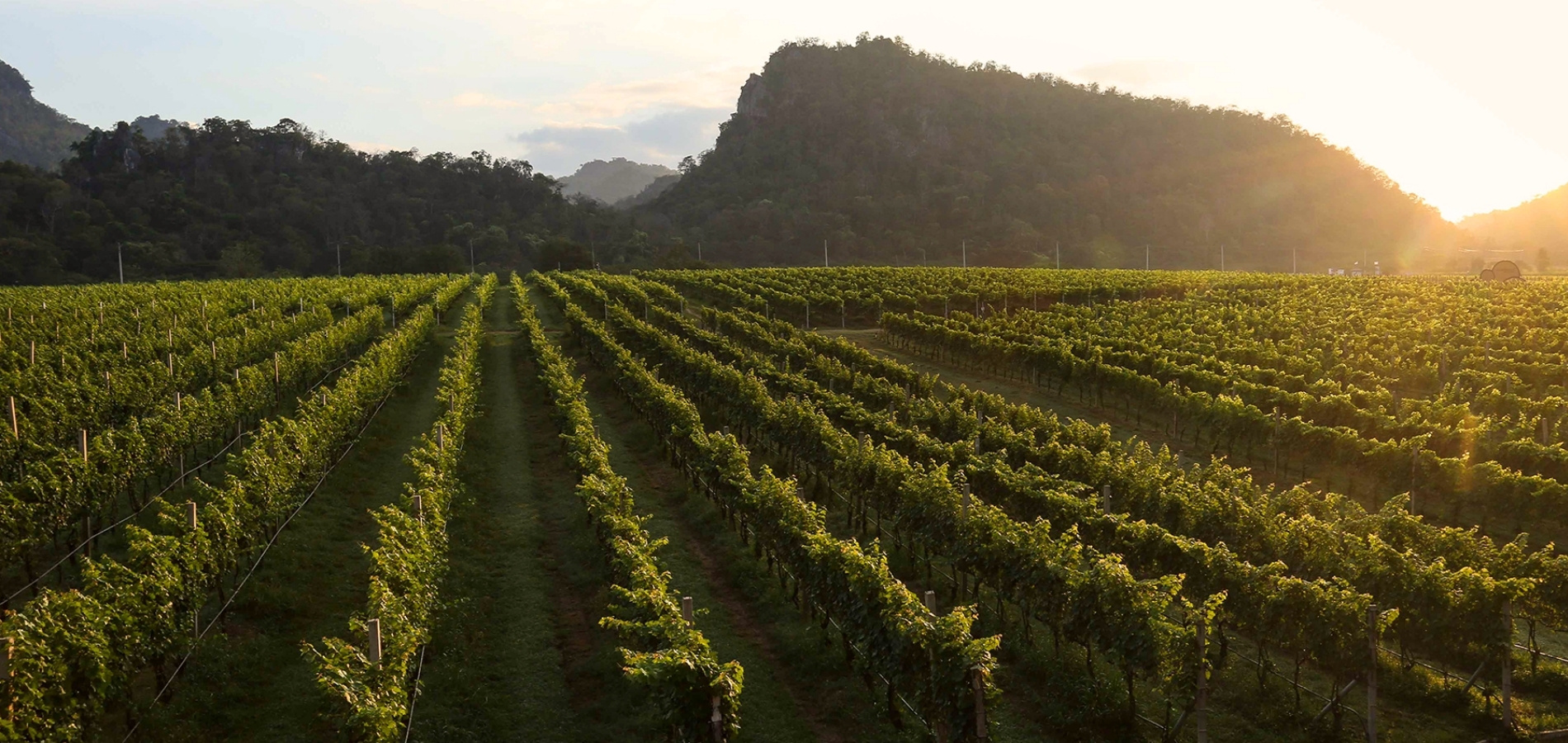
© GranMonte
PB Valley Khao Yai Winery is in another category: a much larger estate where you can tour the vineyards by small train or buggy. The guided tour lasts around 75 minutes and ends with a tasting. Their restaurant, the Great Hornbill Grill, is renowned for its views over the vineyards. It is a more mainstream experience, but very well organised.
Other more recent estates, such as Alcidini Winery, now complement the region’s wine landscape, a sign that Khao Yai continues to move upmarket.
If your stay falls in January, also enquire about the Khao Yai food and wine festival, which brings together several producers over a weekend.
Tastings and experiences on site
The principle remains simple: you book a tour, you are taken around the vineyards while being introduced to the production process, and then you taste several wines accompanied by small bites. Expect to pay generally between €10 and €20 for the wine tasting tour. Places fill up quickly, especially at weekends, so we recommend booking well in advance.
Tosacana Valley, an unexpected little piece of Italy
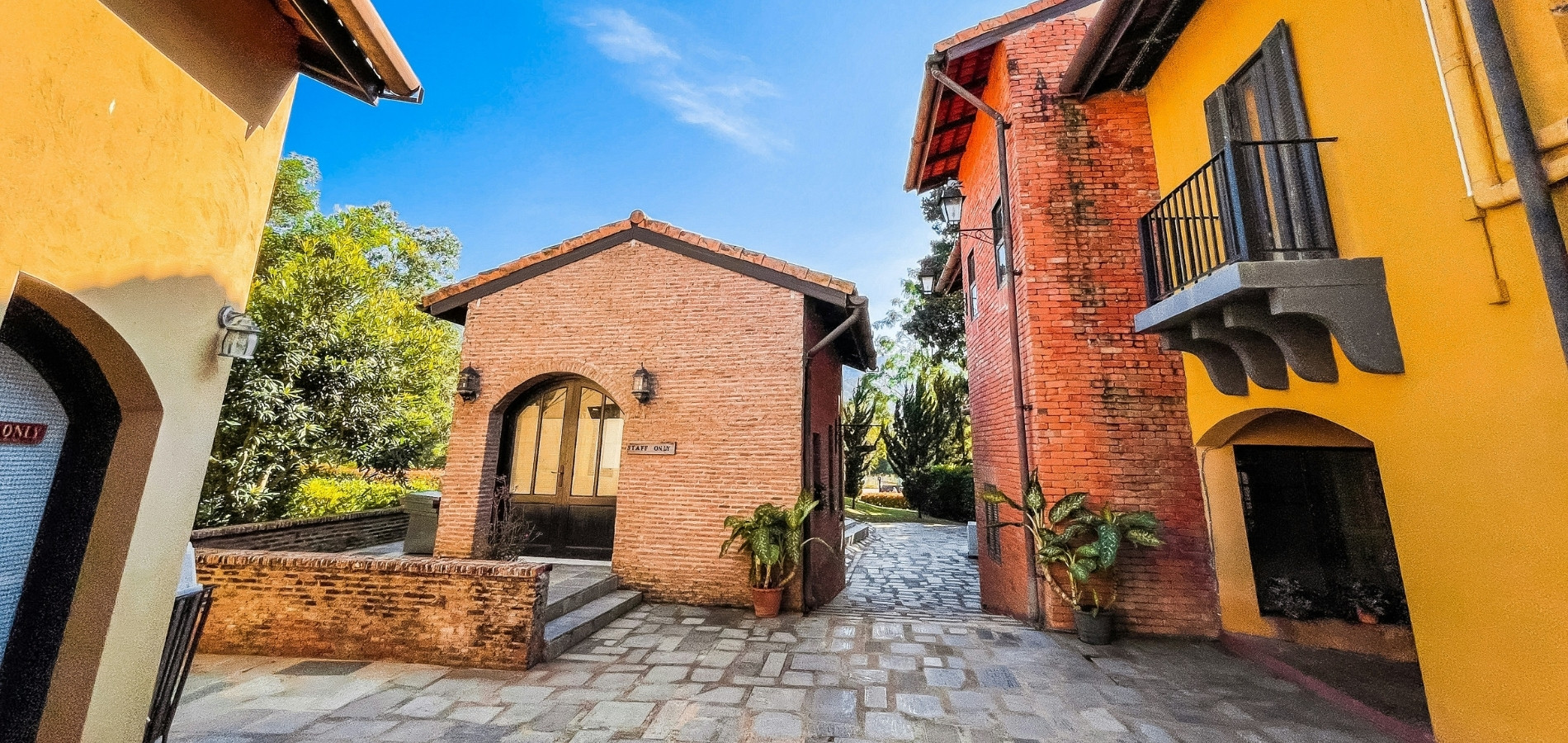
Not far from the vineyards, another surprise awaits travellers: a vast complex recreating the atmosphere of a Tuscan village in the heart of Thailand. Toscana Valley goes all-in on the change of scenery, with its brick and pastel-coloured façades, arched roofs and lively central square, complete with cafés, Italian restaurants, a bakery and shops.
The site is divided into several themed areas, each inspired by a different part of Italy. Hotel Portofino recreates the atmosphere of the fishing villages along the Ligurian coast, Toscana Piazza is inspired by the Leaning Tower of Pisa, and Castello Della Valle imitates castles from southern Europe, with views over the golf course and surrounding hills.
The place has become a very popular photo spot, especially at the end of the day when the light gives the buildings a genuine Mediterranean charm. You can stroll freely through the outdoor areas, have a coffee or try Italian cuisine on site. Guests staying at one of the complex’s hotels, however, enjoy full access, including the golf course and facilities.
Planning your stay in Khao Yai
How to get there
The Khao Yai region is easily accessible. From Bangkok, allow between 2.5 and 3.5 hours depending on traffic and your starting point.
By car or private driver: the most flexible option. You leave whenever you want, stop wherever you want, and remain independent once there. This is what we recommend for this region.
By train: from Krung Thep Aphiwat station in Bangkok to Pak Chong, the gateway town to Khao Yai. Allow around 3.5 hours, at a very affordable price.
By bus or minivan: departing from Mo Chit terminal to Pak Chong. An economical option, with a journey of around 3 hours.
Once in Pak Chong, you still need to reach the park or your accommodation. Songthaews, shared pickup trucks, provide the connection, but to explore the park itself, a vehicle remains almost essential.
Where to stay according to your budget
Pak Chong, the town, is a convenient and affordable base for your stay in Khao Yai. You are close to transport, restaurants and markets, and only 20 to 30 minutes from the park entrance. It is a good option if you are travelling on a smaller budget, as there is a fairly wide range of accommodation.
The Mu Si area, at the park’s doorstep, is more focused on resorts and nature accommodation, often with mountain views. It is more expensive, but offers a greater change of scenery and is closer to the trails. A few wineries also offer accommodation on site, a charming option for those who really want to experience the wine-growing side of the region.
The best time to visit
The best time to visit Khao Yai is without a doubt from November to February. This is the cool and dry season, when the weather remains pleasant for hiking. It is also harvest season, which starts around late January. You therefore get the best of both worlds, between hiking and discovering the vineyards.
The rainy season, roughly from June to September, has its own charm: the jungle takes on vibrant shades of green and the waterfalls regain their full flow, but some viewpoints and trails temporarily close.
Two or three days on site are ideal for discovering Khao Yai: one day in the park, half a day in the vineyards, and time to unwind in between. You will leave with images of wild elephants and a case of Thai wine under your arm.