Thai cuisine: specialties and prices


In Thailand, cuisine is an integral part of the journey. From the first few hours on-site, travelers discover streets filled with the scents of lemongrass, grilled meats, fried rice, or fresh chili. In Bangkok, Chiang Mai, or small southern villages, eating is never limited to a simple meal. It is a social habit and a moment of sharing.
For travelers, this culinary immersion quickly becomes one of the most memorable souvenirs of the trip. The variety of dishes, the very accessible prices, and the atmosphere of the night markets transform every meal into a discovery. Many are surprised by the quality of Thai street food, often prepared in smoking woks on the side of the road.
Contrary to certain misconceptions, it is not necessary to love chili to enjoy the local cuisine. Thailand offers a very balanced cuisine, where one finds as many mild, sweet, and fragrant dishes as very spicy recipes. Here are the specialties not to be missed, the actual prices observed on-site, and the local habits to know in order to experience Thai cuisine like the locals.
Thai dishes you must taste
Thai cuisine varies enormously by region. The north does not have the same dishes as the south, and Bangkok mixes all the country's influences. However, certain dishes remain staples for every traveler.
Khao Soi, the culinary identity of the north
In Chiang Mai and the northern provinces of Thailand, Khao Soi is an unmissable dish. It is a curry noodle soup, inherited from the trade routes connecting Burma and Chinese Yunnan, which explains its Muslim influence and the presence of spices like turmeric, coriander, and cardamom.
The broth is prepared with a base of coconut milk and yellow curry paste, in which meat is simmered—most often chicken or braised beef. Boiled egg wheat noodles are added, and then the top is garnished with a handful of the same noodles, fried until they become crispy. It is this contrast of textures that characterizes the dish.
Khao Soi is always served with an assortment of condiments to add according to taste: sliced raw red shallots, pickled mustard greens (phak kat dong), lime wedges, and a roasted chili paste in oil (nam phrik phao). It is by mixing these elements that everyone adjusts the acidity, spiciness, and bitterness they desire in the broth.
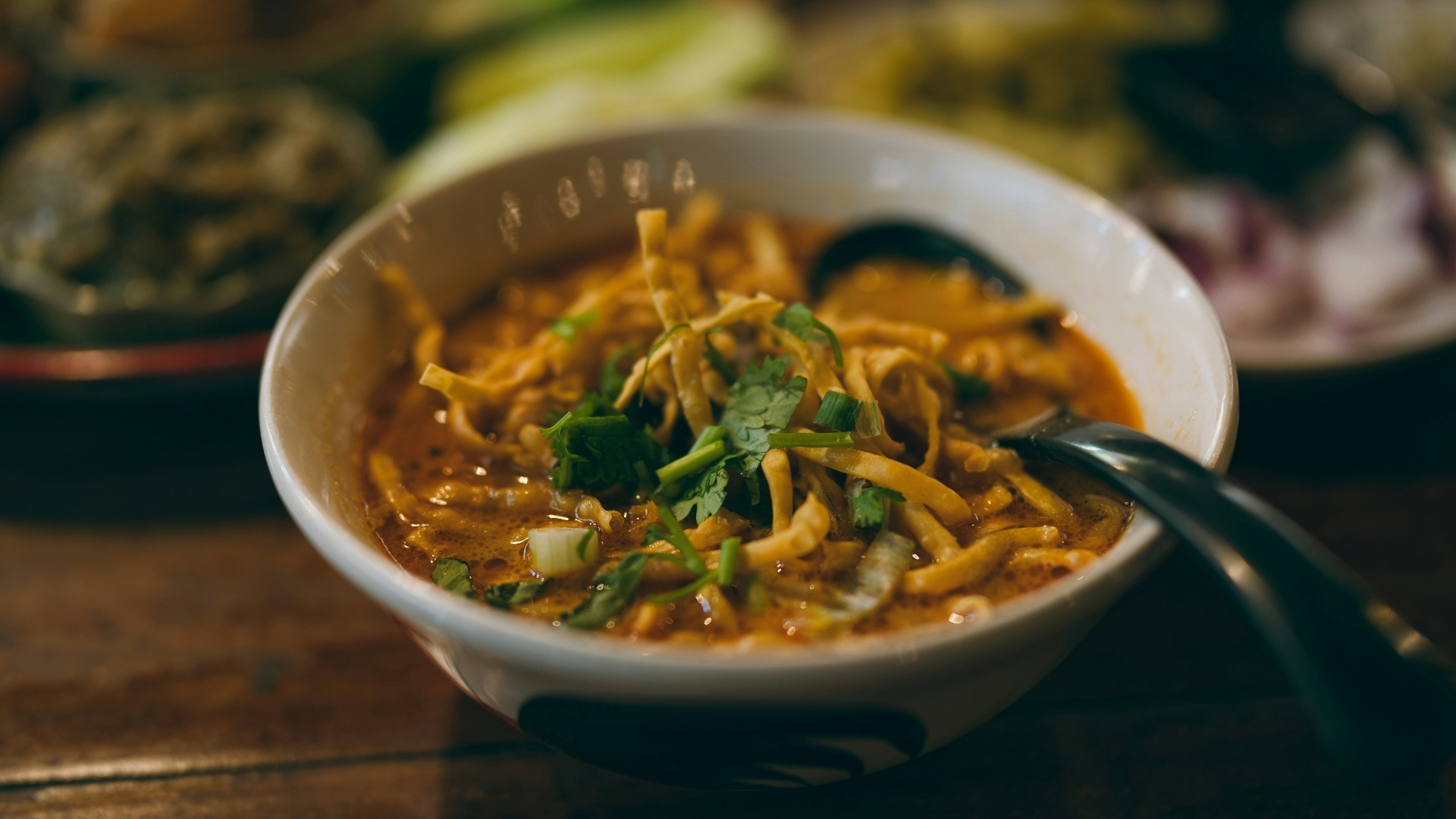
It can be found in street stalls from morning until evening. Expect to pay between 60 and 120 baht per bowl. The northern version is moderately spicy by default, with the chili being added at the time of serving.
Tom Yum, the iconic soup
Tom Yum is undoubtedly the most well-known Thai soup abroad, and it can be found throughout the country, from street stalls to established restaurants. Its name comes from two words: tom, which means to boil, and yum, which means spicy and sour salad. This sums up its flavor profile well.
The broth is flavored with lemongrass, galangal, kaffir lime leaves, chili, lime juice, and fish sauce. The most common version is Tom Yum Goong, prepared with shrimp, but it is also found with chicken or seafood. There are two main variants: one with a clear broth and one to which coconut milk is added, resulting in a creamier, orange-colored broth.
It is generally served with white rice. Count on 60 to 150 baht depending on the location and ingredients, with shrimp versions being the most expensive.
Som Tam, the perfect balance of sourness and freshness
Som Tam has its origins in Isan, in northeastern Thailand, but today it is found throughout the country. It is a green papaya salad prepared to order and pounded in a mortar with a fast and precise rhythm. The balance of the dish rests on four flavors adjusted to order: sweet, sour, salty, and spicy. It is common to specify the number of chilies desired, but one is often more than enough to start.
The base is always the same: unripe green papaya, shredded into thin strips. It is pounded in a terracotta or wooden mortar with garlic, chili, long beans cut into sections, cherry tomatoes, palm sugar, lime juice, fish sauce, and roasted peanuts. Some versions also include dried shrimp.
Several variants exist according to region and taste. Som Tam Thai, the most widespread and accessible, is slightly sweet and contains peanuts. Som Tam Pu adds marinated field crab, and Som Tam Pla Ra, typical of Isan, is seasoned with a fermented fish brine with a strong odor—this is the most authentic version but also the most disconcerting for an unaccustomed palate.
Som Tam is traditionally accompanied by sticky rice (khao niao), served in a small bamboo basket, and grilled chicken (gai yang). Expect 40 to 80 baht for a portion in markets and street stalls.
 |  |
Sai Krok Isan, the fermented sausage that divides
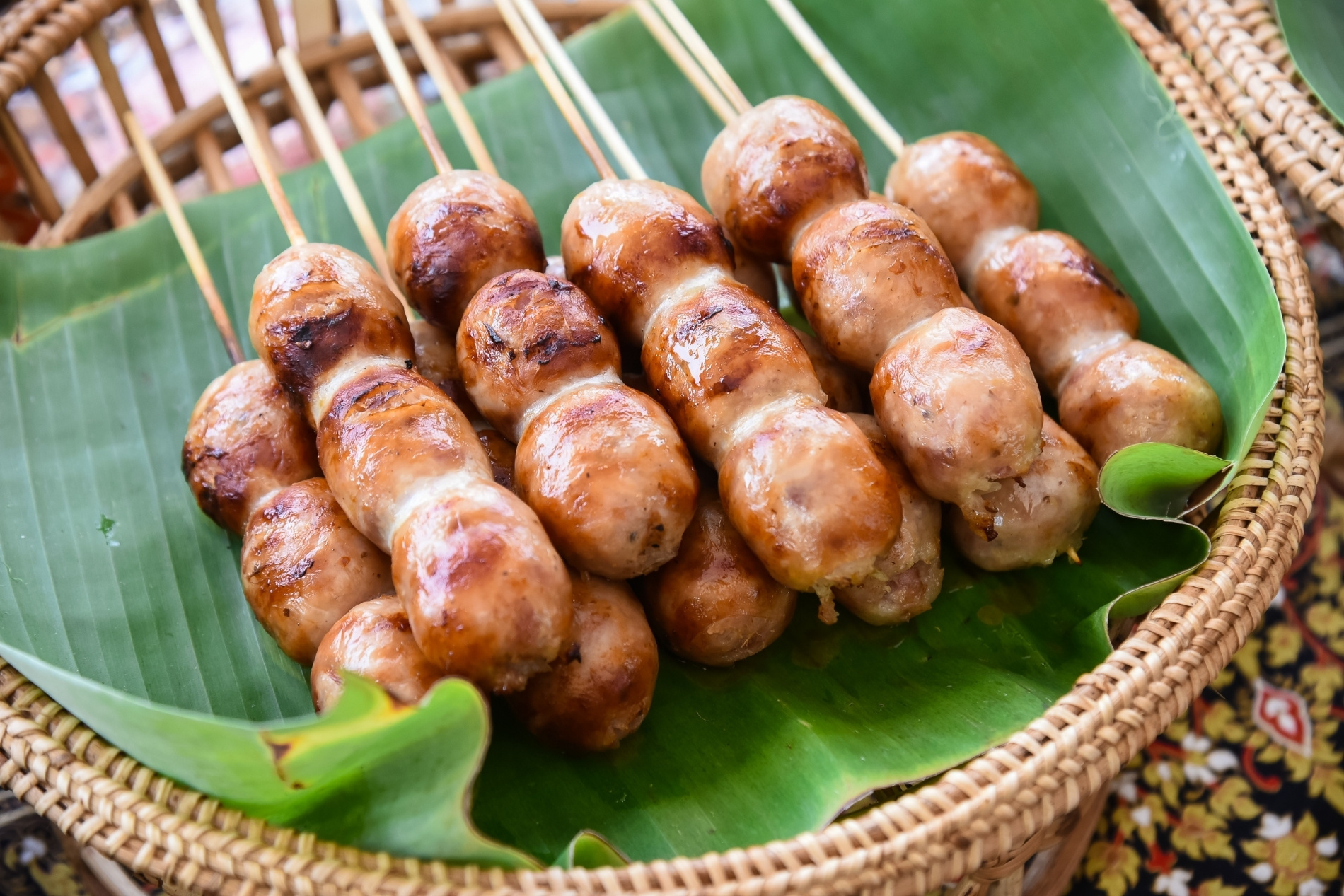
In northeastern Thailand, Sai Krok Isan is one of the most common street snacks. It is a fermented pork sausage, recognizable by its shape of small balls linked together, grilled over charcoal on stalls.
Its peculiarity comes from its preparation: minced pork meat is mixed with cooked rice, garlic, and salt, then left to ferment for two to three days at room temperature. It is this fermentation that gives it its characteristic tangy taste, close to that of a sour sausage.
It is eaten by hand, directly after cooking, accompanied by raw cabbage, sliced fresh ginger, and whole small chilies to bite between two mouthfuls. Expect 10 to 20 baht per sausage at the markets.
Must-try Thai desserts
In Thailand, desserts are often simple but extremely indulgent. They rely heavily on coconut milk and tropical fruits.
Mango Sticky Rice, the national dessert
Mango Sticky Rice is probably the most famous Thai dessert, but its local version is much tastier than what is found abroad.
It consists of steamed sticky rice, topped with sweet and salty coconut milk, and served with slices of mango. The fruit used must be very ripe, sweet, and non-fibrous. During the mango season, between March and June, mango sticky rice is sold everywhere, from street markets to small family restaurants. Expect 60 to 150 baht per portion.
Roti, the star pancake of the night markets
Imported by Muslim communities from the south, the roti has become a classic of night markets across the country. It is a thin dough stretched by hand, cooked on a griddle in butter, then folded into a square around the chosen filling.
Vendors offer almost anything as a topping: egg, cheese, condensed milk, mango, strawberry, Oreo, Nutella, and even savory combinations like tuna-mayonnaise. The version that remains the most popular is undoubtedly banana-chocolate. The result is crispy on the outside and soft on the inside, with pieces of banana that melt slightly during cooking. The whole thing is drizzled with sweetened condensed milk. It is a warm and comforting street dessert, sold for between 40 and 80 baht depending on the filling.
Bua Loy, coconut milk rice balls
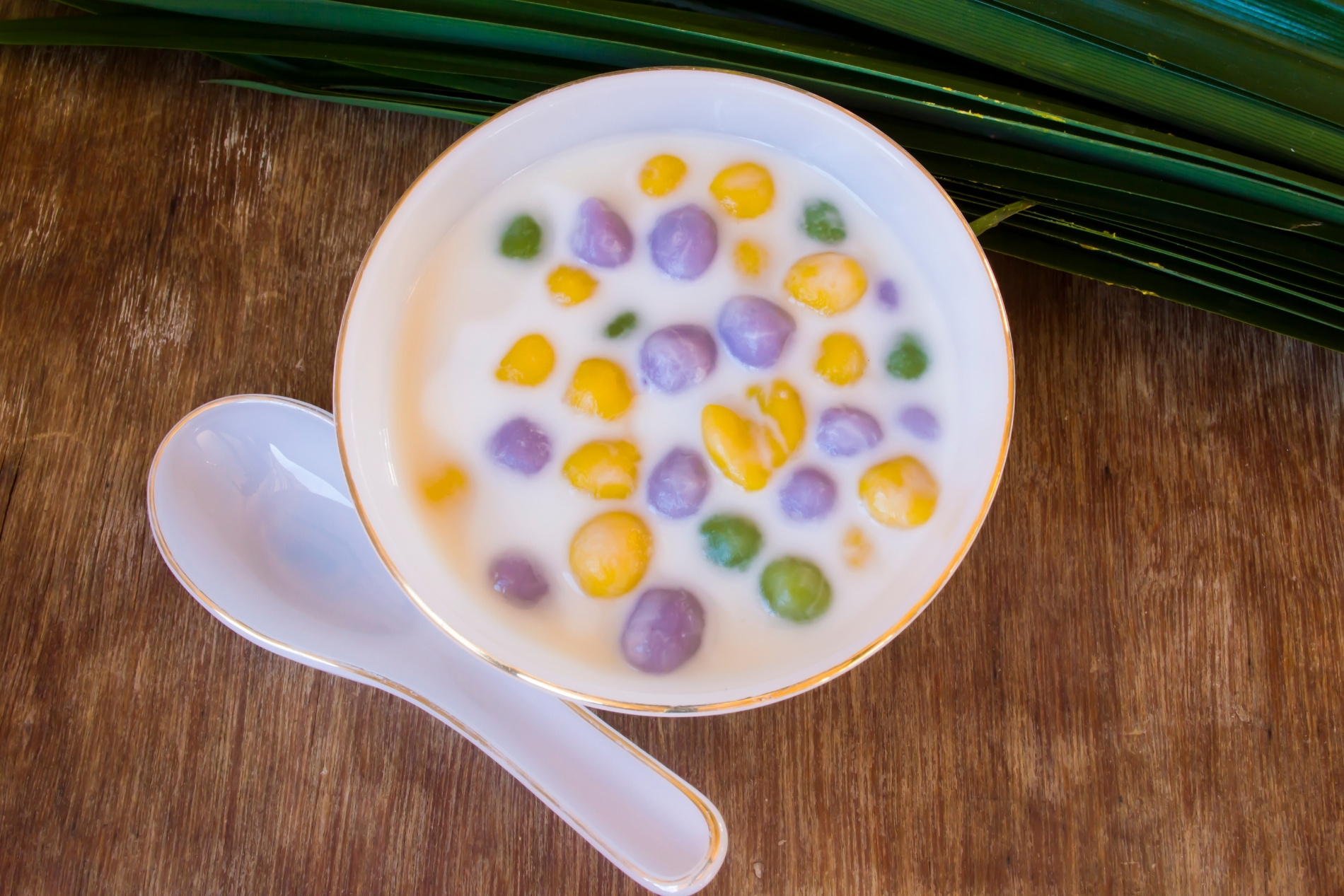
Less known to tourists, Bua Loy is a warm dessert composed of small glutinous rice flour balls. They are naturally colored: pandan for green, taro for purple, and pumpkin for orange. They are then served in a slightly sweetened coconut milk broth. The texture of the balls is elastic and their flavor very mild. It is mostly found in morning markets and traditional stalls, around 30 to 50 baht a bowl.
 |  |
Khanom Krok, coconut mini pancakes
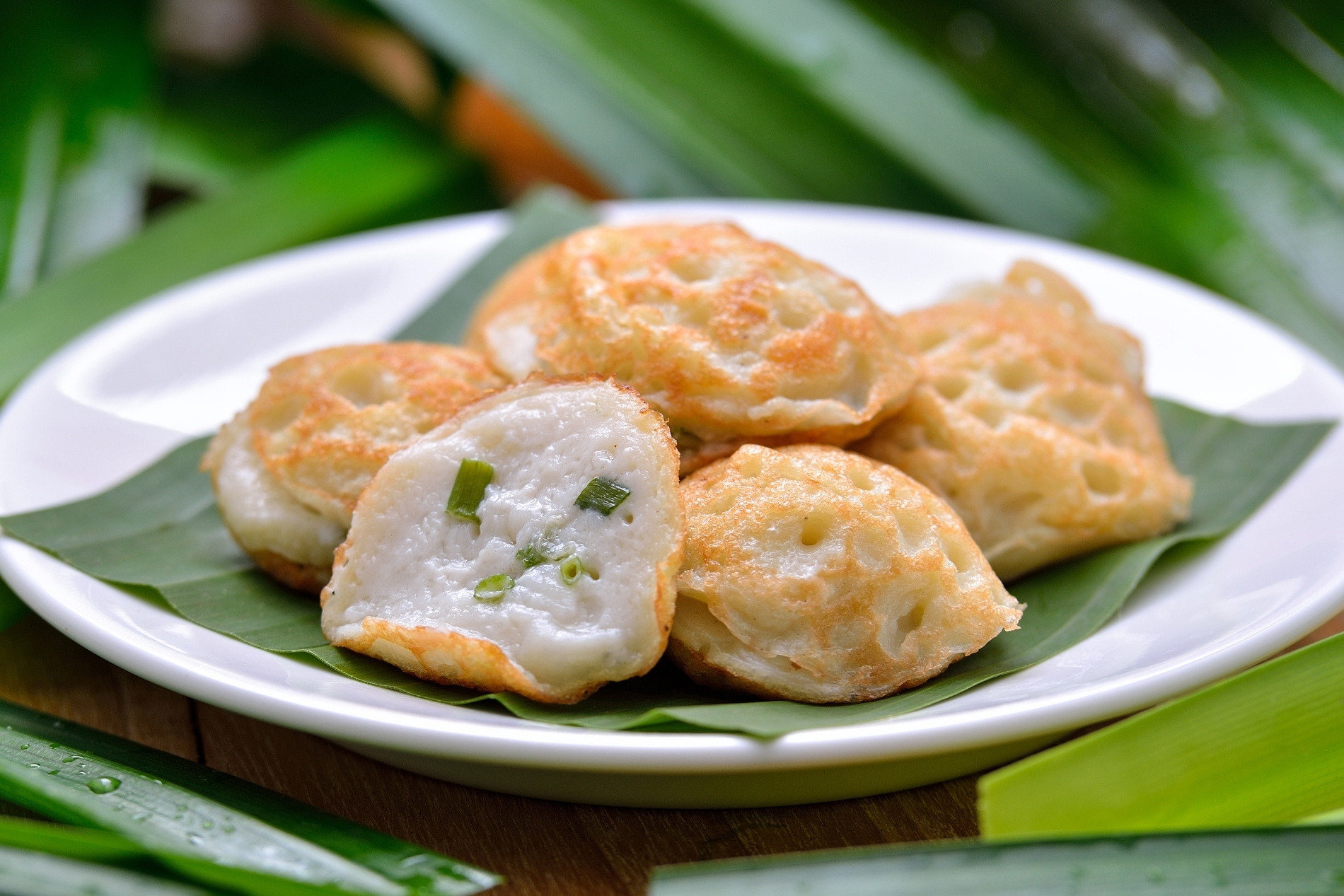
Prepared in a cast-iron plate with small cavities, Khanom Krok is a bite-sized snack made from rice flour and coconut milk. They are cooked in two layers: a slightly salty cream and a sweet bottom that caramelizes during cooking. Sometimes spring onions, corn, or taro are added. The small golden cups are served in pairs, still warm, in a paper tray. This snack is sold for around 20 to 40 baht for a portion of about ten pieces.
Tropical fruits in Thailand
Thais consume a lot of fresh fruit throughout the day. Street stands offer ready-to-eat portions, often sold in plastic bags with wooden skewers. You can find green mango with salt and chili, very sweet pineapple, or fresh papaya.
Durian
Nicknamed the "king of fruits," the durian is recognizable by its thorny shell and its powerful odor, which makes it banned in most hotels and public transport. Its creamy yellow flesh has a complex taste, both sweet and slightly sulfurous. The durian season runs from May to August and the price varies greatly according to quality, between 150 and 400 baht per kilo.
Mangosteen
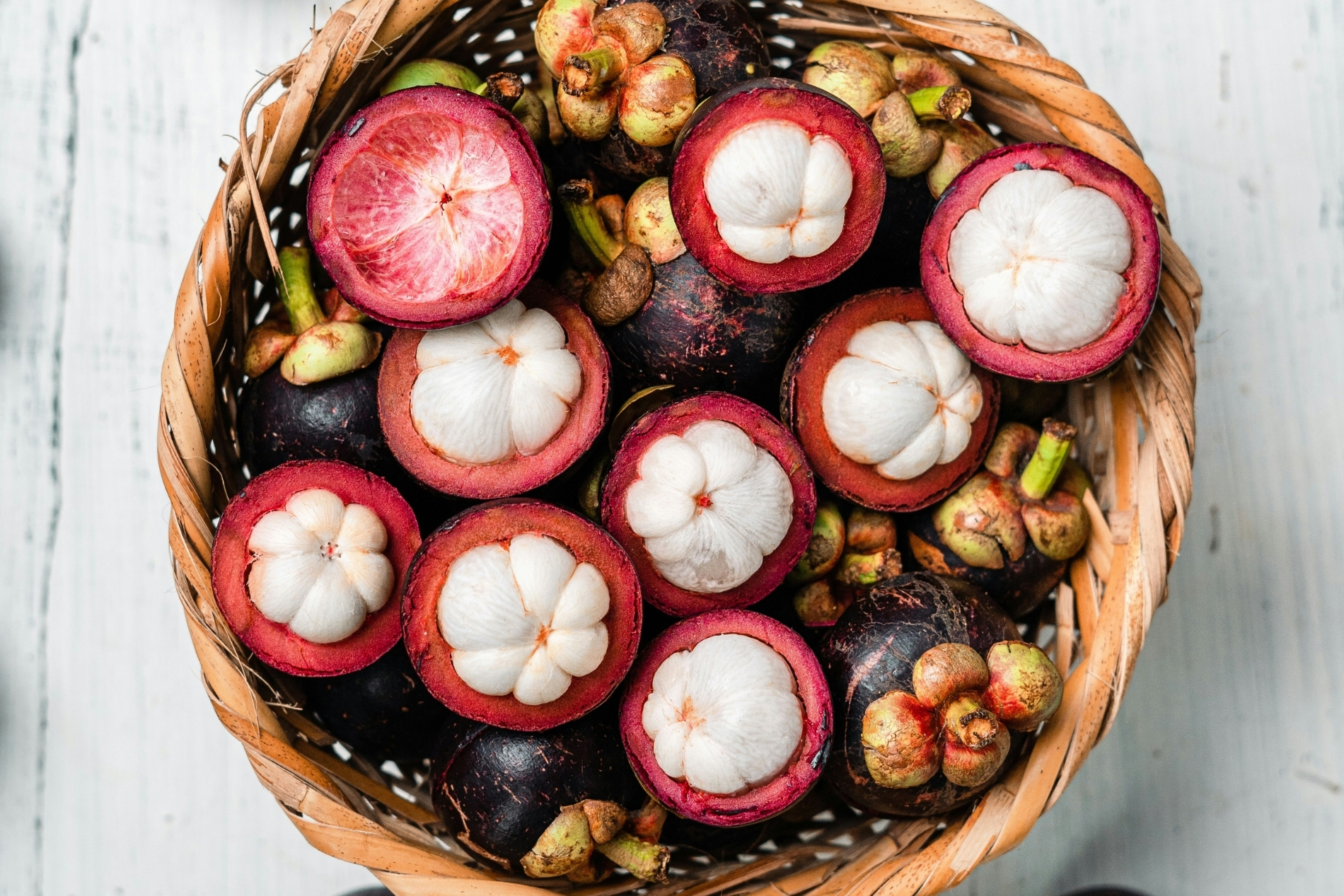
The mangosteen has a thick dark purple skin that protects a white flesh divided into segments. Its taste is delicately sweet, slightly tangy, with floral notes. It is opened by pressing the shell between the palms to split it in two. The season is short, mainly from May to September. Count on 60 to 120 baht per kilo in the markets.
 |  |
Rambutan
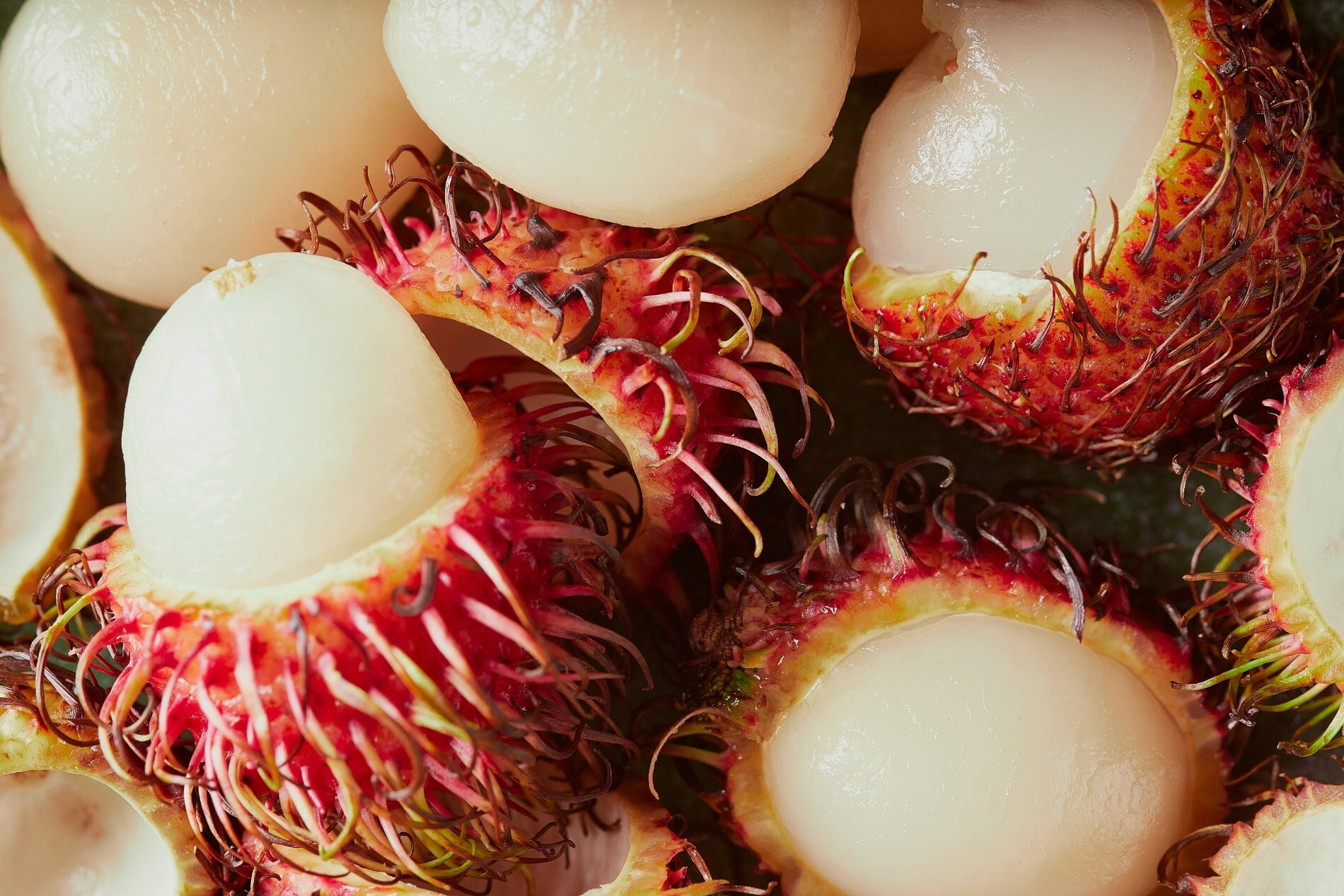
Easily recognizable by its red skin covered with flexible green "hairs," the rambutan is a cousin of the lychee. Its flesh is translucent, juicy, and sweet, with a central seed that should not be swallowed. It is often sold in clusters still attached to their branches. The peak season is from May to September, and the price is around 40 to 80 baht per kilo.
Dragon fruit
Cultivated throughout the country, dragon fruit comes in two forms: white-fleshed (the most common) or bright pink-fleshed, both dotted with small edible black seeds. Its taste is very mild, not very sweet, close to kiwi in intensity. Available all year round, it costs between 30 and 80 baht per kilo.
How much does food cost in Thailand?
Thailand is a very affordable destination regarding the food budget, provided you eat like the locals. In street stalls and markets, a full dish like a Pad Thai or a noodle soup generally costs between 40 and 80 baht, which is about 1 to 2€. Snacks like chicken skewers, Isan sausages, or roti are found between 10 and 40 baht, so less than one euro.
A meal in a small local restaurant with a terrace, where you sit down to order several dishes to share, costs between 100 and 300 baht per person, including a drink.
Food courts in shopping malls, very popular with middle-class Thais, offer varied dishes for 60 to 120 baht. It is a good option to taste different specialties in the same place while enjoying the air conditioning.
Western restaurants, particularly in Phuket, Koh Samui, Krabi, or in central districts of Bangkok, charge significantly higher prices, generally between 200 and 500 baht per dish. High-end restaurants and rooftops in Bangkok can exceed 1,000 baht (25€) per person, excluding drinks.
As for drinks, expect 10 to 20 baht (0.50€) for a bottle of water, 30 to 60 baht for an iced coffee in the street, and 60 to 100 baht (2.50€) for a local beer (Chang, Singha, Leo) in a restaurant. Pre-cut fresh fruit sold in the street costs around 20 to 40 baht (1€) per bag.
Ultimately, with a budget of 200 to 400 baht per day (between 5 and 10 euros), it is entirely possible to eat three good meals while staying within the local circuit. Double that if you wish to alternate with more comfortable or touristy restaurants.
