Visiting the floating villages of Tonlé Sap lake from Siem Reap

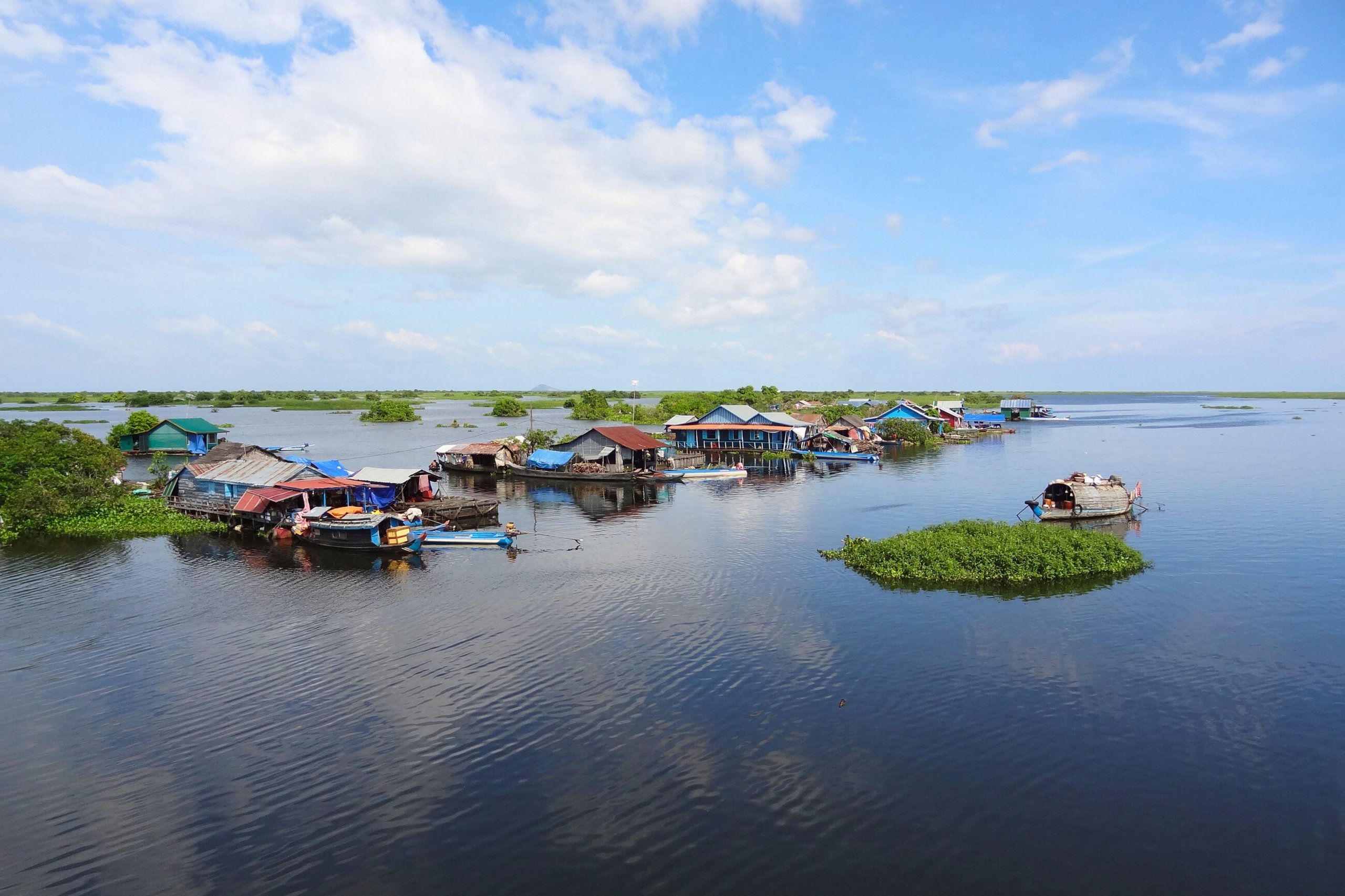
Thirty kilometres or so from the temples of Angkor, in Cambodia, the scenery changes completely. The road leaves the town, crosses the rice fields, then stops at the edge of a canal. You board a motorised boat, and a few minutes later the first houses appear, perched on their stilts. Tonlé Sap is the largest body of fresh water in Southeast Asia. Hundreds of thousands of people live here to the rhythm of the flood, in villages that look different depending on the month of the year.
It is one of the most interesting excursions to do from Siem Reap, provided you choose the right village and the right season. From one site to another, the experience can be very different.
Tonlé Sap, the largest freshwater lake in Southeast Asia
Tonlé Sap lies in central Cambodia, between Siem Reap and Phnom Penh. What makes it unusual is the river of the same name that connects it to the Mekong. Twice a year, this river changes direction. During the monsoon, the Mekong floods so heavily that the water flows back up towards the lake instead of draining out of it. At the end of the rainy season, the current reverses again and the lake slowly empties into the river. This reversal of the waters happens in May or June, then in October or November, and it is celebrated during the Water Festival, Bon Om Touk.
The result is spectacular. At the end of the dry season, the lake covers around 2,500 to 3,000 km² and is barely a metre deep. At the height of the flood, it exceeds 10,000 km² and reaches eight to nine metres deep. The lake therefore grows fivefold in a matter of months.
This annual flood sustains one of the most productive freshwater fisheries in the world. According to UNESCO, the lake provides a large share of the fish consumed in Cambodia. It was designated a biosphere reserve in 1997, with three protected core areas, including Prek Toal.
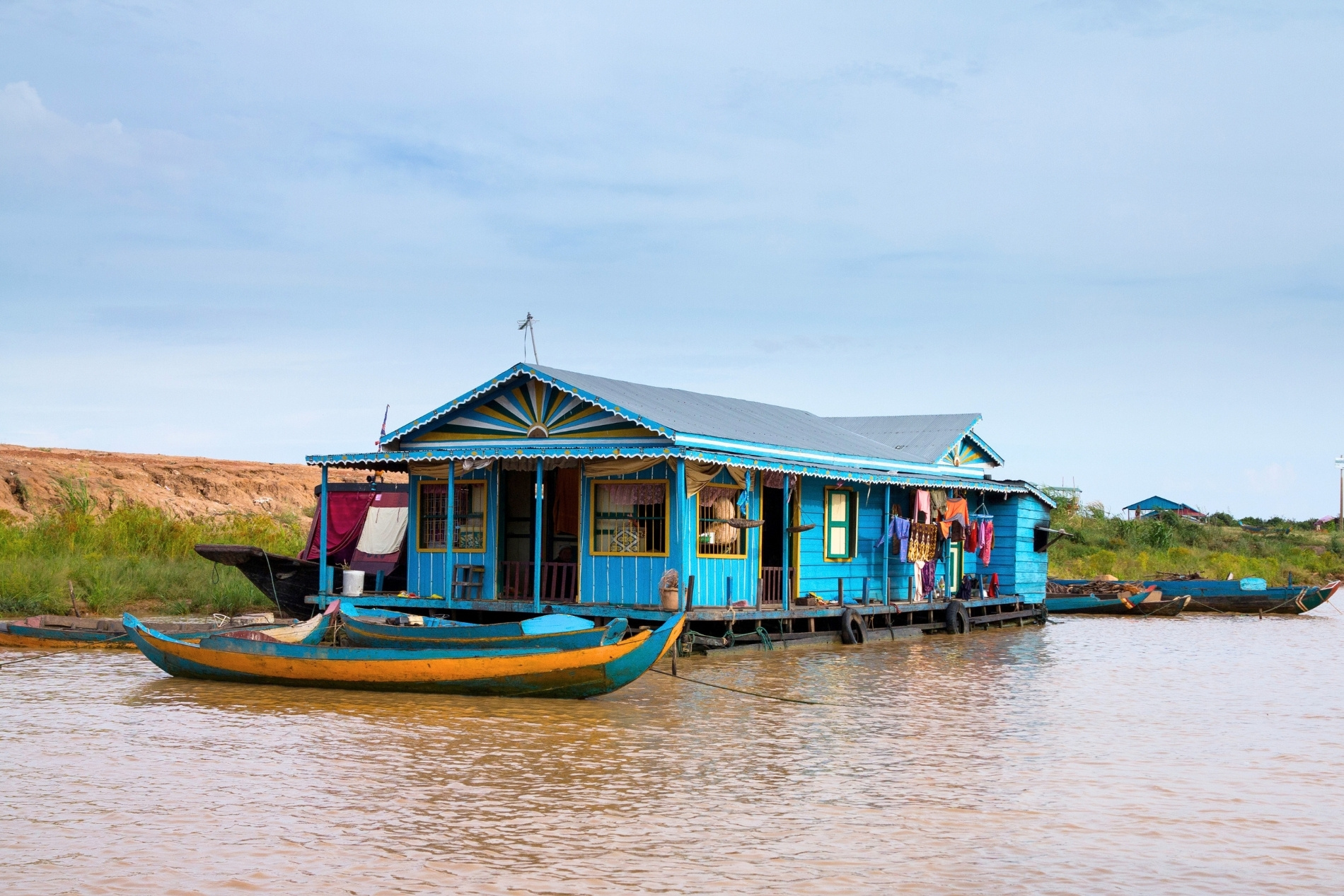
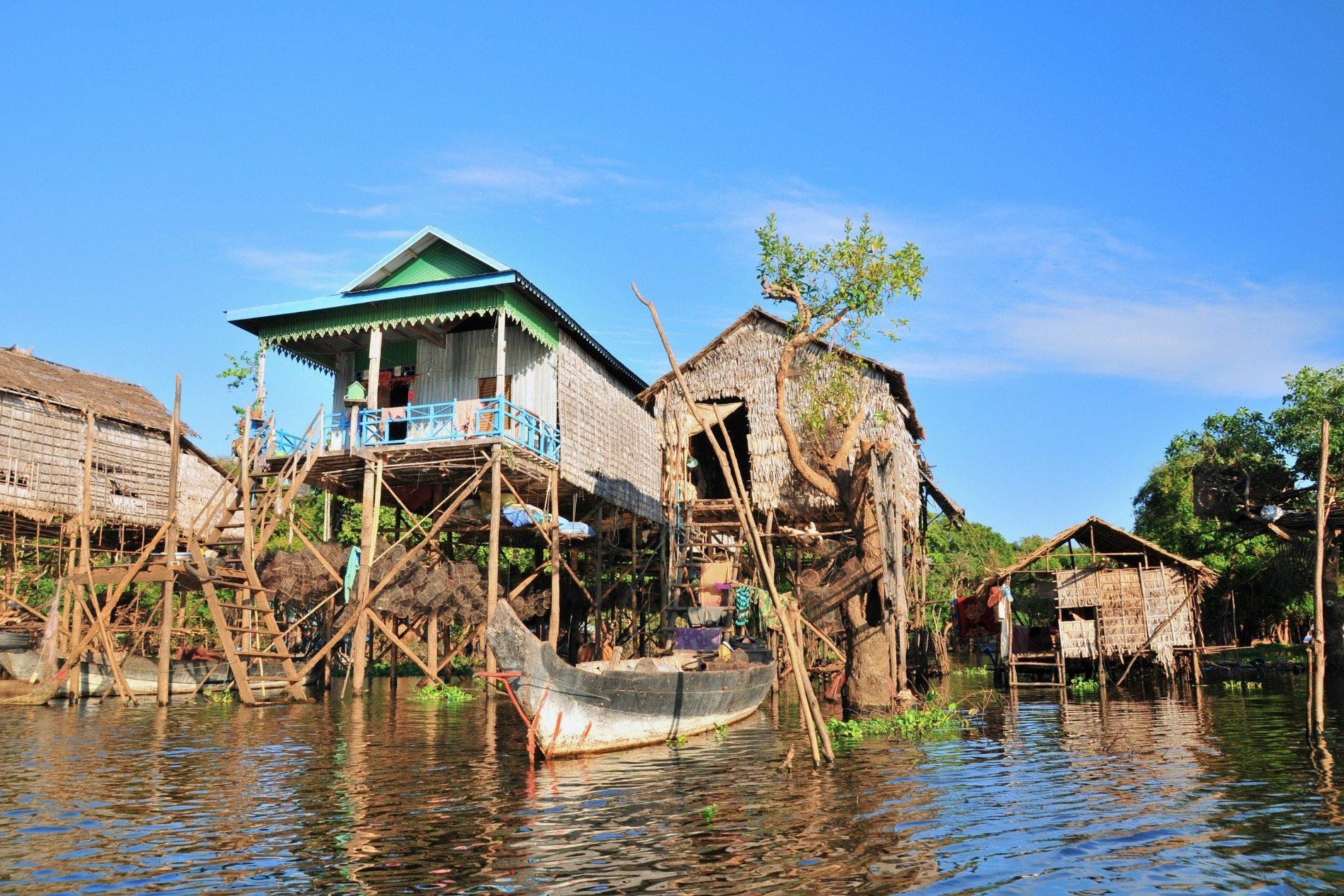
Living on a lake that rises by eight metres requires some organisation, and the inhabitants have adapted in two different ways. Some villages genuinely float. The houses rest on bamboo structures or on floats, and they are moved when the water level changes. Others are built on stilts, sometimes six to eight metres high. In the rainy season, the water rises up to the floor, and in the dry season the stilts are fully exposed and people walk around underneath them.
 |  |
The lake is going through a difficult period. The dams built upstream on the Mekong and several years of drought have reduced the scale of the flood, with direct consequences for fishing and for the flooded forest.
How does a visit to the lake work?
Allow half a day to visit Tonlé Sap lake. From Siem Reap, the drive takes between 40 minutes and 1h30 depending on the village you choose. You arrive at a landing stage, where you board a wooden motorboat. The trip begins in a narrow canal lined with houses, drying nets and fishing boats. You come across children heading home from school by boat, or travelling traders.Then the canal widens and you come out onto the lake, whose far shore is out of sight. The visit is mostly done from the boat. You pass within a few metres of the houses, the pagodas and the school. You can watch the daily life of these communities living on the water, fishermen pulling up their nets, fish drying in the sun... There is usually a stop on a floating platform, often a restaurant, where you get off for a drink. In the dry season, part of the village can also be explored on foot, beneath the stilts.
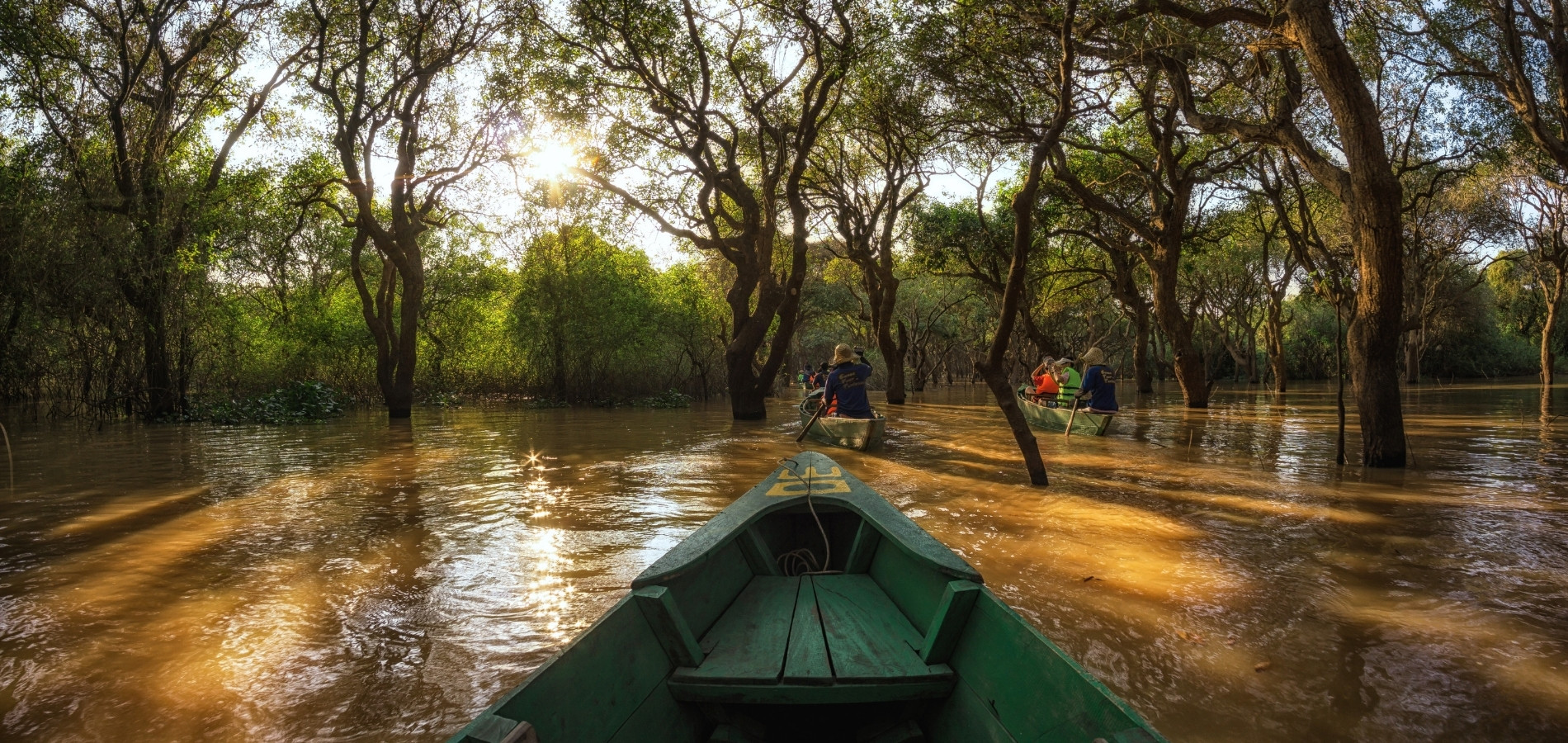
Between August and January, when the water is high, a paddle boat then takes you into the flooded forest. You move among the half-submerged trees, with no engine, and it is without doubt one of the calmest moments of the day. But this part of the excursion is not possible when the water drops, generally from February or March onwards.
Many travellers choose the late afternoon so they can finish with sunset over the lake. But a morning departure has its advantages too: the light is good, the fishermen are more active and there are far fewer boats. We often recommend this option to our travellers. And the visit combines easily with the temples of Angkor within the same trip.
Which floating village to visit on Tonlé Sap?
Kampong Phluk
Thirty kilometres or so from Siem Reap, Kampong Phluk is the easiest village to reach in half a day. Its name means "harbour of the tusks" and it is in fact made up of three villages with a total of around three thousand inhabitants. The houses are on stilts, some of them more than six metres high, which makes for striking photos in the dry season.
Kampong Phluk is also the simplest starting point for the flooded forest by paddle boat. The boat service is run by the community, with a rotation system between the village families, so each trip benefits a different household. The short journey and the paddle boat ride make it a good choice for families with children, even though the site remains busy in high season.
Kampong Khleang
The largest village on the lake is also the furthest from Siem Reap. It lies around fifty kilometres away. It has several thousand inhabitants and combines stilt houses along the canal with floating houses further out on the water. The drive is longer, but there are far fewer visitors and daily life carries on without paying much attention to tourist boats. It is our default choice for travellers who want to avoid the crowds. In the dry season, the rows of very high stilts above the dry ground are worth the detour on their own.
Prek Toal and its bird sanctuary
Prek Toal is a core area of the biosphere reserve and one of the most important breeding sites for water birds in Southeast Asia. You can see spot-billed pelicans, adjutant storks, storks and ibises, often in large numbers.
The visit is nothing like the other villages. You have to leave very early, often before 6am, and allow a full day. Access is by boat from the Chong Kneas landing stage, then by ranger boat inside the reserve. The best period to visit this area is between December and February, when the water drops and the birds gather. After February, the level is sometimes too low to reach the best viewing points. A must for birdwatching enthusiasts!
Our practical tips for visiting Tonlé Sap lake
When to visit Tonlé Sap lake?
Both seasons have something going for them. From September to January, the water is high. The villages appear to float, the flooded forest can be reached by paddle boat and the lake landscapes are at their best. September and October are the highest months, but also the wettest. The showers generally fall at the end of the day, which does not necessarily disrupt the visit.
From February to May, the level drops drastically. The stilts are exposed along their full height, which gives a different picture of the village, one that says more about how people live here. On the other hand, the canals shrink: navigation becomes more difficult and the flooded forest is not accessible. In March and April, the lake reaches its lowest level. Visiting is still possible, but part of the village is explored on foot, at the base of the stilts.
If you only had to remember one period, November and December offer the best balance, with water still high and dry weather. It is also high season in Siem Reap, so remember to book in advance.
How to visit Tonlé Sap without feeding mass tourism?
The choice of village matters more than anything else. Kampong Khleang and Prek Toal receive far fewer people and the income is better shared among the inhabitants. Also go for early morning departures, before the large groups arrive.
Once there, the simplest approach is to spend money directly with local people, in a floating restaurant or with the families who offer the paddle boats.
And don't forget that the people in these villages are going about their daily lives while you pass by on a boat. A hello and a gesture before photographing someone up close make a real difference to the exchange.
Donations of rice or school supplies bought at inflated prices in a shop chosen by the guide are best avoided, however they are presented. If you would like to support the lake communities, we can point you towards organisations we know on the ground.