What to do in Luang Prabang in 3 days? Our itinerary

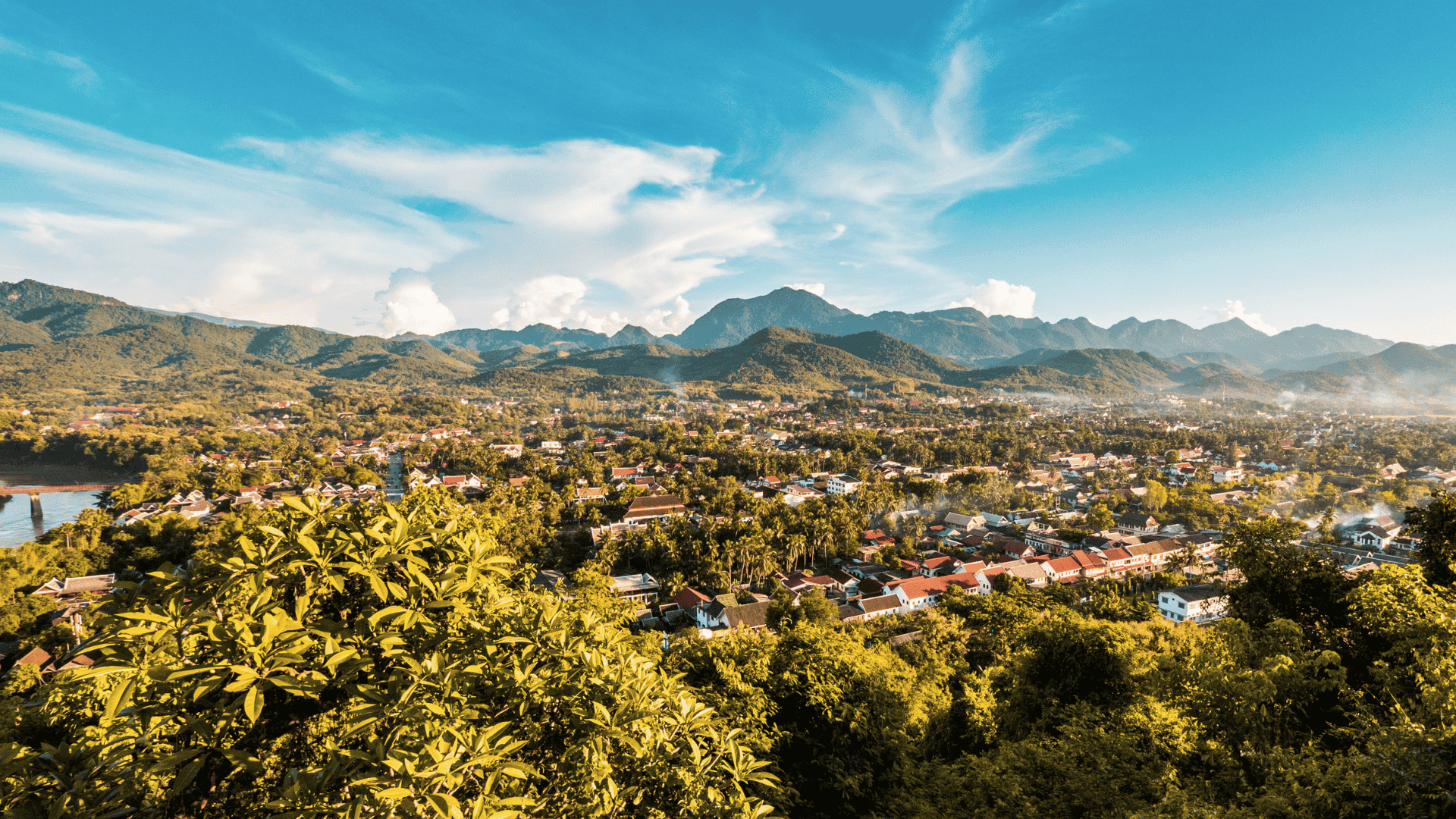
The former royal capital of Laos, Luang Prabang stretches across a peninsula between the Mekong and the Nam Khan, surrounded by mountains and vegetation. Its architecture combines traditional houses, Buddhist temples and colonial buildings, a remarkably well-preserved heritage that earned it a place on the UNESCO World Heritage List in 1995.
But Luang Prabang is not a city to discover by rushing from one attraction to another. Instead, the city invites you to slow down, take the time to wander through its streets and meet local artisans. In three days, you can therefore discover its main highlights while still having enough time to enjoy the gentle pace of life that makes it so charming.
Luang Prabang in 3 days: our itinerary
Day 1: temples, the old town and sunset from Mount Phousi
Start your stay with a walking tour of Luang Prabang's historic center, and its streets lined with teak houses and handicraft shops.
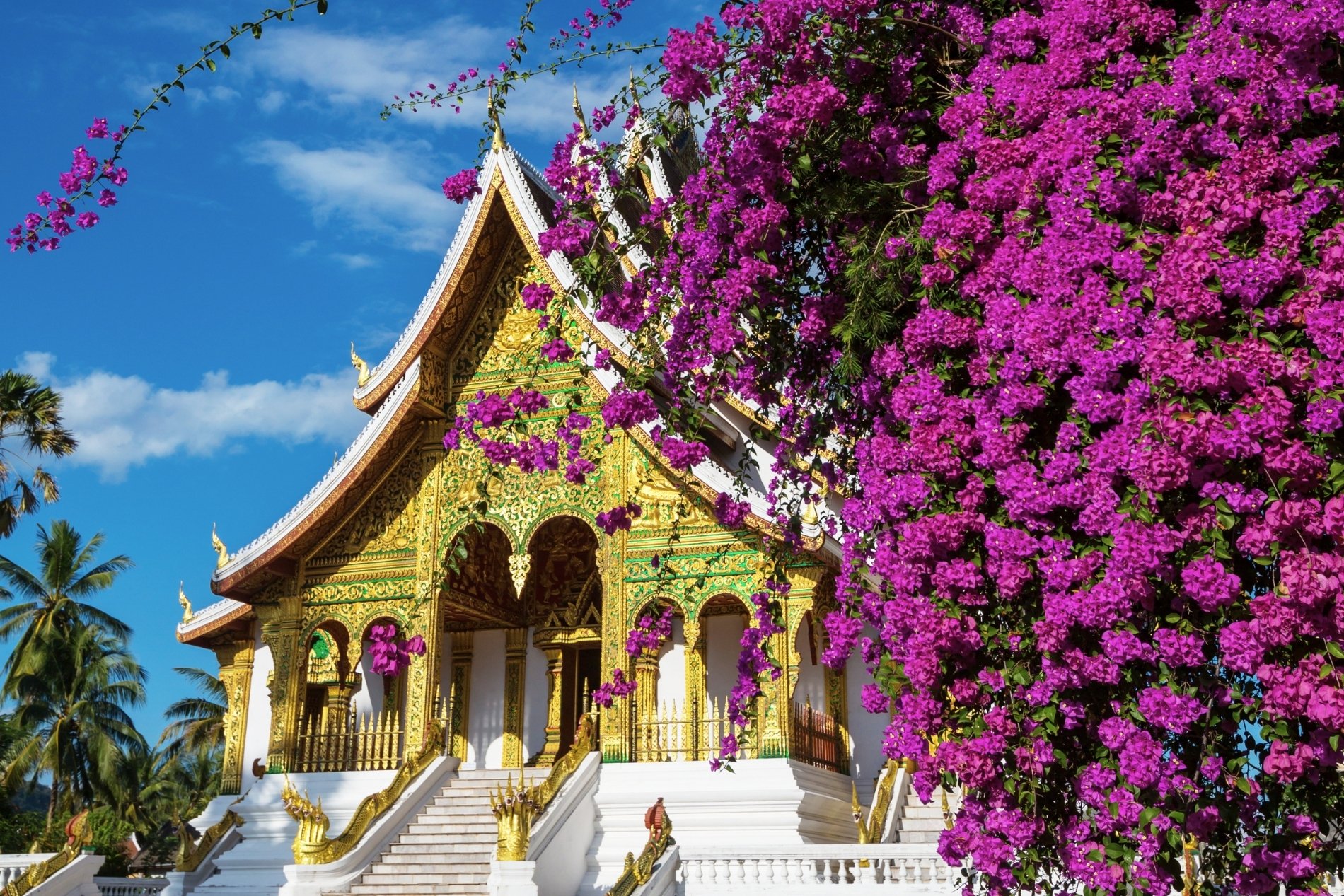
Among the temples not to be missed, start with Wat Xieng Thong, located at the tip of the peninsula. Built in the 16th century, it is considered one of the most remarkable religious complexes in Luang Prabang. Its tiered roofs, mosaics and decorative details reflect the refinement of Lao religious architecture.
If you would like to discover more temples, continue to Wat Mai and Wat Sensoukharam, closer to the center. Otherwise, continue your walk towards the National Museum, housed in the former royal palace. It is an interesting stop for understanding the history of the city and its former role as a royal capital. Then take the time to wander through the small streets of the center and stop at one of the cafés or restaurants occupying the former colonial houses.
In the late afternoon, climb the 328 steps of Mount Phousi to reach the pagoda overlooking the historic center. The climb is not long, around twenty minutes, but arrive a little early as the 360° view over the Mekong and the surrounding hills attracts crowds at sunset. The colors gradually change over the rooftops of Luang Prabang and the two rivers surrounding the peninsula, creating a magnificent spectacle.
End the evening at the night market, which sets up every evening along Sisavangvong Road. Here you will find textiles, ceramics, handicrafts, jewelry and creations made by different ethnic groups from the region. The market has several hundred vendors and is also a good opportunity to spot local crafts that you can discover in greater depth the following day. It is also a chance to taste Lao street food, from grilled skewers to fragrant soups.
 |  |
Day 2: Kuang Si Falls and a moment of meditation
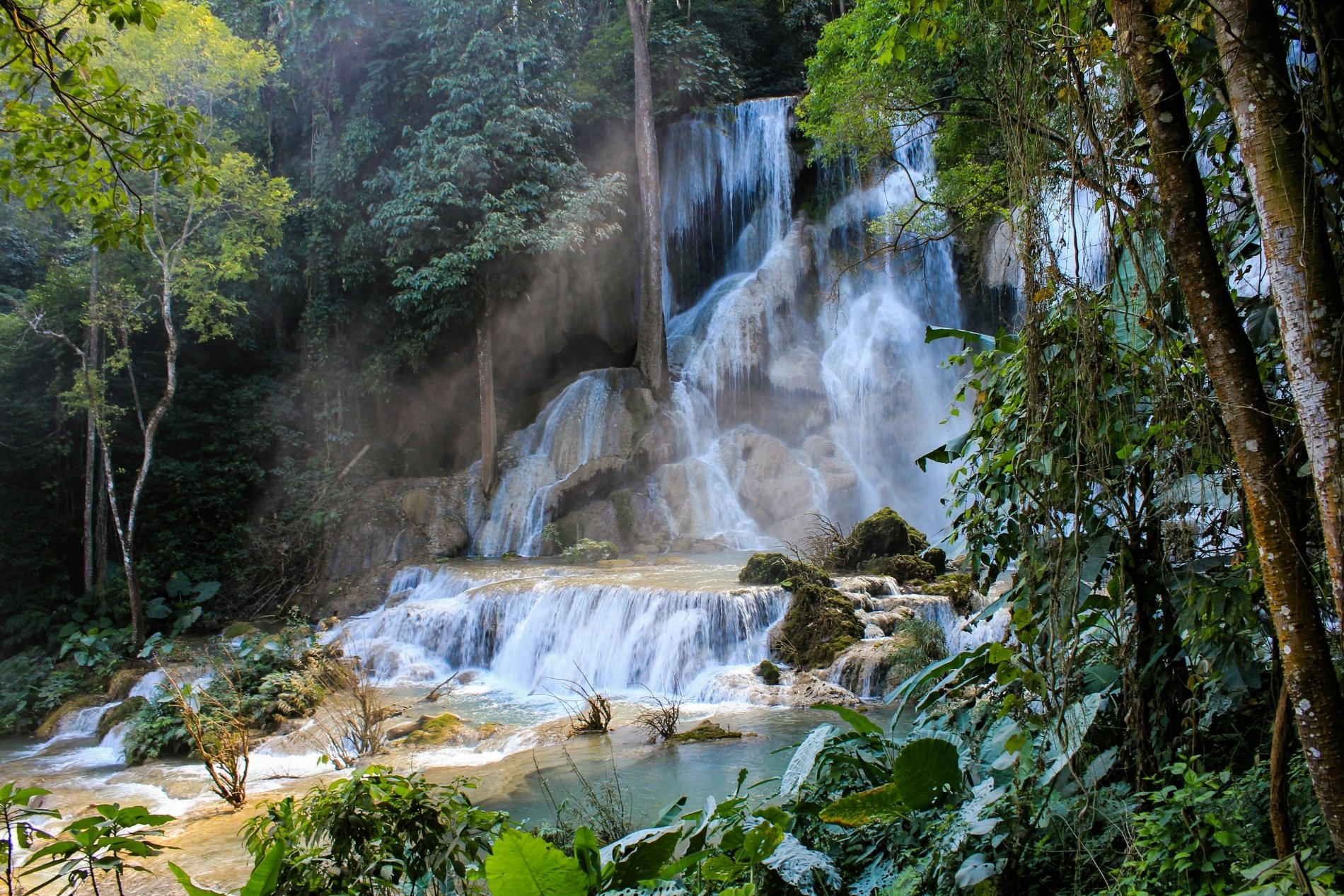
The second day brings a completely different pace. In the morning, head to the famous Kuang Si Falls, about an hour's drive from the city center. The site is known for its different terraced pools and waters whose color ranges from blue to green depending on the season. Trails allow you to walk around the waterfalls, and some areas are accessible for swimming. The site is also home to a conservation center dedicated to rescued bears, access to which is included in the waterfall visit.
Arrive early, before 9am if possible, as the site fills up quickly in the middle of the morning. And allow a good part of the morning to enjoy the place at a leisurely pace.
After this break in nature, return to Luang Prabang. And rather than filling the afternoon with more sightseeing, why not simply take some time to relax? Choose a more secluded accommodation by the river and enjoy a few peaceful hours: a nap in a small bamboo hut, reading in a hammock in the shade of the trees,... Luang Prabang is a destination particularly well suited to letting go. We therefore recommend taking the opportunity to join a yoga or meditation introduction session. Like meditation, yoga is an integral part of Lao culture, deeply influenced by Theravada Buddhism.
Our advice: don't underestimate the value of keeping half a day free in Luang Prabang. In a destination so conducive to relaxation, with its peaceful pace and landscapes that naturally invite you to slow down, a few hours without a schedule can be just as valuable as another excursion.
Day 3: Mekong cruise, Pak Ou Caves and local crafts
For your final day, take a seat aboard a boat and enjoy a Mekong cruise towards the Pak Ou Caves. The journey takes around 1.5 hours from Luang Prabang and offers a glimpse into the life that still revolves around the river, a true transportation route for the region.
The Pak Ou Caves, also known as Tham Ting, are set into a cliff near the confluence of the Mekong and Nam Ou rivers. They are home to thousands of Buddha statues placed there over the centuries by pilgrims. The lower cave is the easiest to access, while a staircase leads to the upper cave.
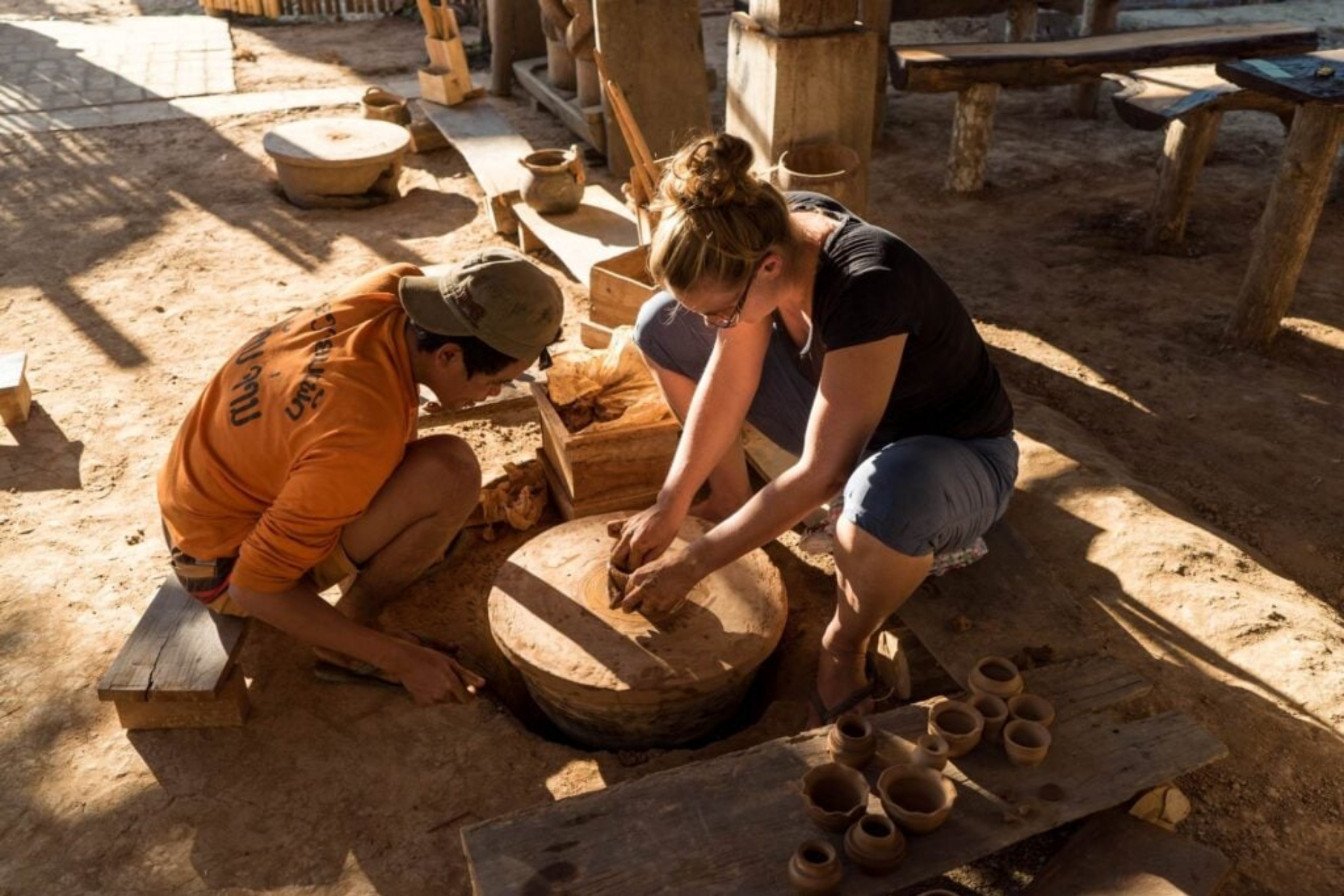
On the way back, stop at Ban Chan village, known for its pottery craftsmanship. The inhabitants have preserved traditional techniques for several generations. Clay is sourced locally and then worked by hand to make various terracotta objects. You can visit the village, watch the artisans at work and even take part in a pottery workshop yourself, guided by local residents. A beautiful way to end these three days: not with one last must-see attraction, but with a meeting and a craft passed down from generation to generation.
This discovery can be complemented by other traditional crafts around Luang Prabang. In the nearby villages, you can notably observe traditional silk and cotton weaving, bamboo work and even paper-making from mulberry bark. These activities are not solely intended for travelers: they remain connected to the daily lives and identities of local communities.
What to do in Luang Prabang beyond this itinerary?
Three days are enough to discover the essentials, but Luang Prabang can easily deserve a few extra days if you have a little more time or want to adapt the itinerary. The city and its surroundings offer several experiences that become more meaningful when you are willing to step outside the classic itinerary.
Witness Tak Bat, the monks' alms-giving ceremony
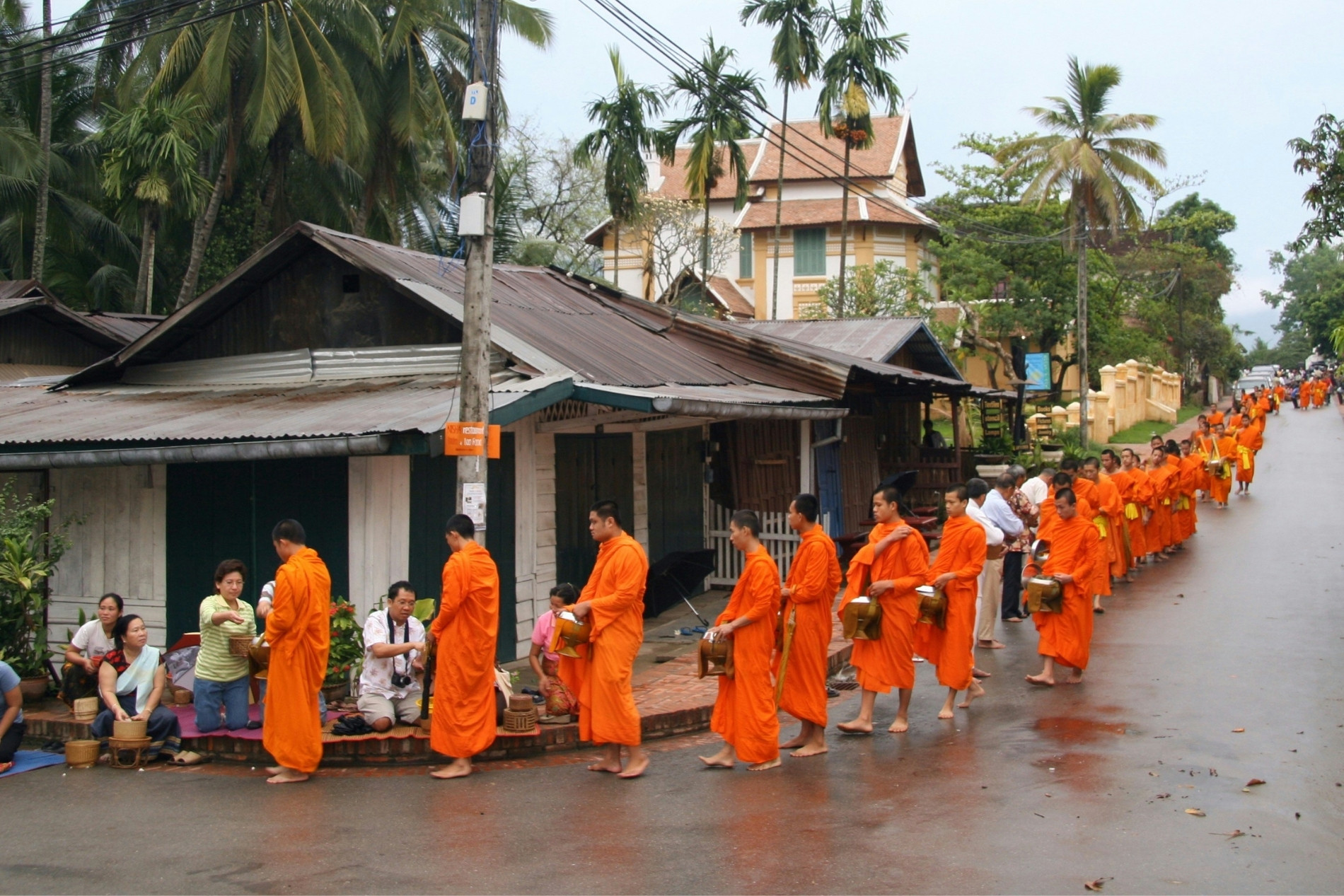
Every morning, shortly before 6am, hundreds of saffron-robed monks walk silently through the streets of the city to receive offerings from local residents. This Buddhist tradition, known as Sai Bat, is one of the oldest and most respected rituals in the country.
It is entirely possible to witness it, and even take part as a tourist. If you would like to make an offering, small stalls generally sell ready-made offering kits. You simply need to keep a respectful distance: no flash, no direct contact with the monks, and appropriate clothing. This is a genuine religious practice that should be observed discreetly.
 |  |
Discover traditional Lao crafts
Beyond Ban Chan, several villages around Luang Prabang continue to preserve ancestral crafts. In the villages surrounding the city, some families continue to work using techniques passed down through several generations.
In Ban Phanom, looms offer an insight into local textile traditions. The village is renowned for its cotton and silk fabrics. Some workshops offer complete demonstrations, from silkworm farming to the final weaving process.
In Ban Done Keo, you can observe bamboo craftsmanship directly in front of the houses. The villagers weave large baskets, among other objects. The village is not set up like a conventional tourist attraction, which is precisely what makes it an interesting discovery for travelers who want to experience local life up close.
Finally, the villages of Ban Xang Khong and Ban Xieng Lek are respectively known for traditional saa paper made from mulberry bark and silk weaving.
Our advice: prioritize visits that allow you to meet the artisans directly rather than simply visiting a souvenir shop. It is a more interesting way to understand the value and time required to make these objects.
Explore Luang Prabang by bicycle
The historic center is particularly well suited to exploring by bicycle. As you leave the peninsula, you will quickly reach quieter neighborhoods and rural landscapes. It is also a great way to discover Luang Prabang without a specific goal: cross a small bridge, follow a road along the river, stop in front of a workshop or head to a nearby village.
Organizing your stay in Luang Prabang
Where to stay in Luang Prabang for 3 days?
Two main options stand out depending on the pace of your stay. The city center, around the old town and the night market, is ideal for the first few days. Everything is within walking distance, whether temples, restaurants, cafés or markets. For a more relaxing stay, such as on the third day of your itinerary, however, we have a preference for hotels along the Mekong. After a day of sightseeing, being able to return to a garden and terrace overlooking the river really changes the experience
When to visit Luang Prabang?
The dry season, from November to April, is the most comfortable time to visit the city. We particularly recommend visiting Luang Prabang between November and February, as temperatures are mild, around 20 to 28°C, ideal for walks and climbing Mount Phousi. From March to April, temperatures rise significantly, and it is the season of agricultural burning, which affects visibility and pollution.
The rainy season, from May to October, should not necessarily be ruled out. The showers are often offset by greener vegetation, and Kuang Si Falls are at their most impressive during this period.
How many days do you need to visit Luang Prabang?
Three days are enough to cover the must-sees of Luang Prabang: the old town and its temples, Kuang Si Falls, a Mekong excursion and a first encounter with local crafts. With one extra day, you can add a cycling trip, a more in-depth silk-weaving workshop or a hike. This is the length of stay we prefer for travelers who have the time.
How to get around Luang Prabang?
The historic center is very easy to explore on foot, which is also the best way to appreciate its architecture and atmosphere.
To reach Kuang Si, the surrounding villages or more distant sites, you can use a tuk-tuk or a private vehicle. For a day combining several stops, we generally recommend a vehicle with a driver: you gain in comfort and can adapt the schedule without depending on a group itinerary.
Our tips for making the most of 3 days in Luang Prabang
Start some visits early
If you want to witness Sai Bat, the experience begins at dawn, and the first hours of the day are also very pleasant for walking around the historic center. For Kuang Si, leaving early also allows you to enjoy the pools more peacefullybefore the arrival of the many visitors (generally from 9am onwards).
Keep some free time in your itinerary
This is probably the most important piece of advice we can give you. Don't try to fill every hour of your stay in Luang Prabang. A walk without a specific itinerary is an integral part of the experience. It is precisely this slower pace that sets Luang Prabang apart from many other cultural destinations in Southeast Asia.
Pack appropriate clothing for temples
Temples are places of worship before they are tourist attractions. So make sure to bring clothing that covers your shoulders and knees and, in some temples, you will also need to remove your shoes. A light shawl in your bag can often come in handy if you forget.
Prioritize local experiences
In Luang Prabang, the best memories are not always the ones you find on postcards: they can come from meeting someone in a village, taking part in a pottery workshop or sharing a meal with a local family. When you have the choice between an additional sightseeing stop and an experience that allows you to discover local life, we recommend the latter. These moments often remain more memorable than a list of monuments checked off.