What to Do in Phuket Town: The Complete Guide to the Old Town's Must-See Attractions


When people think of Phuket, Thailand, they usually picture the famous beaches of Patong or boat trips to the surrounding islands. Yet just 30 minutes from the island's beach resorts, Phuket Old Town reveals a completely different side of the island, with colorful shopfronts, vibrant street art around every corner, incense-filled Chinese shrines, and one of the best street food scenes in southern Thailand. Here's everything you need to know to make the most of this cultural escape.
Why Visit Phuket Town?
A preserved historic district: the Sino-Portuguese heritage
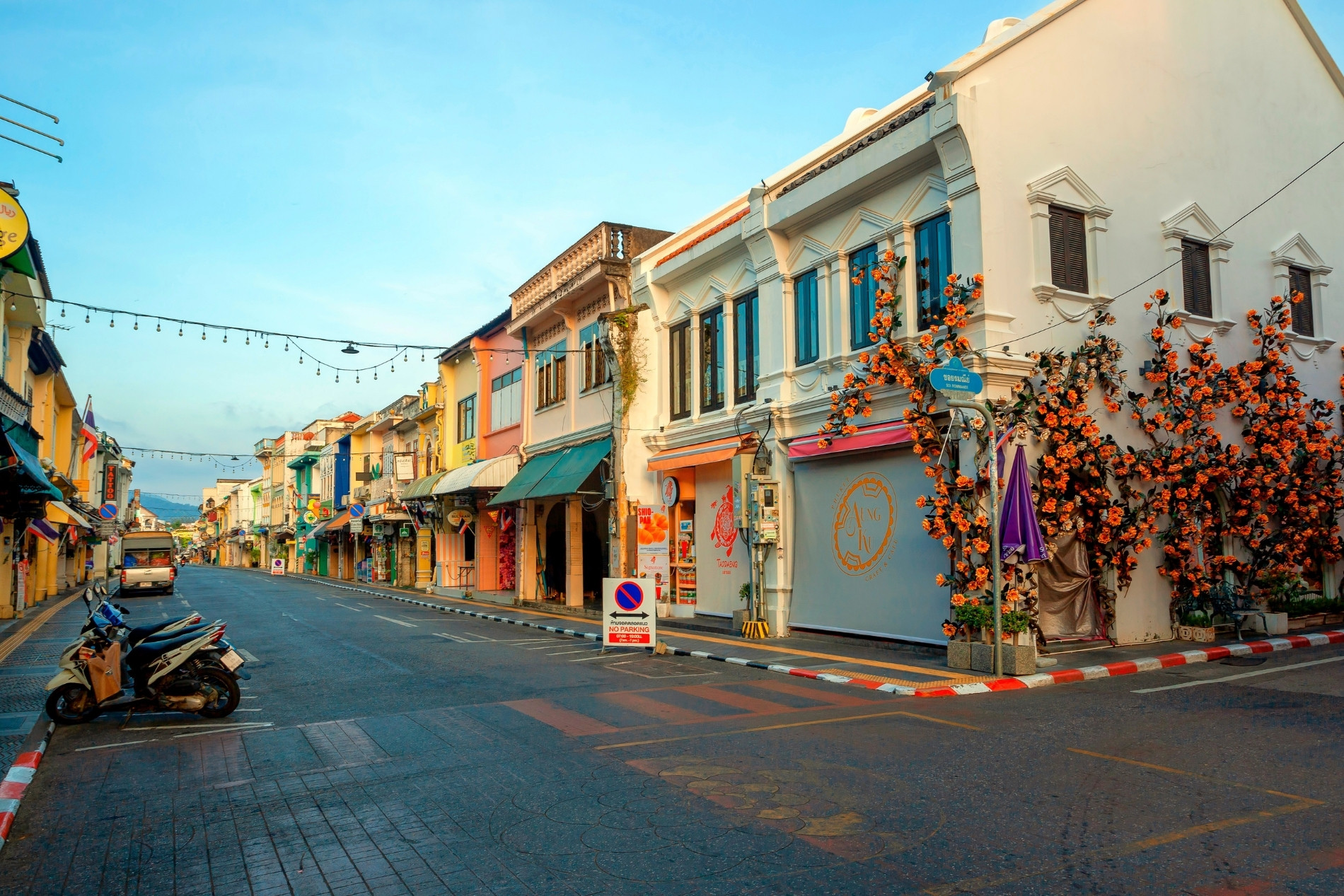
Phuket Town is unlike any other town in Thailand. Its historic center is home to one of the finest collections of Sino-Portuguese architecture in Southeast Asia, with more than 200 shophouses and colonial mansions dating from the late 19th and early 20th centuries. Five streets and two alleys have even been officially designated as a Cultural Heritage Conservation Area by the Thai government.
To understand this unique architectural style, you have to go back to Phuket's tin mining boom. From the mid-19th century onwards, thousands of Hokkien Chinese migrants, fleeing famine and political unrest in Fujian, arrived to work in the island's tin mines. Their descendants formed the Baba (or Peranakan) community, with its own distinct culture, traditions, and architecture.
This architectural style blends Portuguese influences, introduced by European merchants through the trading ports of Malacca and Penang, with Chinese decorative elements: pastel-colored facades, arched windows, carved wooden doors, ornate stucco details, and traditional Chinese roof tiles. The ground floor was typically used as a shop, while the upper floor served as the family's living quarters. These buildings are known as shophouses.
Today, many of these historic buildings have been carefully restored into cafés, art galleries, boutique hotels, and museums. Others are slowly weathering with time, giving the neighborhood its distinctive mix of faded charm and contemporary revival. And that's precisely what makes Phuket Old Town so captivating.
Phuket Town vs. Patong: What's the Difference?
The contrast couldn't be greater. Patong is all about beaches, Bangla Road, endless massage parlors, and vibrant nightlife. Phuket Town offers the complete opposite: a neighborhood that moves at a local pace, where family-run businesses line the streets and cafés invite you to slow down in the shade.
Patong attracts visitors looking for beach days and nightlife, while Phuket Town is the place to experience culture, architecture, and local gastronomy. Rather than competing with one another, the two destinations complement each other perfectly. Many travelers staying in Patong, Kata, or Karon spend a day (or at least an evening) in Phuket Town to escape the crowds and discover a different side of the island.
Our tip: if you're spending several days in Phuket, make sure to dedicate at least one full day to exploring Phuket Town.
When to Visit Phuket Town? Weather, Festivals & Best Days of the Week
Phuket has two distinct seasons. The dry season, from November to April, is the most pleasant time to visit, with sunny skies, temperatures around 30°C (86°F), and very little rain. The rainy season, from May to October, brings occasional heavy showers, but they are often short-lived, making a visit to Phuket Town perfectly worthwhile year-round.
The best day to visit Phuket Town is Sunday, when the famous Sunday Walking Street Market (Lard Yai) transforms Thalang Road into a lively pedestrian street from 4:00 PM to 10:00 PM.
If you're planning your trip around local events, here are two major festivals to keep in mind for 2026 and 2027:
Chinese New Year: February 6–20, 2027. Phuket hosts one of Thailand's biggest Chinese New Year celebrations, with dragon dances, red lanterns, and colorful parades along Thalang Road and Soi Romanee.
Phuket Vegetarian Festival: October 10–18, 2026. This is the island's most spectacular and photogenic festival, featuring religious processions, spirit mediums in trance, fire-walking ceremonies, and purification rituals centered around Jui Tui Shrine.
Please note: some of the Vegetarian Festival rituals involve body piercings and other intense acts of devotion. While they are an important part of local tradition, they may not be suitable for young children or sensitive visitors.
The Best Things to Do in Phuket Town
Thalang Road: The Heart of the Old Town
If you only have time to explore one street, make it Thalang Road. This is the historic heart of Phuket Old Town, lined with an uninterrupted row of beautifully preserved pastel-colored Sino-Portuguese shophouses in shades of pink, blue, yellow, and green. It's also where you'll find many of the area's cafés, souvenir shops, and artisan boutiques.
Be sure to wander along Dibuk Road, which runs parallel to Thalang Road and is equally charming but generally quieter, as well as Phang Nga Road, another beautiful street that forms part of the protected historic district.
Khao Rang: A Scenic Viewpoint Over Phuket Bay
Perched on one of the hills overlooking Phuket Town, Khao Rang Viewpoint is one of the city's best panoramic viewpoints. From the terrace, you'll enjoy sweeping views over the colorful rooftops of the Old Town, Phuket Bay, and, on clear days, the small islands scattered across the Andaman Sea. It's an especially beautiful spot at sunset, when the golden light bathes the city and the first lights begin to twinkle.
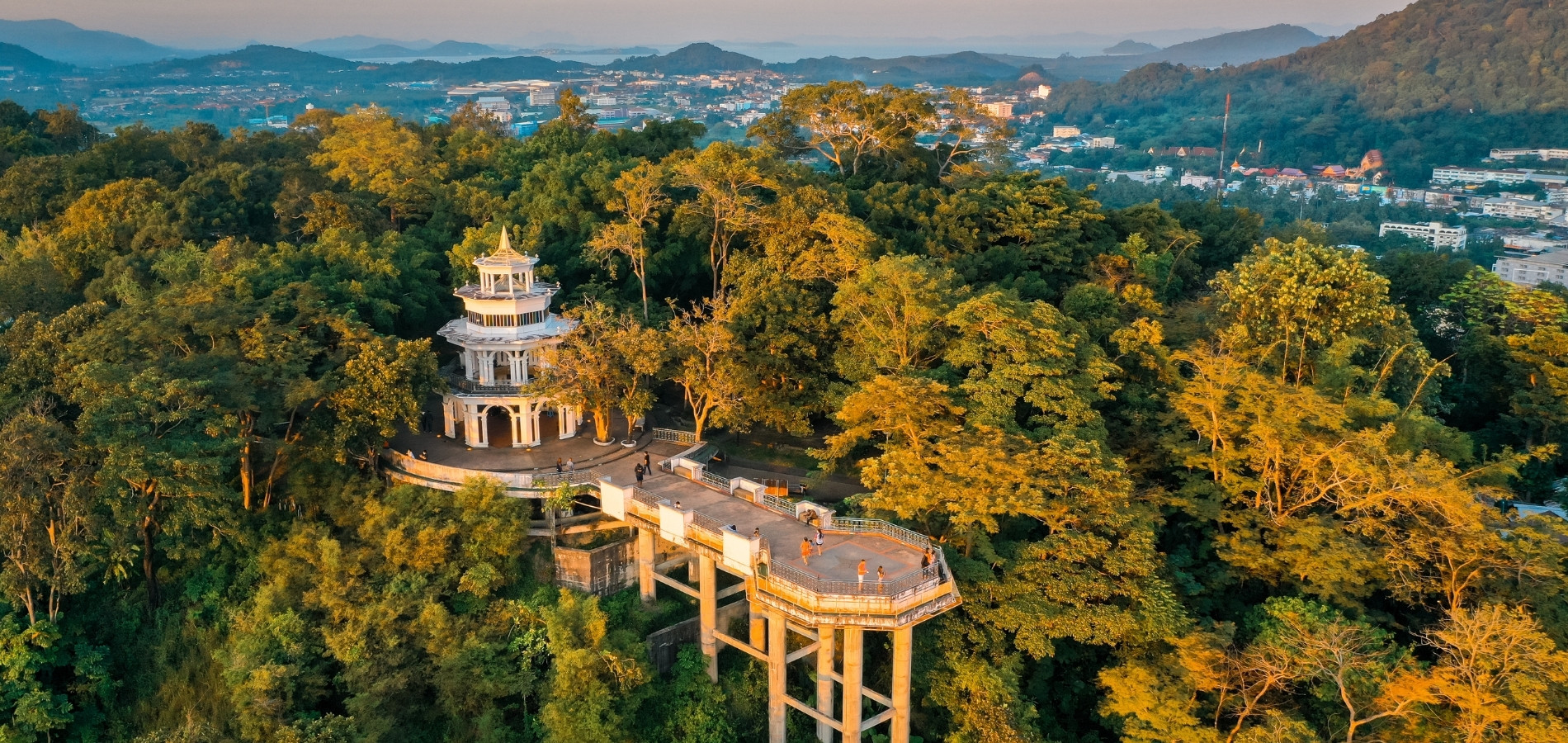
The viewpoint is also home to several cafés and restaurants with scenic terraces, as well as a shaded park where locals come to stroll or exercise in the late afternoon. You'll often spot wild macaques living on the hillside. Although they are used to seeing people, it's best not to feed them or get too close, as they can become aggressive when they associate visitors with food.
Chinese Shrines You Shouldn't Miss
Phuket Town's Chinese heritage is also reflected in its many Chinese shrines (known as san chao in Thai), which shouldn't be confused with traditional Buddhist temples.
Jui Tui Shrine (Soi Phutorn, Ranong Road) is the island's most important Chinese shrine. Built to honor Kew Ong, one of the Nine Emperor Gods, it is open daily from 6:00 AM to 8:00 PM, free to visit, and serves as the spiritual heart of the Phuket Vegetarian Festival. Even outside the festival, its red dragon decorations, intricate architecture, and fragrant incense make it well worth a visit.
San Chao Saengtham, tucked away behind a discreet entrance on Phang Nga Road, is one of Phuket Town's hidden gems. This intimate shrine is richly decorated with carved wooden panels, colorful murals, and religious statues.
Bang Neow Shrine, located on Phuket Road, is instantly recognizable thanks to its dragon-covered pillars and its large statue of Kuan Yin, the Goddess of Mercy.
As with all temples in Thailand, remember to cover your shoulders and knees, remove your shoes before entering the sacred buildings, and avoid pointing your feet toward the statues.
Museums to Learn About Phuket's History
To better understand Phuket Town's rich heritage, two museums are particularly worth visiting.
The Thai Hua Museum (28 Krabi Road) is arguably the best place to begin. Housed in a beautifully restored Sino-Portuguese mansion built in 1934 that once served as a Chinese school, it tells the story of the Hokkien migrants, the island's tin mining boom, the rise of the Baba community, and the architectural development of Phuket Old Town. The museum is open daily from 9:00 AM to 5:00 PM, with an admission fee of 200 baht (around US$6).
The Phuket Baba Museum, located at the intersection of Phang Nga Road and Phuket Road, focuses on Peranakan culture. Inside, you'll find antique furniture, traditional Baba clothing, jewelry, interactive digital exhibits, and even a virtual reality experience that brings the island's history to life. The iconic Clock Tower nearby regularly hosts contemporary art exhibitions, and admission is free.
Where to Eat and Drink in Phuket Town
Street Food and Night Markets
Phuket Town has been recognized by UNESCO as a Creative City of Gastronomy, and for good reason. Its cuisine blends Thai, Chinese, and Malay influences into a unique culinary identity. Here are a few local specialties you shouldn't miss:
Mee Hokkien: thick yellow noodles stir-fried with seafood, egg, and soy sauce—the signature dish of Phuket's Sino-Thai cuisine.
O-Tao: a crispy oyster and taro omelet cooked on a hot griddle.
O-Aew: a refreshing shaved ice dessert made with banana jelly and sweet syrup, perfect on a hot day.
Moo Hong: slow-braised pork cooked with Chinese five-spice, a classic Hokkien recipe.
Here are some of our favorite places to try them:
Sunday Walking Street Market, held every Sunday on Thalang Road. It's the perfect place to sample local specialties while browsing handicrafts and souvenirs. An extension of the market also takes place along Phang Nga Road, which is generally less crowded during the high season.
Chillva Market, open Thursday to Saturday evenings. A more modern night market where you'll find everything from street food to fashion and live music.
Raya Restaurant, a Michelin Guide favorite serving traditional Phuket cuisine. Reservations are highly recommended, as it can fill up quickly.
For dessert, don't miss Thaivetro Oldtown Ice Cream. Every flavor is delicious, with original options such as Tom Yum and Thai Tea ice cream.
Bars & Rooftops for the Evening
Phuket Town's nightlife is nothing like Patong's. Instead of loud clubs and beach parties, you'll find a more relaxed, local atmosphere centered around cocktail bars, live music venues, and a handful of rooftop spots.
The Loof Bar & Co is a hidden rooftop bar located on the third floor of Elle Café, right in the heart of Thalang Road. It's one of the few rooftop terraces in the Old Town and the perfect place to enjoy a cocktail while watching the sun set over the colorful Chinese rooftops. Keep in mind that it's a small venue with only a few tables.
Anfield Café is a Liverpool FC-themed pub housed inside a traditional shophouse. Football scarves from around the world decorate the walls, while locals and travelers gather to enjoy live music almost every evening, usually a mix of Thai reggae and British classic rock. The reasonably priced draft beers and excellent Thai food make it a great place to spend the evening, even if you're not a football fan.
For something completely different, head to Mad Hog Tavern. This Harry Potter-themed bar and restaurant recreates the atmosphere of the Hog's Head Inn, complete with a crooked entrance, dragon skeleton hanging from the ceiling, gargoyles, and even a replica of Diagon Alley in the courtyard. Don't leave without trying their homemade Butterbeer.
Finally, The Library is arguably Phuket Town's liveliest cocktail bar. Hidden behind a discreet façade designed to resemble an old library, the venue features floor-to-ceiling bookshelves and is divided into two distinct spaces: a cozy lounge area for drinks and conversation, and a hidden speakeasy-style room in the back with DJs and live performances. The talented mixologists are known for creating original signature cocktails.
Keep in mind that Phuket Town tends to wind down fairly early during the week, with most bars closing around midnight. The liveliest atmosphere can be found on weekends, especially on Sunday evenings during the Lard Yai Walking Street Market.
Sunday Walking Street Market (Lard Yai)
 | 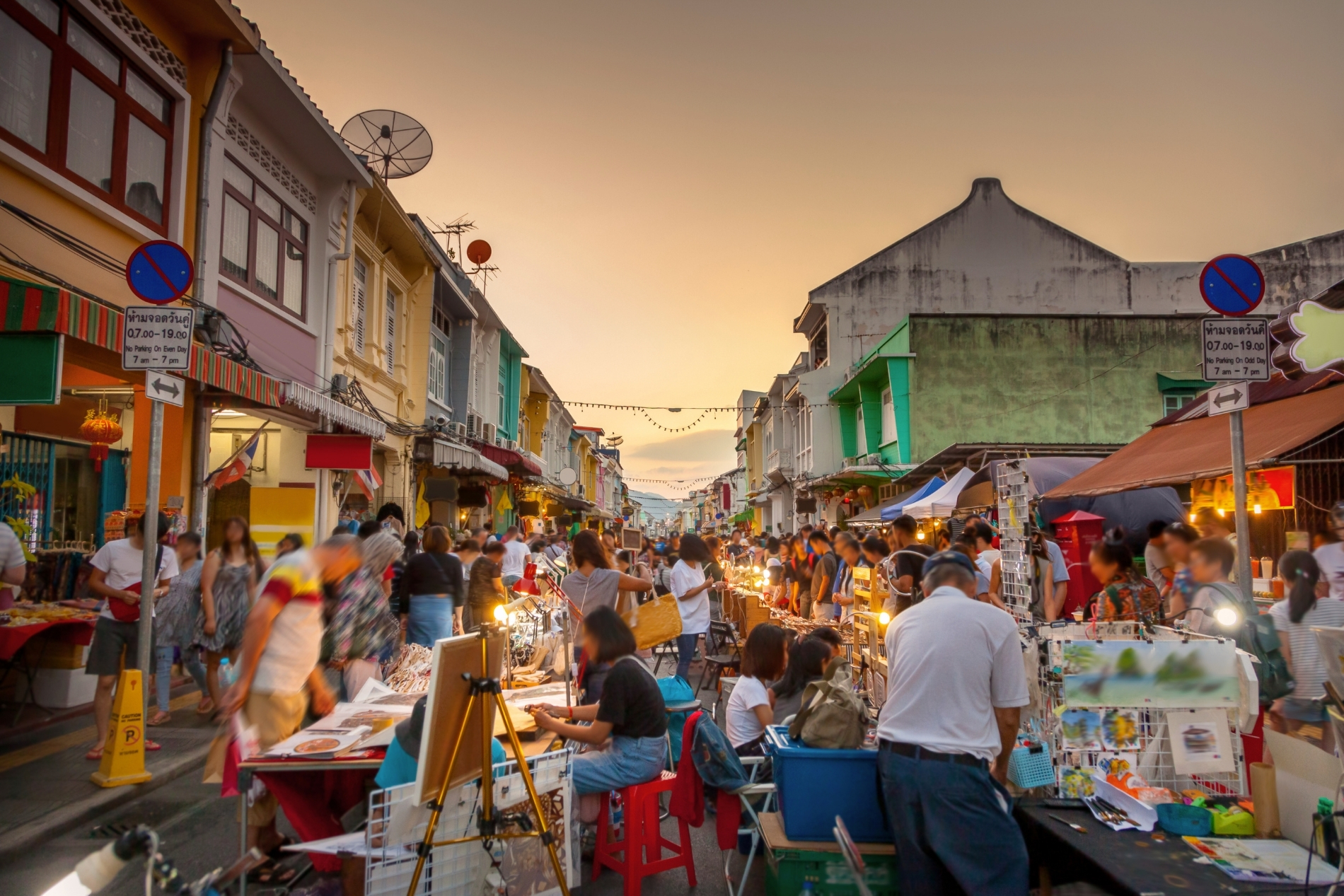 |
If there's one event you shouldn't miss, it's this one. Every Sunday from 4:00 PM to 10:00 PM, Thalang Road is transformed into the Lard Yai Walking Street Market, the island's most iconic street market.
Expect dozens of street food stalls (with dishes typically costing 30–60 baht, or less than US$2), local handicrafts, vintage clothing, home décor, and live musical performances throughout the evening. It's also one of the best times to experience Phuket Old Town at its most vibrant, as the historic buildings are beautifully illuminated and the atmosphere is festive without feeling overwhelming.
A few practical tips: bring cash in small denominations, as most vendors don't accept credit cards, arrive around 5:00 PM to beat the biggest crowds, and sample several small dishes instead of filling up on just one.
While you're there, don't forget to explore Phang Nga Road, where an extension of the Sunday market offers a more local, less touristy atmosphere while remaining just as enjoyable.
