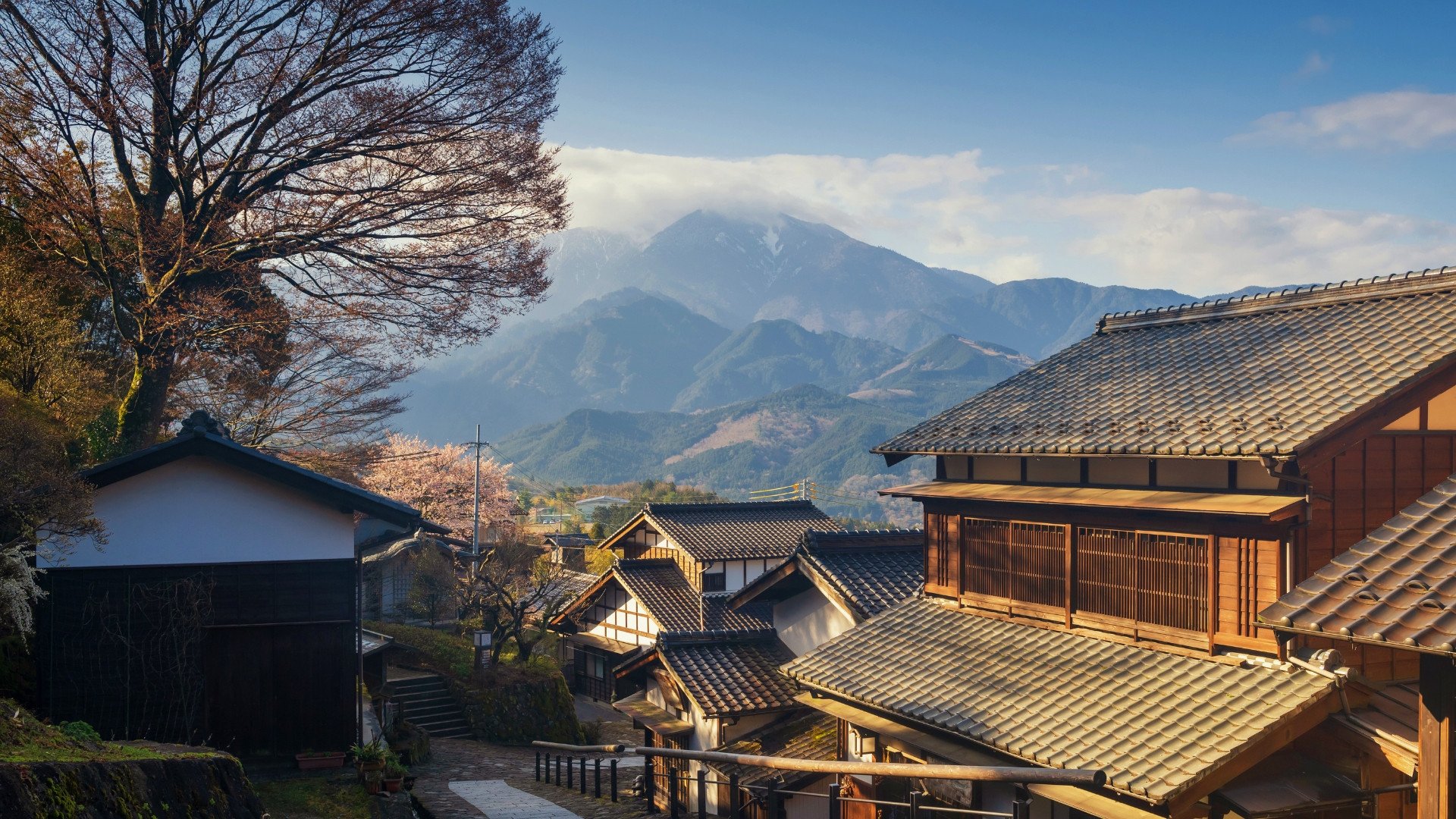
Magome
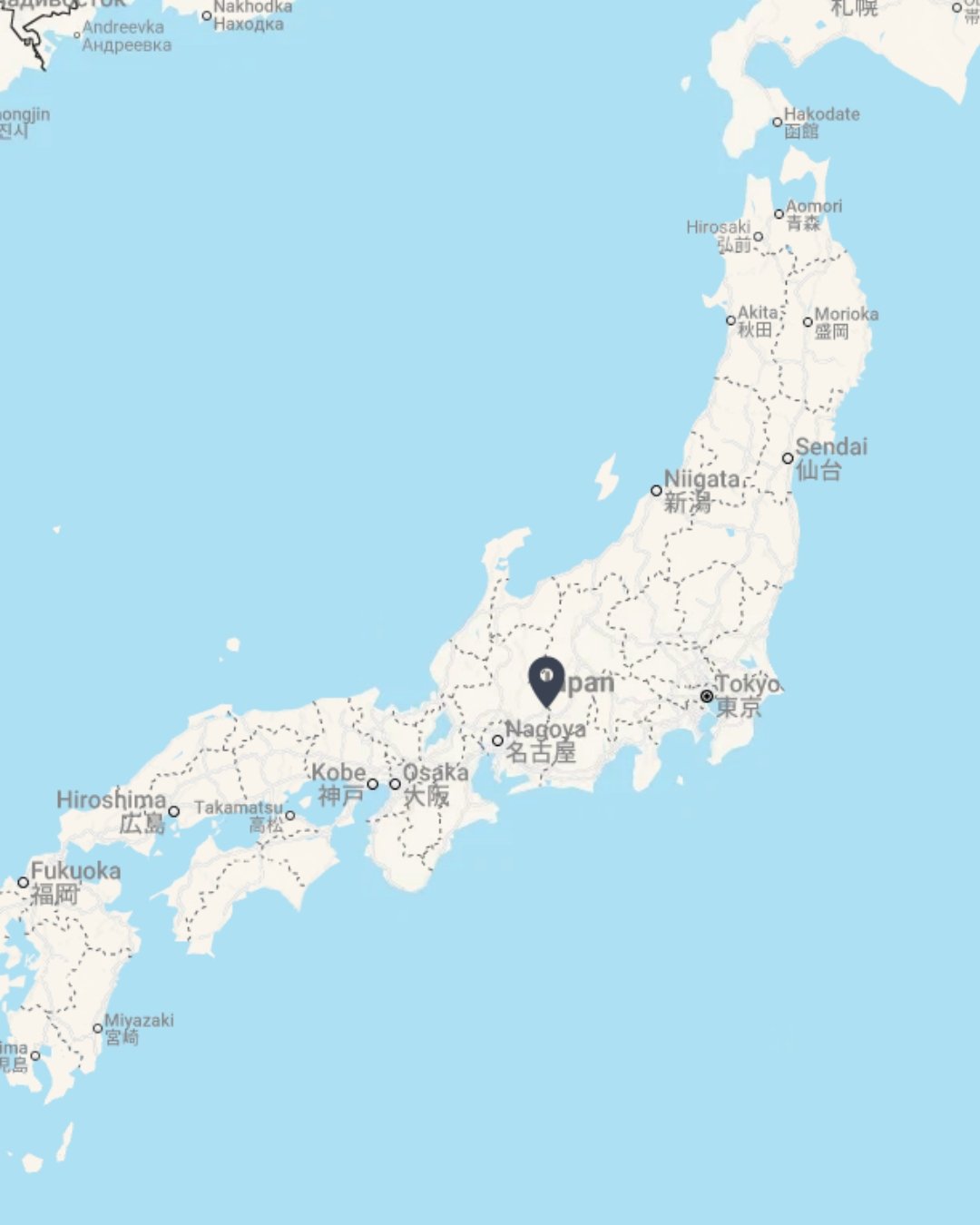
Magome is a former post town on the Nakasendō, located at the southern end of the Kiso Valley. During the Edo period, this mountain road linked Edo (present-day Tokyo) to Kyoto, and travellers stopped in Magome to eat and sleep. It was the 43rd of the 69 post towns along the route, counting from Edo. The village is built along a steep cobbled street lined with low-roofed wooden houses, inns and small shops. This is where the eight-kilometre trail to Tsumago, another post town on the Nakasendō, begins, running through a forest of cedar and cypress.
Magome at a glance

Magome can be visited in a morning, but I often recommend spending a night there. During the day, the main street is busy, especially with hikers setting off for Tsumago. In the late afternoon, the shops close and the village empties out. The next day, if you head out early, you have the street almost to yourself. It’s the right time to walk up to the very top of the village, to the viewpoint near the old kōsatsuba, the board where official edicts were once posted. On a clear day, you can see Mount Ena.
On the way back down, I always stop for a gohei mochi, a pounded rice cake grilled on a skewer and coated in a miso and walnut sauce. You’ll find them all along the street. In autumn, there are also kuri kinton, small chestnut sweets that are a speciality of Nakatsugawa. And on the way to Tsumago, take the time to stop at the Ichikokutochi tea house. It’s an old farmhouse where tea is served to hikers free of charge.

Frédérique
Japan Expert 🇯🇵
WHAT TO SEE IN MAGOME
What SEASON to go to Magome?
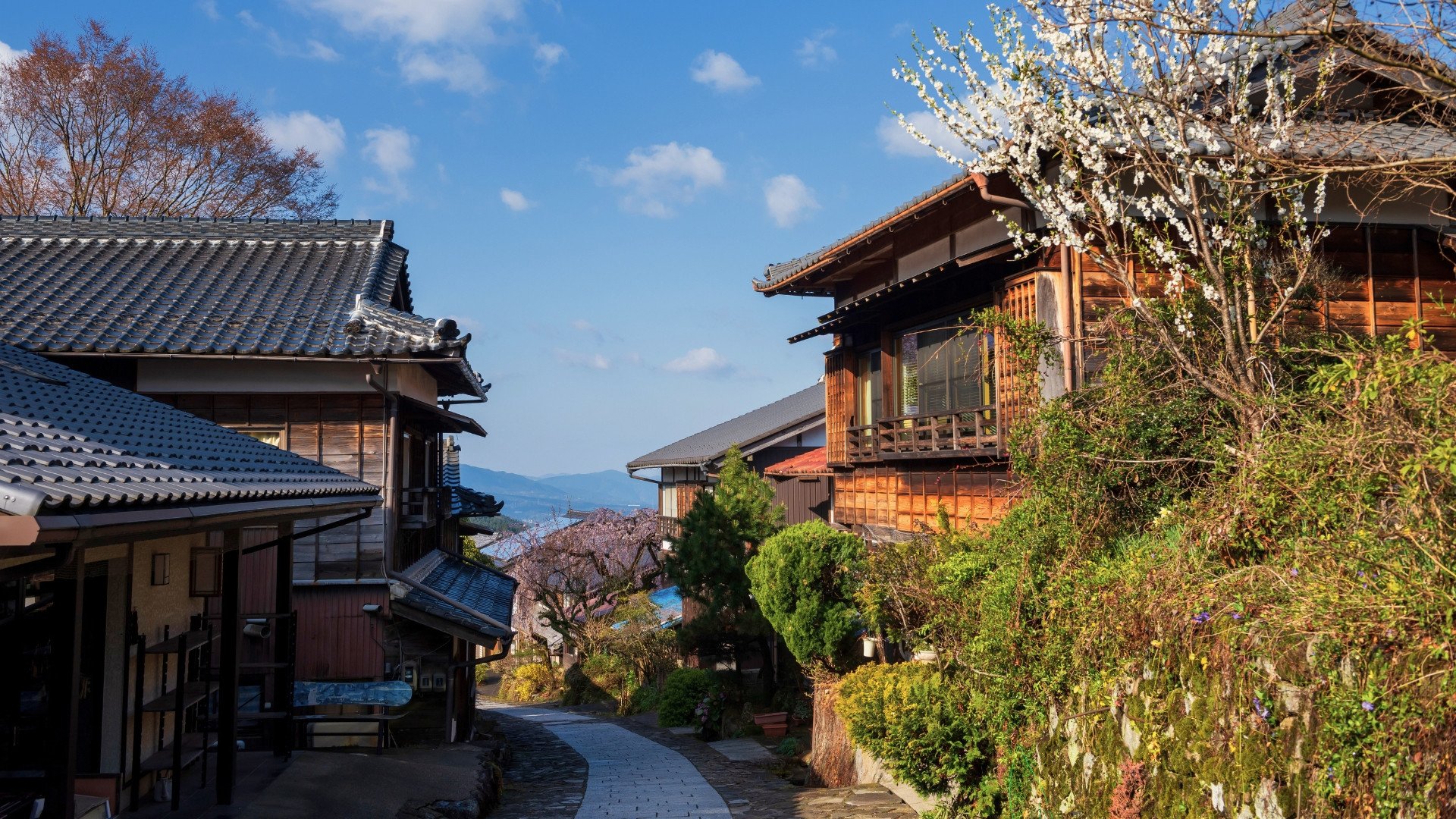
Spring (April and May) and autumn (October to mid-November) are the two best seasons to enjoy the Kiso Valley, because that is when the hike between Magome and Tsumago is most pleasant. In April, the cherry trees blossom in the villages and the forest regains its colour. Autumn is our favourite season for walking. It’s cool, the air is dry, and from early November the maples turn red along the trail. If you are in Tsumago on 23 November, a period costume parade re-enacts the arrival of a procession on the Nakasendō.
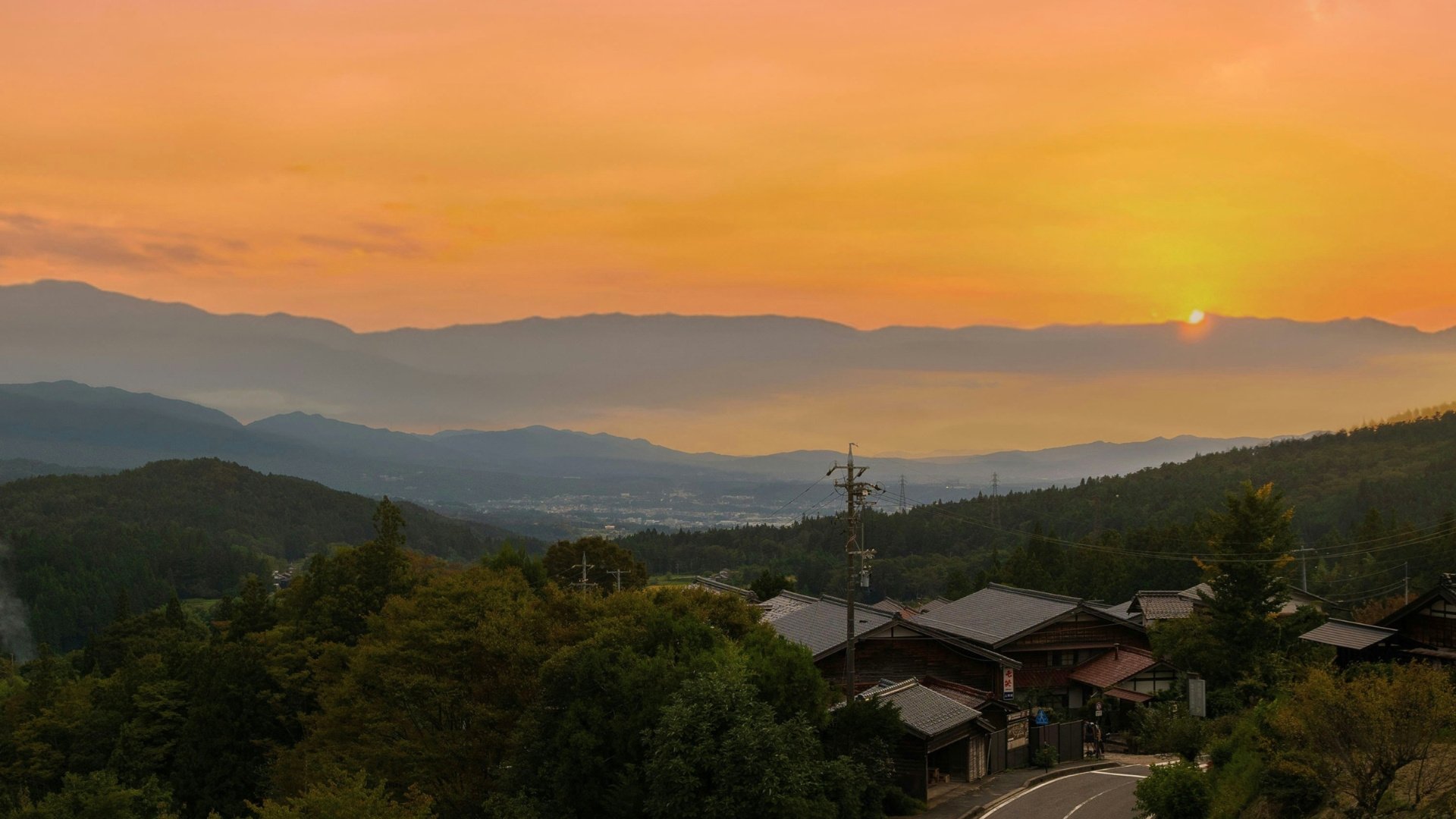
Summer shouldn’t be ruled out, though. It’s hot, but the hike is almost entirely in the shade of the trees, and evenings are cooler than in Tokyo or Kyoto. It’s simply best to avoid the rainy season, from June to mid-July. In winter, snow often covers the village rooftops and there are hardly any visitors, which gives a completely different picture of Magome and Tsumago. It’s cold and the trail can be slippery, so it’s more a season for travellers who come mainly for the villages and a night at an inn.
