Visiting Phatthalung in Thailand: discovering Thale Noi

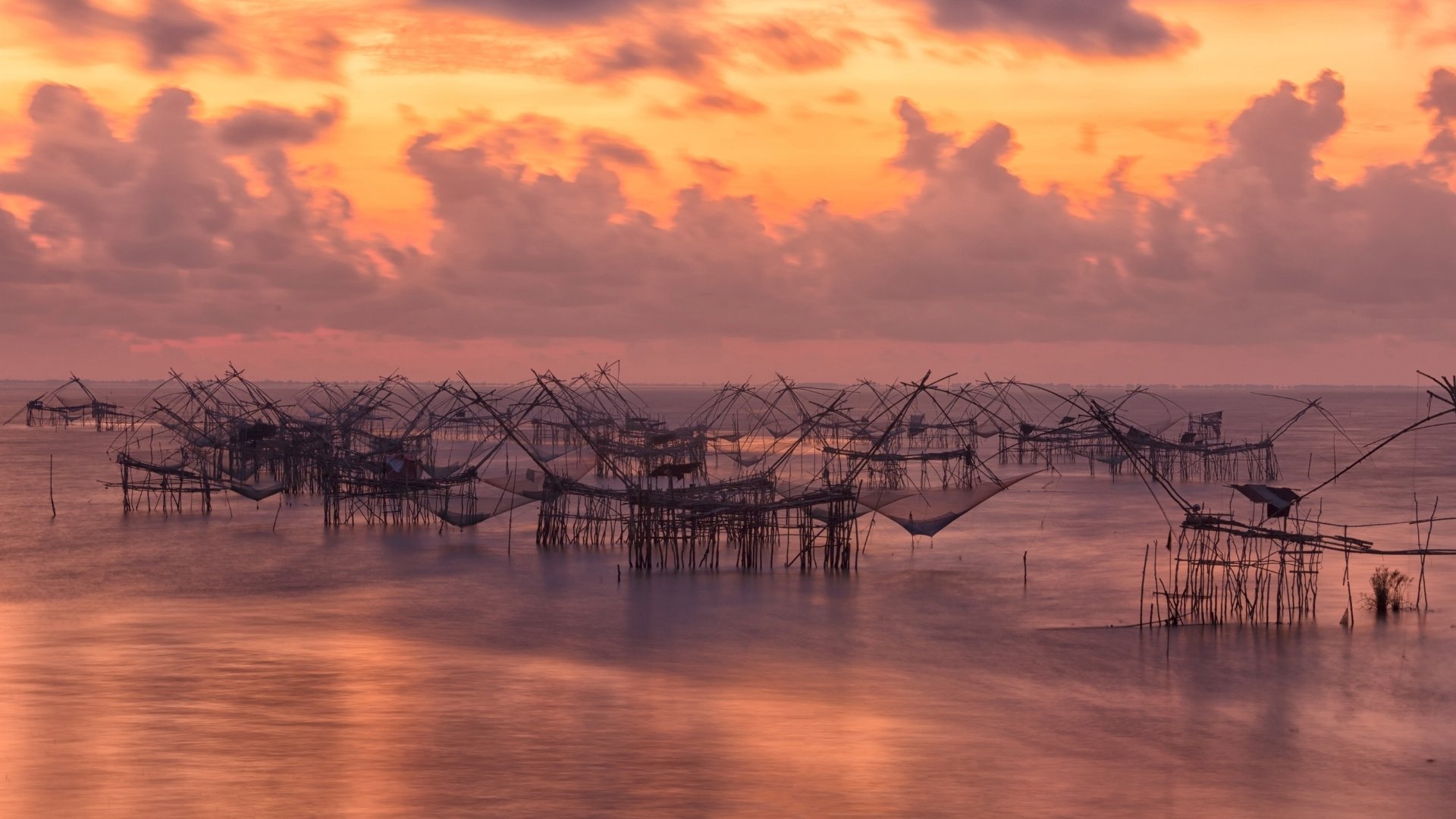
There are still places in Thailand that remain off the beaten track. Phatthalung is one of them. Tucked between the limestone mountains of the South and the western shore of the country's largest lake, this province still lives to the rhythm of rice paddies, fishing boats, and the lotus flowers that cover the water every dry season. Here's everything you need to know before venturing into this authentic province.
Songkhla Lake in Phatthalung: what exactly is it?
A lake made of three basins: Thale Noi, Thale Luang, Thale Sap
"Songkhla Lake" is often talked about as if it were a single body of water, but in reality, it's a system of interconnected lagoons spanning three provinces of southern Thailand: Phatthalung, Songkhla, and Nakhon Si Thammarat. On the Phatthalung side, it's mainly Thale Noi ("the little sea" in Thai) that draws travelers. It's the northernmost and least saline part of the system, separated from the larger Thale Luang basin by a simple sandbank.
Thale Noi is a freshwater marsh covering about 28 km², surrounded by a protected wetland that extends over nearly 460 km². The site has been a Ramsar-listed wetland since 1998, meaning it's officially recognized as a wetland of international importance, particularly for the biodiversity it shelters: aquatic plants, migratory birds, and a small population of Irrawaddy dolphins, an endangered species.
Around the water, the landscape remains shaped by traditional activities: more than 5,000 families still make their living from fishing, water buffalo farming, rice growing, or basket weaving in the Thale Noi area.
A province still untouched by mass tourism
Phatthalung is located about 850 km south of Bangkok, on the Malay Peninsula, between the provinces of Nakhon Si Thammarat, Trang, and Songkhla. Historically tied to the latter, the province has long lived off rice farming and fishing, in the shadow of two limestone mountains that frame the town: Khao Ok Thalu and Khao Hua Taek.
Despite its natural and cultural assets, and although we consider it a must-visit destination in Thailand, Phatthalung remains very little visited by foreign travelers. Most visitors here are Thai, especially on weekends. This low profile is easy to explain: the province has no airport, so you have to go through Trang or Hat Yai to reach it, and it sits off the main tourist routes of the South, between much more publicized destinations like Krabi or Phuket.
That's also what makes it interesting: you get to discover a southern Thailand without the crowds, where traditions (shadow puppet theatre, still performed only in Thai, Nora dance, basket weaving) are still practiced daily rather than for tourists.
What to see and do around Songkhla Lake in Phatthalung
A boat ride on Thale Noi
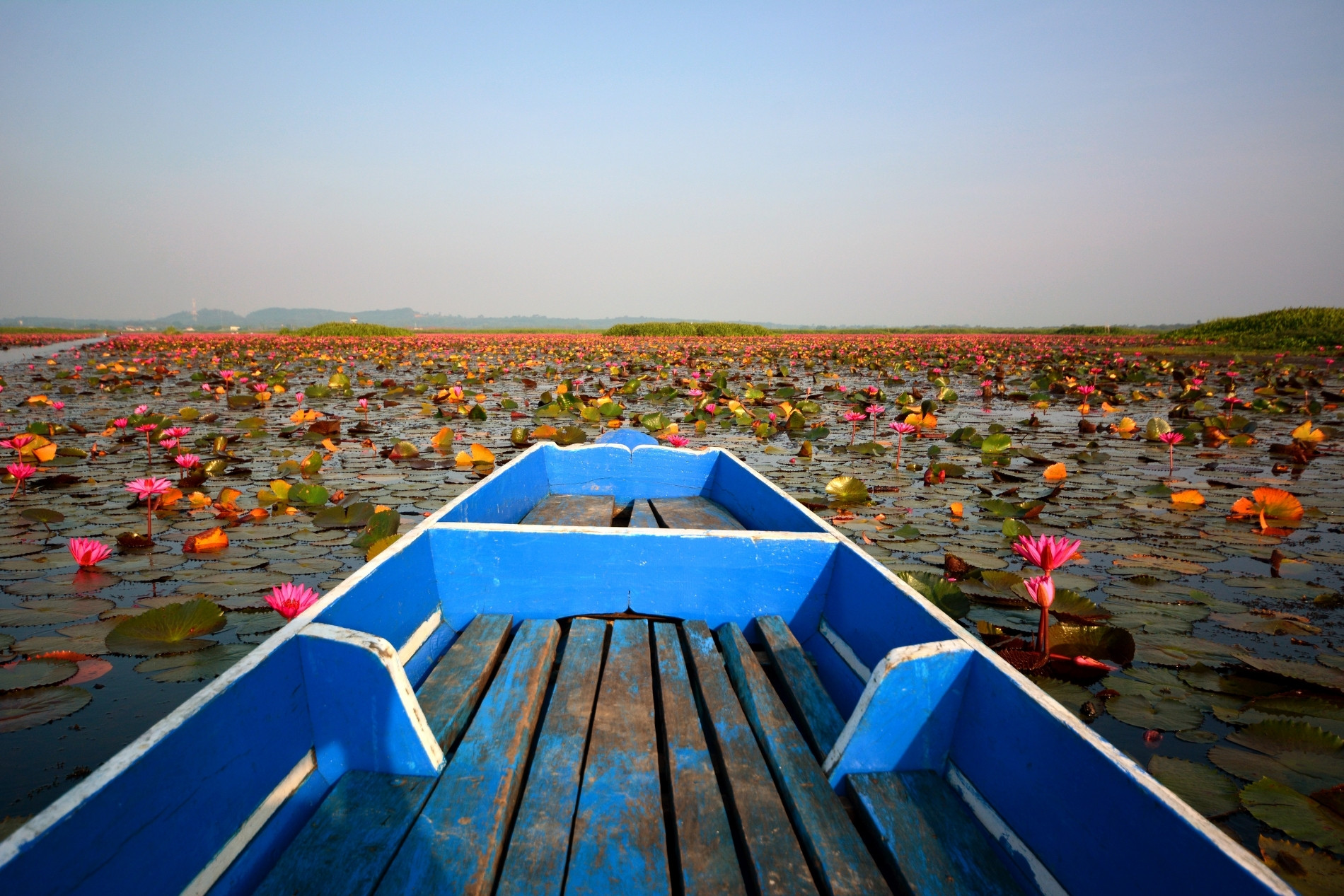
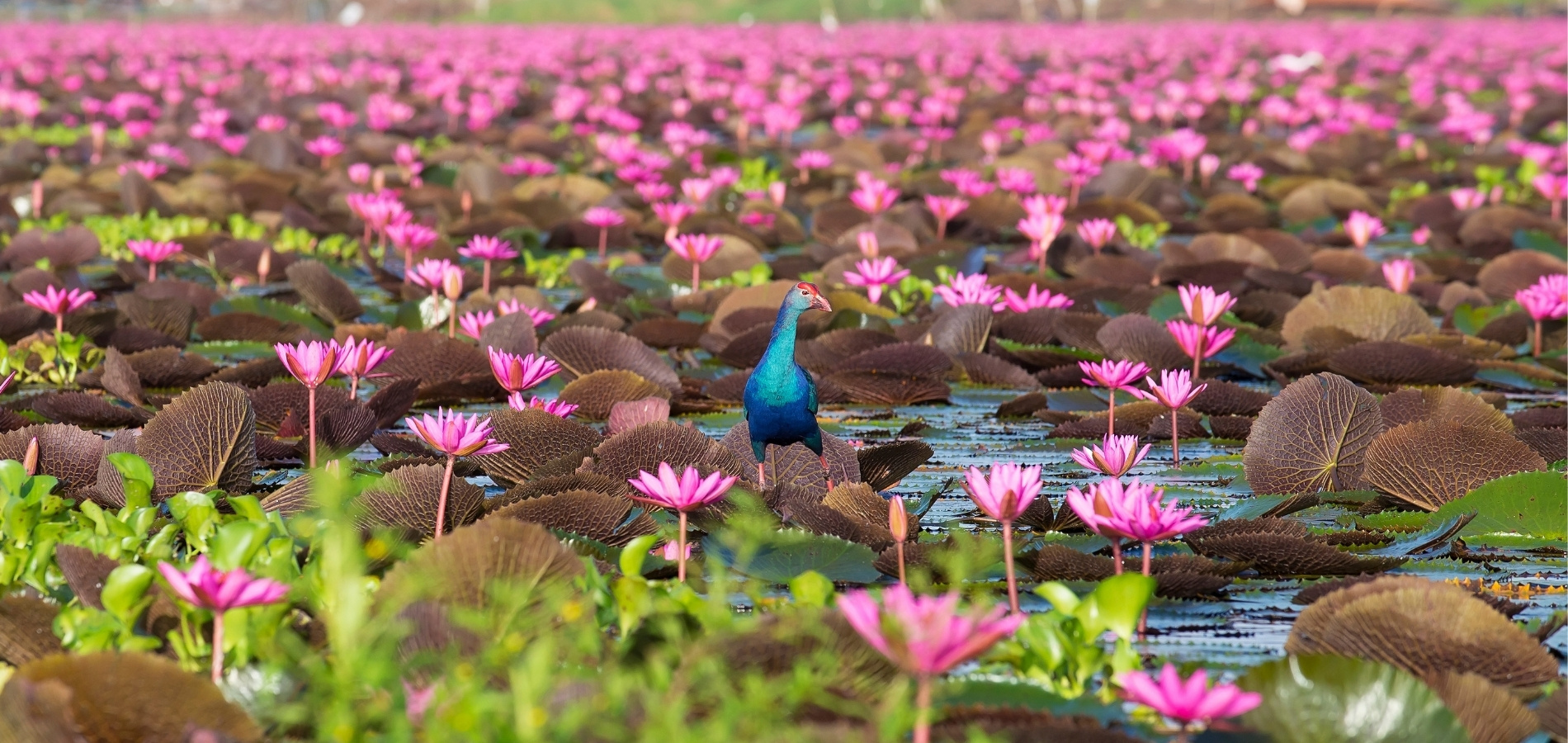
This is the must-do activity in the region. From the Thale Noi pier, board a traditional longtail boat for a ride that generally lasts between one and two hours. The scenery changes completely depending on the season: a carpet of pink lotus flowers in February and March, flocks of migratory birds in winter, or simply calm water reflecting the clouds the rest of the year.
 | 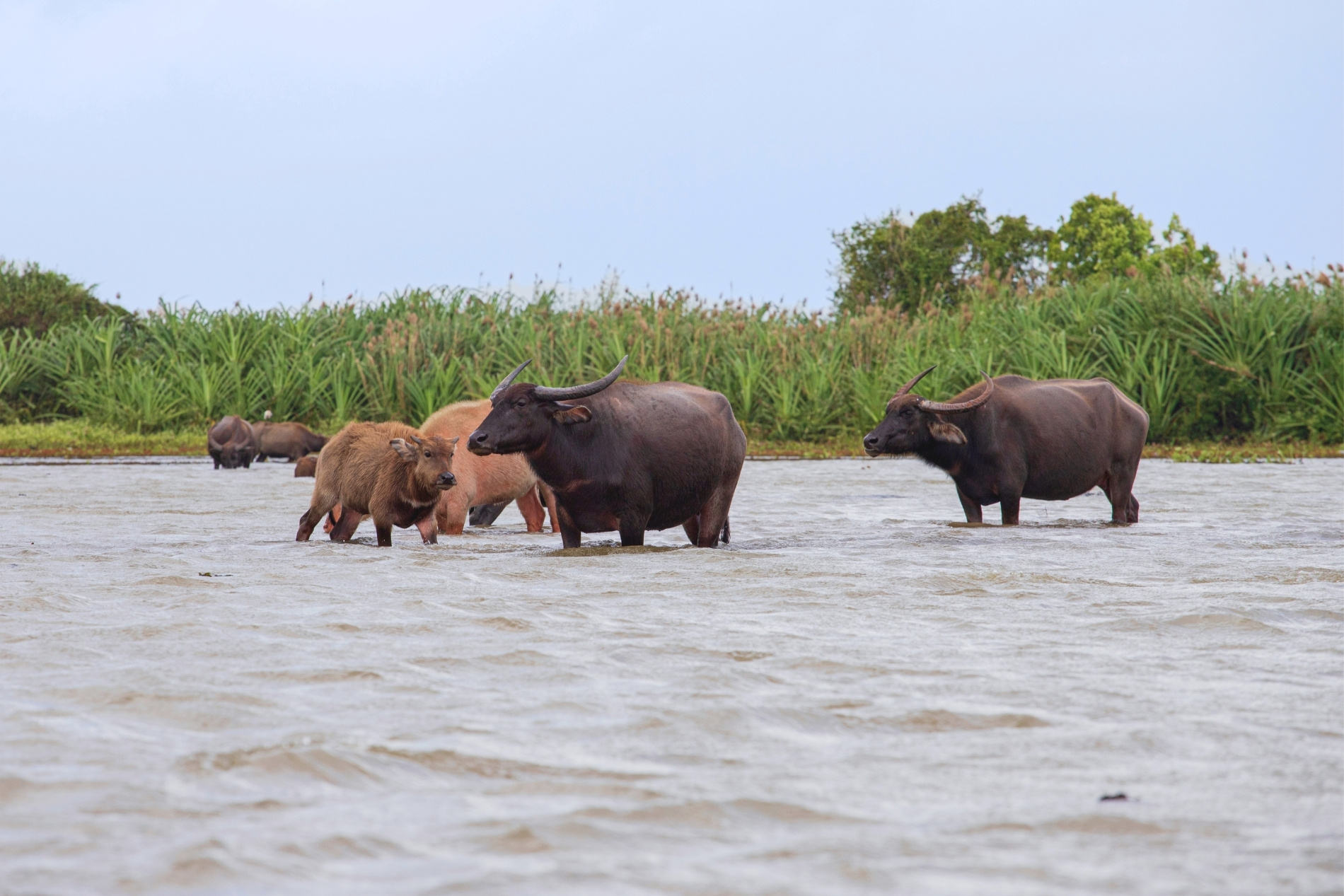 |
Along the way, you'll come across the famous "yo," square fishing nets mounted on wooden frames that local fishermen haul up by hand. You'll also see water buffalo grazing on the few patches of emerged grass. As for birdlife, you may spot purple herons, egrets, cormorants, kingfishers, and, more occasionally, bee-eaters.
To make the most of this activity, set off at daybreak. The first boats leave the pier around 5 or 6 a.m., when the morning light gives the lake its most photogenic colors. This is also when bird activity is at its peak. And if you're visiting Phatthalung during flowering season, it's worth knowing that the lotus flowers usually close around 10-11 a.m. to protect themselves from the sun.
Entry to the site is free; only the boat rental is charged.
The climb up Khao Ok Thalu
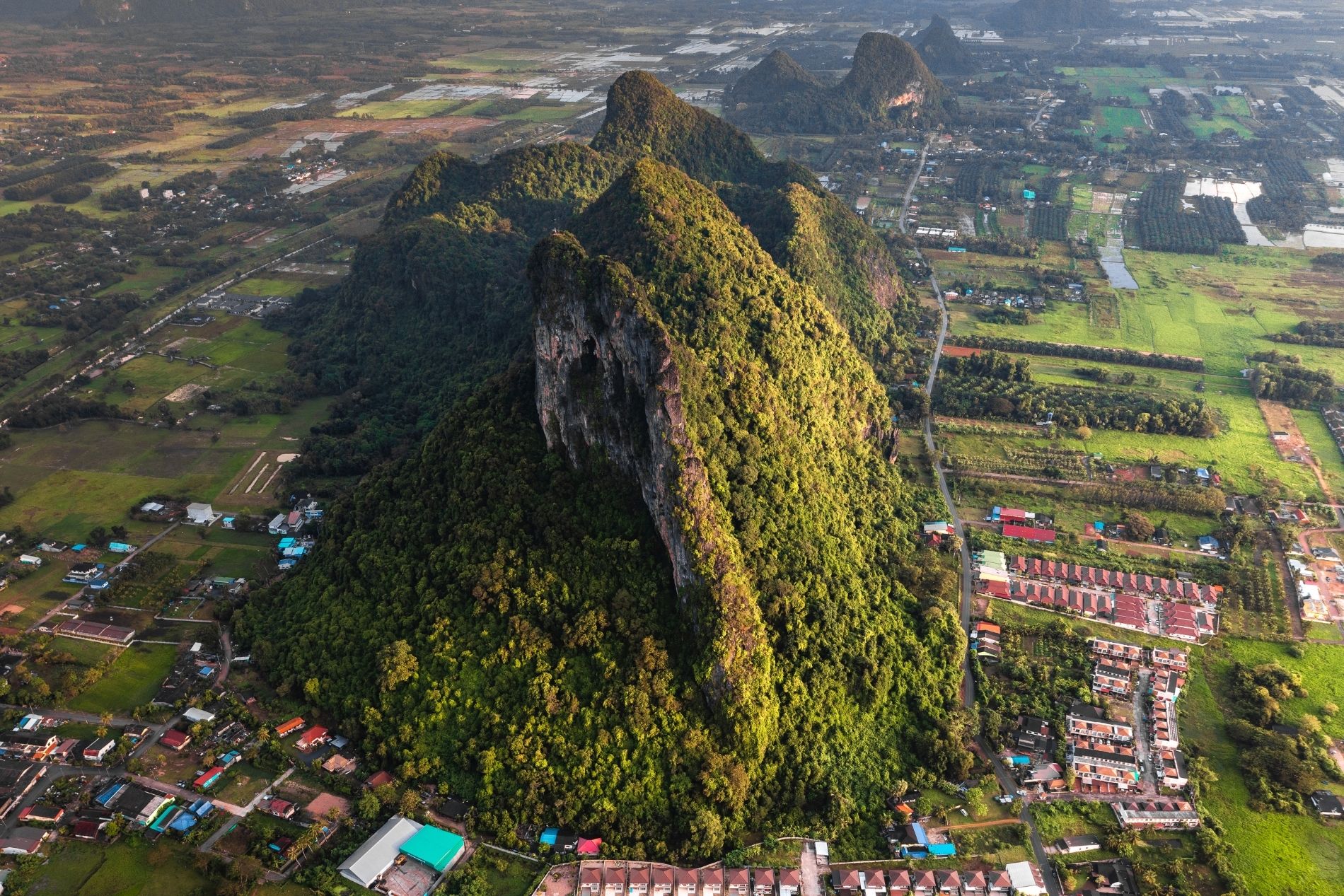
Visible from almost every point in town, Khao Ok Thalu ("the mountain with the pierced chest") is the symbol of Phatthalung: a limestone peak about 250 meters high, pierced near its summit by a natural cavity visible from afar.
The climb follows a staircase up the mountainside, with two options. The first, more accessible stretch leads to a platform and then to the cave temple of Wat Tham Khuha Sawan, with lovely views over the surrounding plain. The full climb to the summit cavity, meanwhile, involves around 1,000 steps and requires good physical fitness. Allow 1.5 to 2 hours round trip, ideally starting early to avoid the heat.
At the top, you can see through the cavity itself, but the real highlight lies a little further up. By following a rope fixed on the right, you reach a 360° viewpoint over the town of Phatthalung and the lake, far more impressive. This final stretch is more physical, though, as you need to pull yourself up using your arms. We don't recommend it for children or those who aren't comfortable with physical exertion.
 |  |
Reed weaving and local craftsmanship
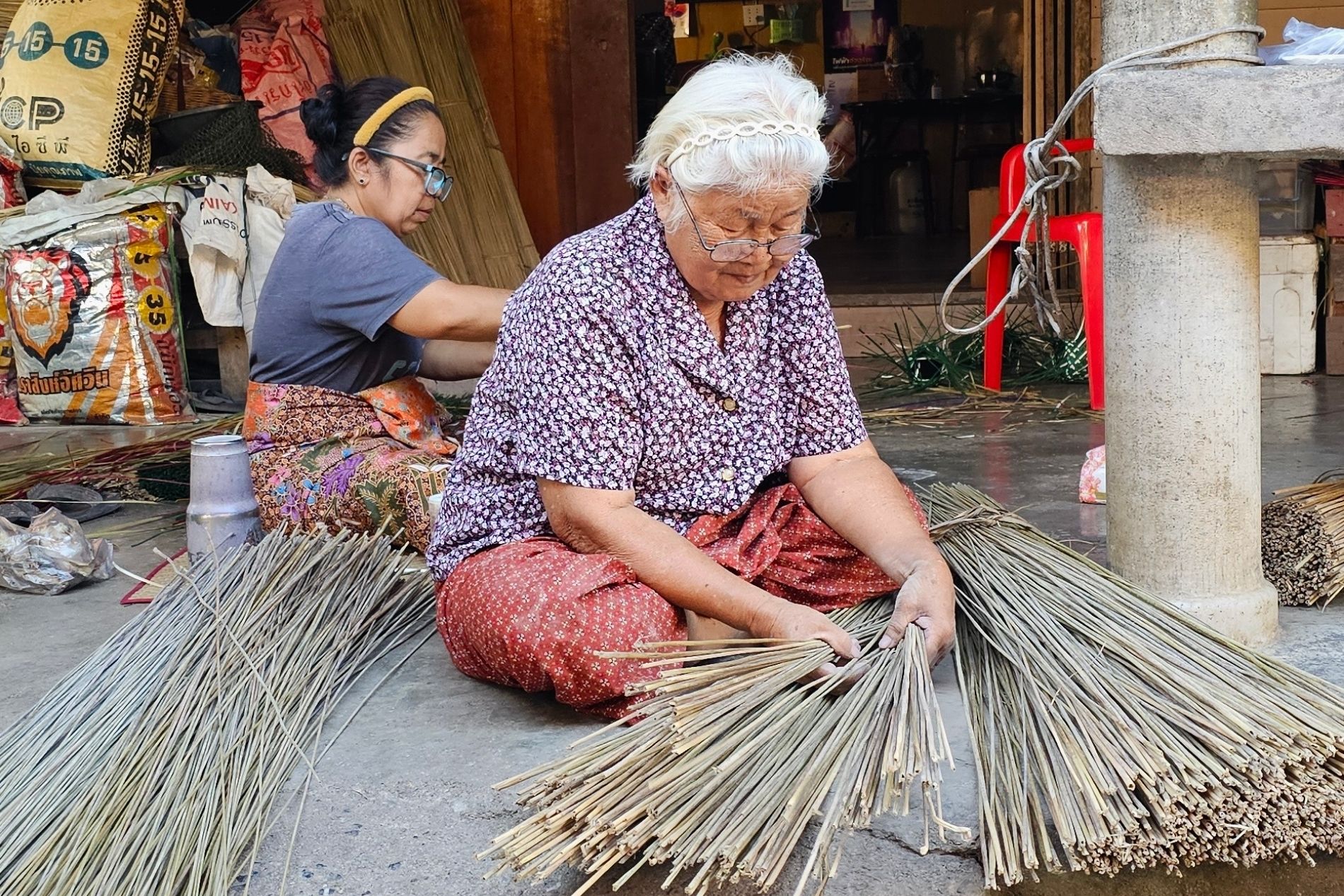
Krajood, an aquatic plant related to reeds, grows abundantly around Thale Noi. Local women harvest it and dry it outside their homes before weaving it into mats, bags, hats, or baskets. This know-how, passed down through generations, can be seen in several cooperatives and craft centers in the area, where visitors can watch villagers hand-weave krajood and buy their creations directly on site.
It's also a chance to discover Sang Yod rice, grown organically in some villages near Thale Noi, such as Baan Chang. A walk through the rice paddies will help you understand how this brown rice, typical of the province, is grown.
Nang Talung shadow puppet theatre
Few travelers know it, but the very name of this shadow puppet theatre comes from Phatthalung: "Nang Talung" literally means "the hides of Talung," referring to the province's shortened name. This form of shadow theatre, originating in southern Thailand, features flat puppets made of buffalo or cow leather, hand-cut and perforated by a craftsman. The puppeteer, positioned behind a lit white screen, plays every character alone, singing and improvising dialogue often laced with humor and social satire.
Attending a performance takes a bit of planning. Since shows aren't put on daily for tourists, it's best to ask locally, particularly at the Bang Kaeo craft center, where some masters offer demonstrations by reservation. Otherwise, we recommend arranging a guide or interpreter, as performances are held in Thai.
When and how to get to Phatthalung
The best season for pink lotus flowers and migratory birds
Phatthalung's climate follows the classic pattern of southern Thailand, with a dry season from December to April and a rainy season for the rest of the year. There are two things to keep in mind when planning your trip:
Thale Noi's pink lotus flowers bloom mainly between February and April, with peak flowering in February and March. Outside this period, especially during the rainy season, the flowers become much rarer.
Migratory birds stay on the lake between November and March, with activity at its most intense early in the morning.
In both cases, the ideal time for a boat trip is at daybreak. We also recommend avoiding weekends and Thai public holidays, when local crowds on the lake are at their highest.
How to get to Phatthalung
Phatthalung has no airport, so here are the options for getting there from Bangkok:
By train: the town is served by the main southern railway line, departing from Krung Thep Aphiwat station in Bangkok. The journey is long, around 14 hours, which typically makes it an overnight trip. We strongly recommend booking a sleeper berth in advance.
By plane then bus: the fastest option is to fly to Trang or Hat Yai, then reach Phatthalung in about two hours by bus or minivan.
By long-distance bus: direct buses run from the Sai Tai Mai terminal in Bangkok, but again expect around 14 hours of travel.
For travelers coming from the South, such as Krabi, there's no direct air or rail link. The simplest solution is to reach Trang by bus or minivan, then transfer to Phatthalung. Allow around 4 hours of travel in total.
Practical tips for planning your visit to Phatthalung
Where to stay in Phatthalung
Accommodation options in Phatthalung remain modest compared to classic tourist destinations in southern Thailand. You'll find small hotels and guesthouses, as well as family-run resorts on the lakeshore around Pak Pra, which we highly recommend for a memorable experience. There are also a few community homestays near Thale Noi, sometimes built around krajood weaving.
How much time to plan for
One or two full days are enough to cover the essentials: a morning boat trip on Thale Noi, the climb up Khao Ok Thalu, and some free time to explore local craftsmanship. Phatthalung works well as a stop on a broader itinerary through southern Thailand, for example between Krabi and Koh Lipe.
Local specialties not to miss
Phatthalung has its own culinary identity, quite different from the dishes found elsewhere in the country. During your visit to the province, try these three specialties!
Kaeng tai pla is THE signature dish of the province. It's a very strong curry made from fish innards fermented in salt for several weeks, then cooked with spices. This dish has been mentioned in Thai texts since the reign of King Rama II, over two centuries ago, and its origins are said to trace back to ancient culinary exchanges between southern Thailand and southern India.
Sang Yod rice: a quality brown rice, grown organically in villages near Thale Noi, to bring home as a souvenir or taste on the spot.
Pla lam-pam: a freshwater fish (the silver barb) so emblematic of Songkhla Lake that it has become a local symbol. It's often found grilled or cooked at markets throughout the province.
Note: these distinctively flavored specialties, sometimes quite strong in taste, particularly kaeng tai pla, are best enjoyed at local markets or small family-run restaurants.