Responsible travel in Thailand: our habits and favorite places that truly matter


Traveling means immersing yourself in another culture, discovering different landscapes, living differently for a few days or a few weeks. But this dream comes at a cost for the planet and for the communities that welcome us, and Thailand, which welcomed more than 35 million international visitors in 2024, knows something about that.
The good news is that traveling better is neither complicated nor expensive. It often only requires a few good habits, a little curiosity, and a certain level of awareness when it comes to the greenwashing that has spread throughout the tourism industry.
What we will cover:
What we really mean by responsible travel,
The right habits to adopt before and during your trip,
Our favorite places in Thailand for a meaningful stay.
What is responsible travel?
Responsible travel, also known as sustainable tourism, refers to a way of traveling that aims to minimize its negative impact on the environment while maximizing its positive impact on local communities. Accommodation, transportation, activities, food: every choice matters.
Thailand is a magnificent destination, but also a fragile one. Overtourism in certain areas (Maya Bay had to close for several years to recover), plastic pollution on beaches, animal exploitation in questionable “sanctuaries,” displacement of communities to make way for resorts… Traveling thoughtfully means refusing to contribute to these excesses.
The biggest trap today is greenwashing. Many hotels, travel agencies, and “sanctuaries” present themselves with a green image that does not stand up to serious examination. A few warning signs:
Extensive communication but no concrete information about actual practices,
No recognized certification such as Green Leaf, Travelife, EarthCheck, or GSTC,
Vague promises without measurable commitments,
“Elephant sanctuaries” offering elephant rides, forced bathing, or shows.
The rule is simple: if an activity seems too accessible or too spectacular to be ethical, it probably is not.
Habits to adopt
Pack smart
Traveling light remains one of the simplest actions: the heavier a plane is, the more fuel it consumes. But it is also a matter of comfort once you arrive: tuk-tuk rides, bungalow stairs, boat transfers, you quickly become grateful for a compact backpack.
A few essentials to include in your toiletry bag:
Mineral sunscreen without oxybenzone or octinoxate, which are banned in several diving areas. Thai reefs suffer from the chemical compounds found in some sunscreens, so try to choose ocean-friendly sun protection.
Solid cosmetics or refillable products,
A bamboo toothbrush or another alternative to plastic,
A filtered water bottle or insulated bottle. Many hotels and restaurants now offer free refill stations, and the Trash Hero map lists more than 500 refill points across Southeast Asia.
Learn before you go
Thailand is a Buddhist country where respect and etiquette are important: you should not point your feet at a Buddha statue, touch someone’s head, enter temples and homes with shoes on, or expose your shoulders and knees in sacred places.
Learning a few Thai words (sawasdee for hello, khop khun for thank you) completely changes interactions. Thai people are always touched by the effort, even if the pronunciation is imperfect.
Respect wildlife and nature
This is probably the most important point, because tourism-related abuses in Thailand often revolve around animals.
Absolutely avoid:
Riding elephants,
Visiting tiger zoos and parks where visitors pose with sedated animals,
Attending monkey or dolphin shows,
Touching corals and fish,
Feeding wild animals,
Buying shells, corals, or ivory/tortoiseshell objects.
Instead, favor:
Real sanctuaries (without chains, rides, or shows),
Observing wildlife from a distance with a trained local guide,
Properly managed national parks such as Khao Sok, Khao Yai, and Doi Inthanon,
Diving with Green Fins-certified dive centers.
Consume responsibly
Air conditioning and long showers are two major areas where Thailand faces enormous pressure on its resources. Turning off the air conditioning when leaving your room, taking shorter showers, and refusing daily towel changes may not seem revolutionary, but multiplied by millions of visitors, these actions matter.
Regarding waste: systematically refuse plastic straws, bags, and cutlery, and recycle whenever bins are available. In Thai, you can say “mai ao thung, khop khun ka/krap”, which means “No bag, thank you.” Thailand has committed to banning single-use plastics, but implementation still varies depending on the province.
Support the local economy
This is probably the most impactful action: choosing where your money goes.
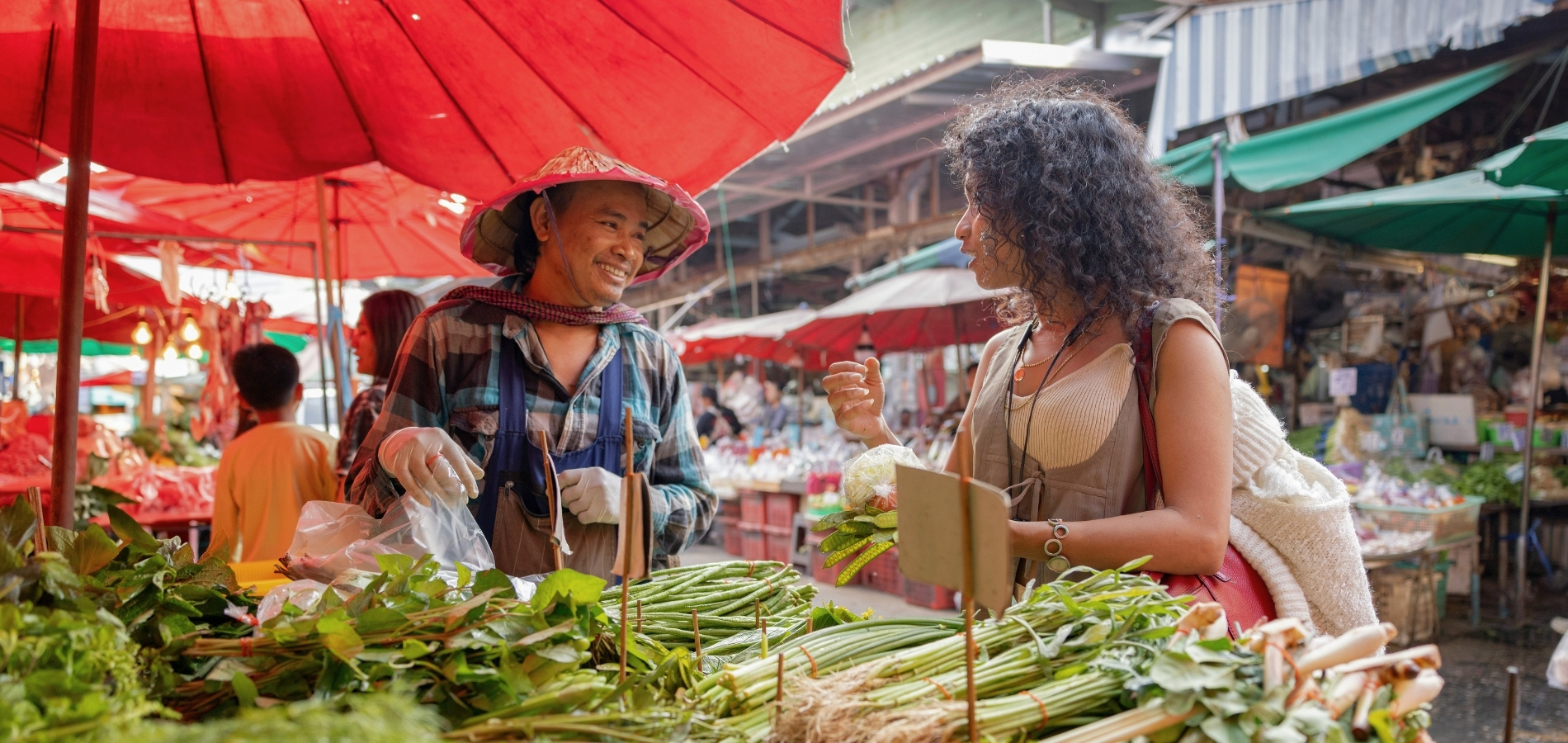
Fresh markets instead of supermarkets for fruits, vegetables, or takeaway meals,
Neighborhood restaurants instead of international chains: a pad krapao for 60 baht from a street cook is often ten times better than a hotel meal,
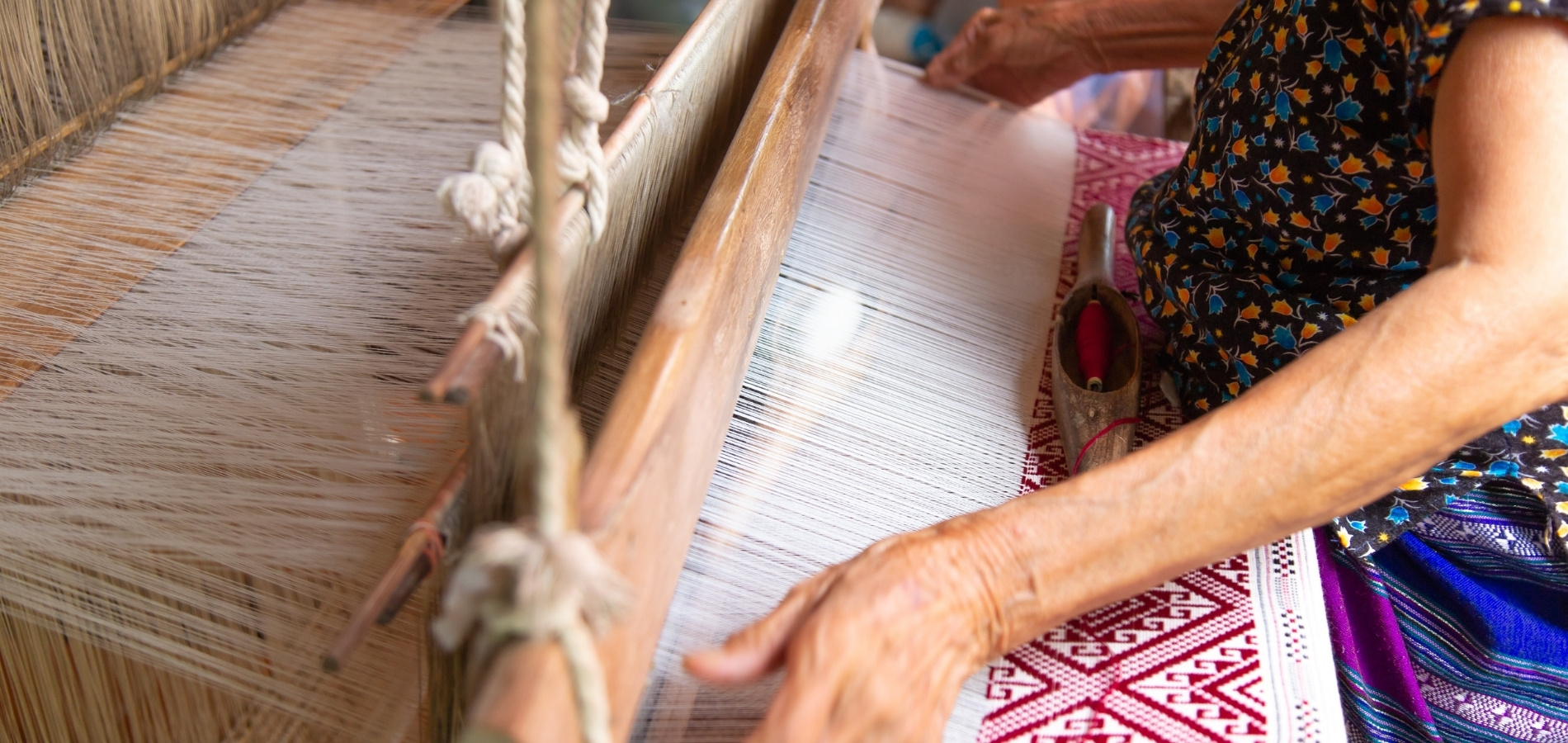
Authentic craftsmanship instead of made in China souvenirs: silk scarves from Surin, ceramics from Lampang, paper umbrellas from Bo Sang, natural soaps from Karen cooperatives…
Reasonable tips: 20 to 100 baht depending on the service for guides, massage therapists, drivers…
Choose your way of traveling
Accommodation: favor small-scale establishments, certified ecolodges, and family-run guesthouses. Here are some reliable labels: Green Leaf Foundation (in Thailand), Travelife, EarthCheck. Certifications are not everything, but the complete absence of certification from an establishment claiming to be “eco-friendly” is a bad sign.
Pace: slow travel (staying longer in fewer places) drastically reduces your carbon footprint and completely changes the quality of the trip. Spending three weeks changing destination every two days is exhausting for both you and the planet.
Transportation: for long-distance journeys, favor trains and night buses, which work very well in Thailand and cost a fraction of the price of a flight. In Bangkok, the BTS and MRT will help you avoid traffic jams.
Food: local and seasonal products are the norm in Thai street food. A mango sticky rice in April or May is perfect!
Protect the places you visit
The hikers’ rule applies everywhere: leave no trace. This means taking nothing (shells, sand, plants, temple stones) and leaving nothing behind. Also respect signs in parks and sacred sites. Do not climb the ruins in Ayutthaya or Sukhothai just for an Instagram photo, for example.
Meaningful places we recommend
Here are some places we recommend for their seriousness and commitment. They are not the only ones, but they have proven themselves over time.
Elephant Nature Park, Chiang Mai
Founded by Lek Chailert, Elephant Nature Park is undoubtedly one of the best-known and most respected elephant sanctuaries in Asia. Here, there are no rides, shows, or chains: the elephants, most of whom were rescued from the tourism or logging industries, live in a vast natural environment where their well-being is the priority.
The sanctuary offers several ways to discover its work: day visits, immersive multi-day stays, and volunteer programs. Over the years, Lek Chailert has also helped inspire a whole network of ethical partner sanctuaries in Thailand, Cambodia, and Myanmar through the Save Elephant Founda
New Heaven Reef Conservation Program, Koh Tao
Based on the island of Koh Tao, the New Heaven Reef Conservation Program is one of Thailand’s best-known marine conservation projects. The center has been working for years on coral reef restoration, marine biodiversity protection, and environmental awareness.
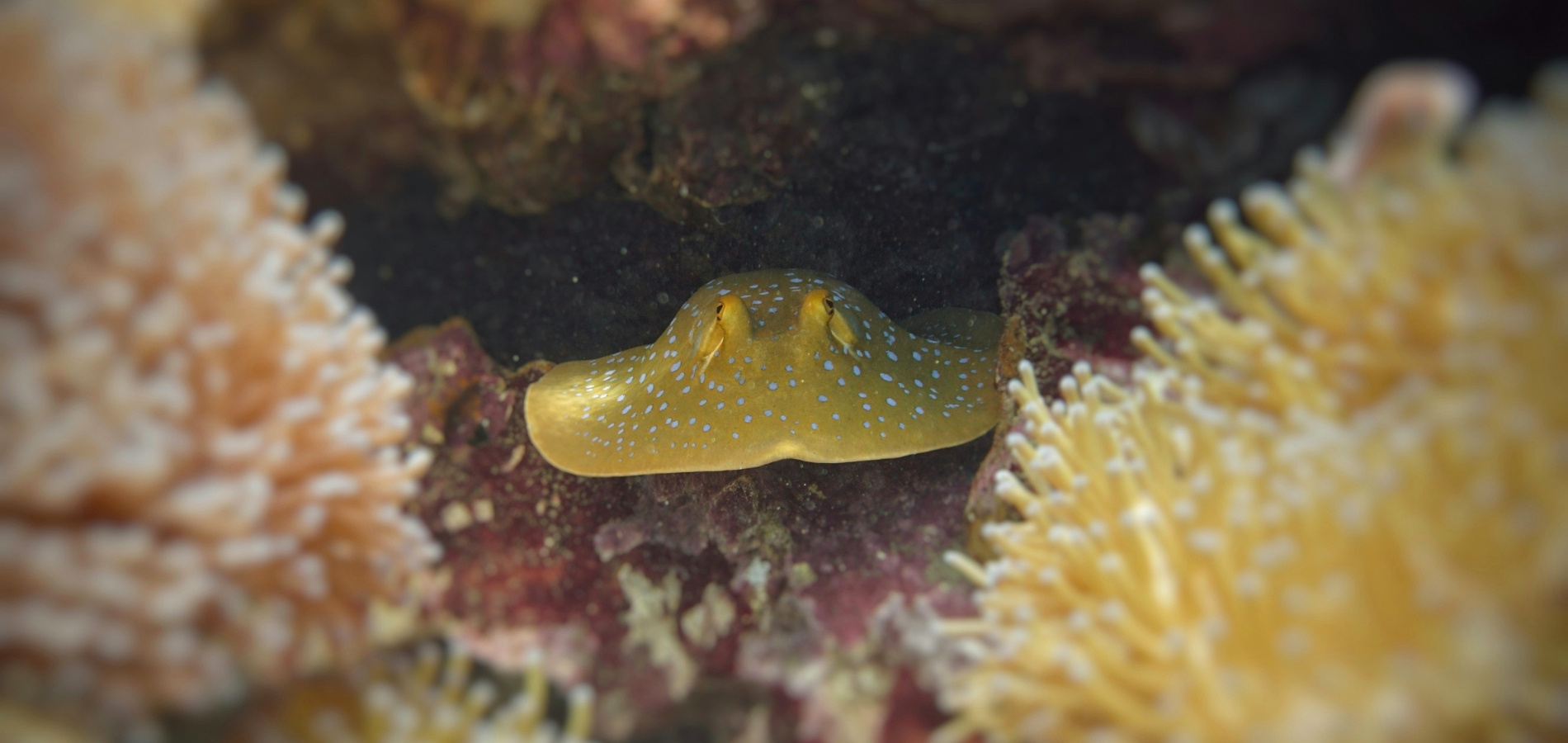
International travelers and divers can participate in different programs ranging from a few days to several weeks: educational workshops, reef monitoring, underwater cleanups, coral nurseries, and marine conservation training. Some activities are also accessible to non-divers.
It is a great opportunity to discover the behind-the-scenes work of ocean conservation while actively contributing to the protection of Thailand’s marine ecosystems.
Pai Seedlings Foundation, Pai
Around three hours northwest of Chiang Mai, the small town of Pai is home to the Pai Seedlings Foundation, a non-profit organization dedicated to sustainable agriculture and environmental education. The project revolves around several initiatives: rehabilitating land into organic farms, with part of the harvest redistributed to local schools, organizing environmental awareness workshops, and managing a distribution network with businesses in Pai.
Visitors can take part in workshops on permaculture, beekeeping, and natural construction. It is also possible to stay there for a few days as part of a farm stay or become involved in longer-term volunteering.
Trash Hero
Created in December 2013 by a few friends gathered on a Thai beach, Trash Hero has since become a large international movement fighting waste pollution. Present in 14 countries, the organization has already mobilized nearly 600,000 volunteers worldwide.
In Thailand, local groups regularly organize beach and nature cleanups in Koh Lipe, Ao Nang, Koh Lanta, Phuket, Pai, and many other places. No special skills are required: equipment is provided, and these actions are often an opportunity to meet locals and travelers committed to protecting the environment.
Also worth exploring :
Khao Sok National Park for its primary rainforest and Cheow Lan Lake, with locally managed floating lodges,
Karen Hill Tribes with a guide who properly compensates the communities, not “human zoos,”
Lisu Lodge or the ecolodges of the Mae Sa Valley for a stay close to the Lisu communities.
Traveling responsibly is not a checklist of rules to tick off. It is a way of paying attention, to where we go, who we meet, and what we consume. It requires a little more preparation and sometimes a little more patience, but the journey that results from it is almost always richer, more authentic, and more memorable. Thailand deserves that perspective. Its nature, culture, and people offer us so much. The least we can do is leave them intact for those who come after us.
