Thailand with the family: a 2-week itinerary off the beaten track

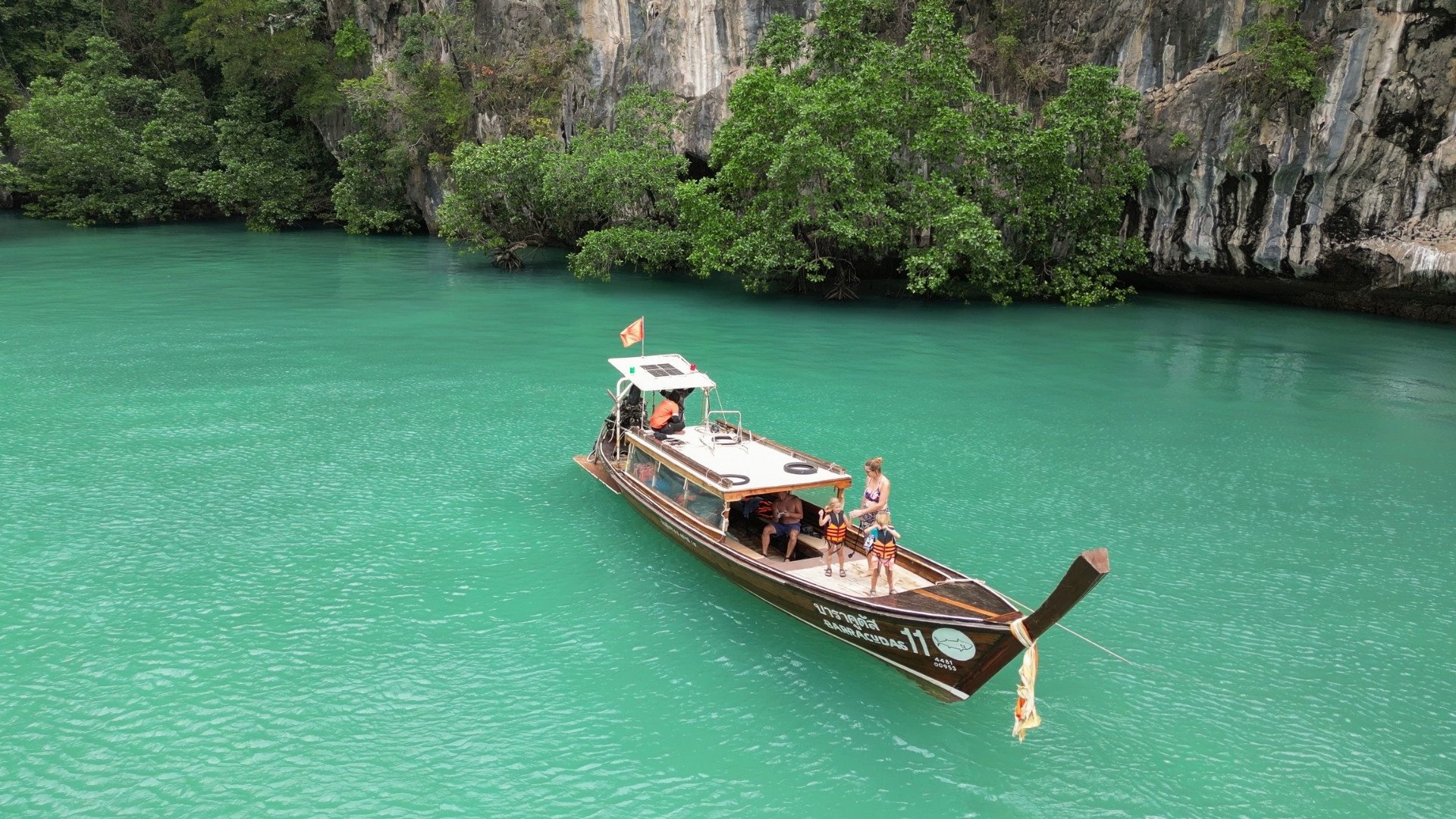
There is one night on this itinerary that the whole family will remember for a long time: the one spent in a floating bungalow on the River Kwai, with no road or neighbours around. It is just one of the five stages of this two-week family itinerary in Thailand, which runs from Bangkok down to the islands of the Andaman Sea, passing through two rural provinces where families still rarely go.
Here are the details province by province, with the activities included at each stage. Vincent, our agency director and father of two girls, talks through the same itinerary in a podcast episode in French and adds his own tips for family travel in Thailand. Worth a listen if you are planning your holiday.
A 2-week family itinerary in Thailand
Bangkok for a first introduction to the country, Kanchanaburi for nature and history, Phatthalung for its magical lake, then two islands in the Andaman Sea to finish. Each stage lasts at least two nights, because repacking the suitcases every morning quickly tires children out.
This circuit is an example itinerary. We then rework it with you, according to the age of your children, your budget and what you want to see. Some families extend the island time, others replace Phatthalung with another southern province. In short, we adjust every stage to suit you.
Bangkok, 3 days
DAY 1
You arrive in Bangkok and the afternoon is left free, giving you time to recover from the flight and find your bearings. Enough for a first Thai meal and a walk around the neighbourhood before the sightseeing begins the next day.
DAY 2
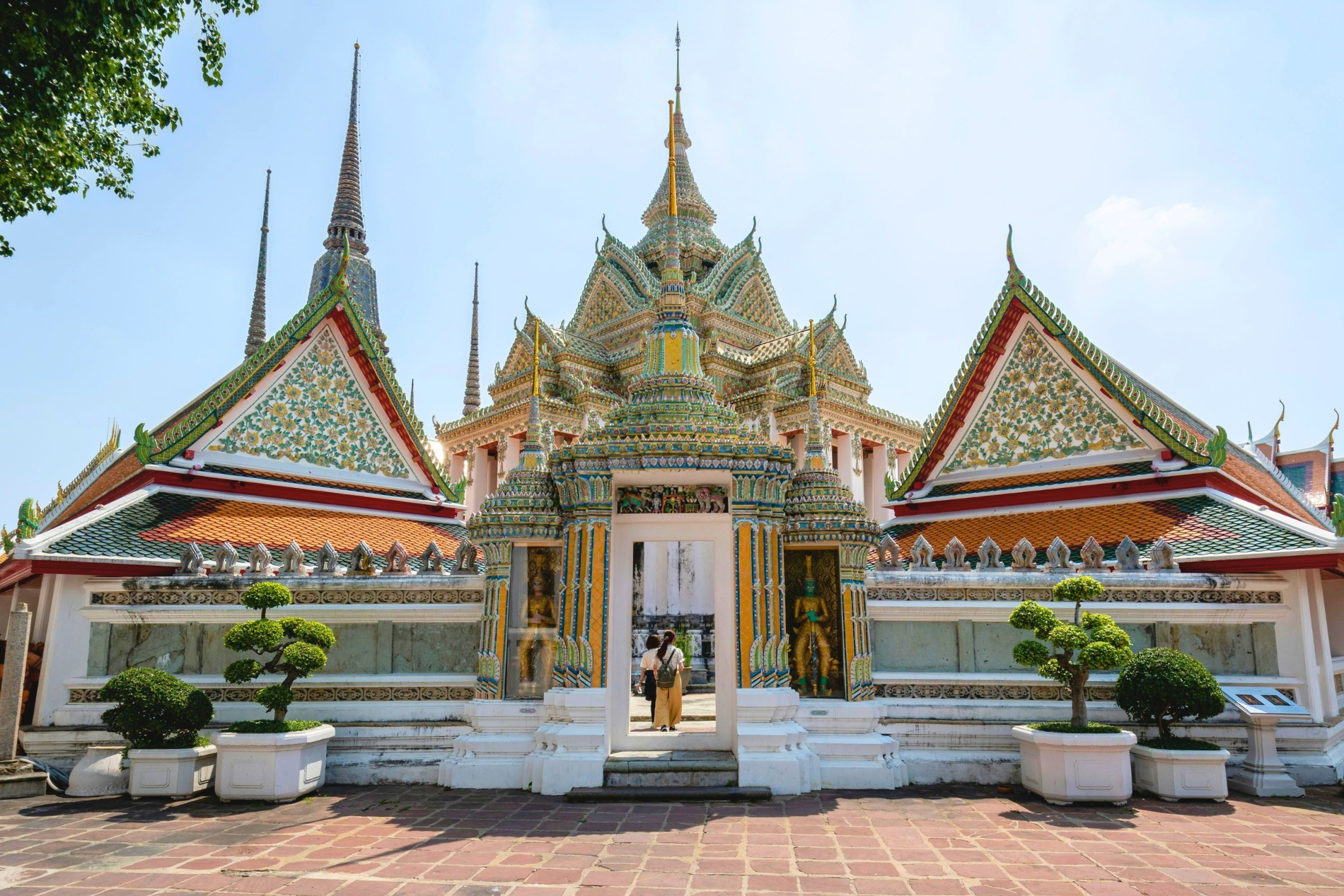
The second day is given over to the capital's essential temples. First the Grand Palace, the former royal residence, with its golden roofs and pavilions covered in glass mosaics. We go as soon as it opens, while the courtyards are still cool.
Good to know: children under 120 cm enter free. Entry costs 500 baht for everyone else.
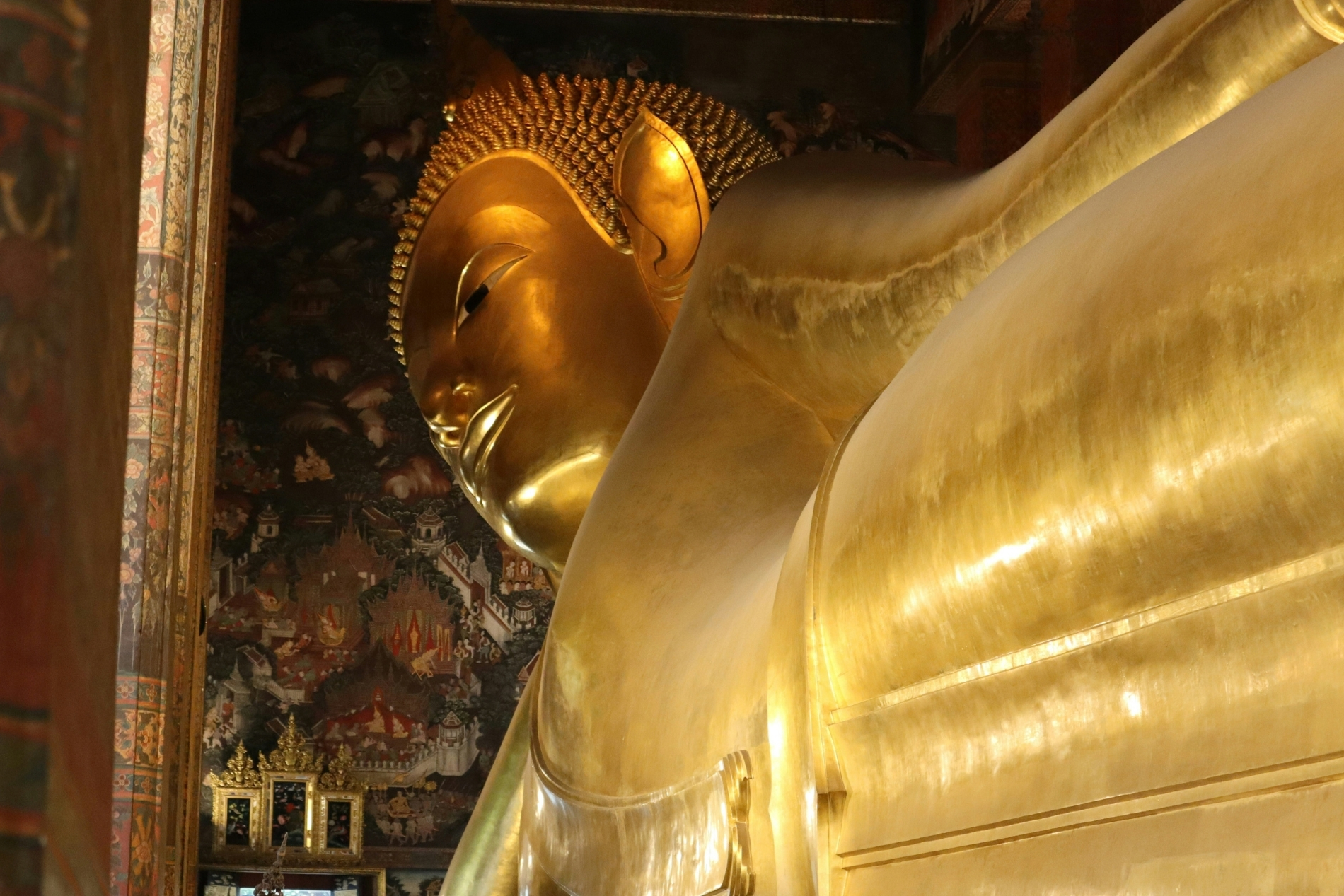
Wat Pho, right next door, is just as spectacular. There you will see a 46-metre-long reclining Buddha entirely covered in gold leaf, with the soles of the feet inlaid with mother-of-pearl. Along the wall, 108 bronze bowls await the coins that visitors drop into them one by one, which keeps children busy for a good while. The afternoon is spent on the water. You board a private longtail boat for a trip along the khlongs, the canals lined with stilt houses.
 |  |
DAY 3
You set off to explore the still-rural neighbourhoods of Bangkok by bicycle. You leave the main roads for narrow lanes and wooden walkways above the canals. You pass local temples, markets, craft workshops and street art. This activity gives you a completely different side of Bangkok. After your bike ride, you leave Bangkok for Kanchanaburi, about three hours' drive to the west.
Kanchanaburi, 3 days
DAY 4
After your first night in Kanchanaburi, you enjoy an electric scooter ride through the rice fields. The route follows small roads between the plots and the hamlets, with a stop at a café set in the middle of the paddies. A guide goes with you and there is a demonstration before departure, so that everyone can get comfortable. It is often the favourite activity of teenagers, who ride their own machine and regain a little independence on a trip where everything is done as a family. For young children, we replace the scooters with an electric tuk-tuk.
DAY 5
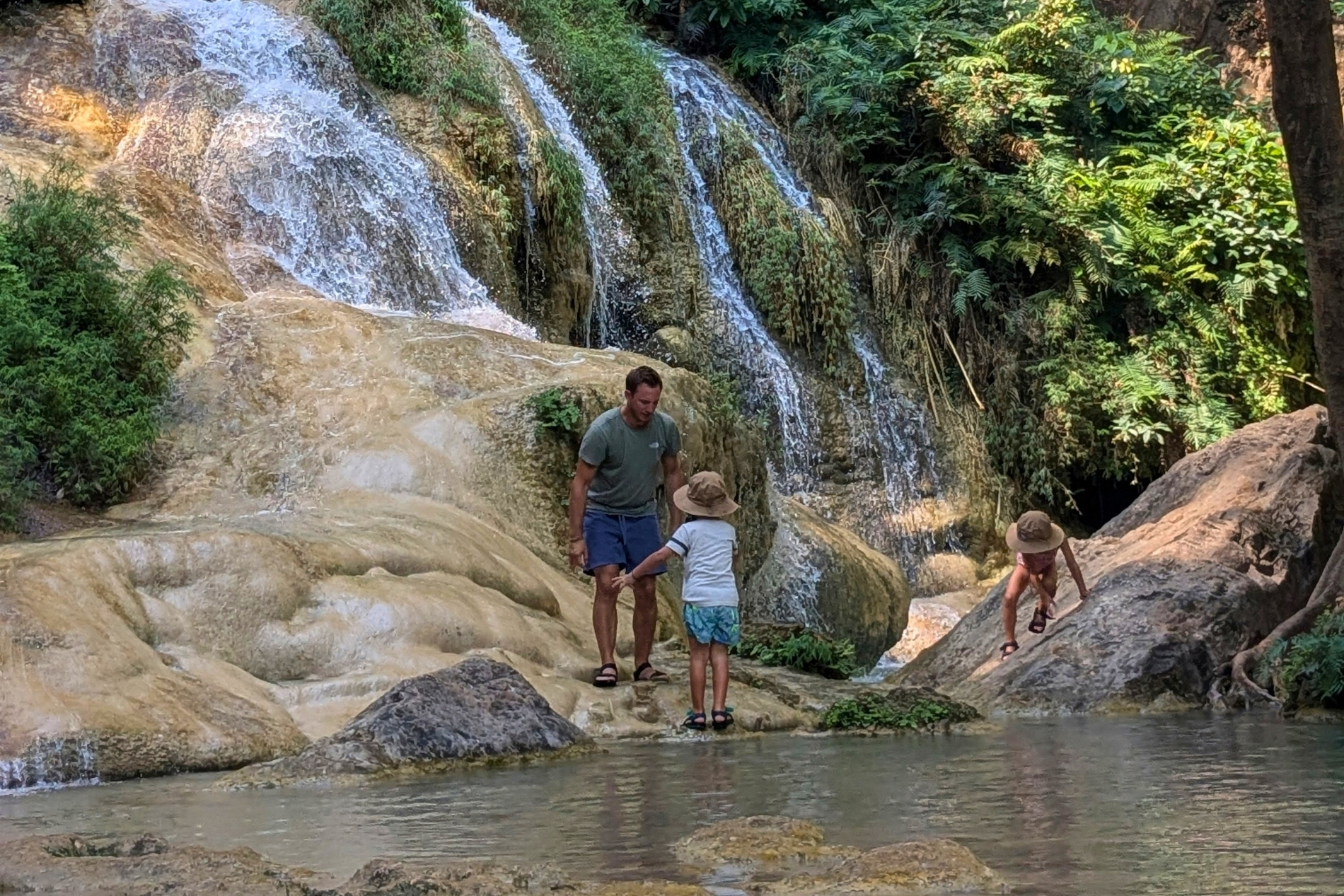
On the fifth day, you set off early for the Erawan Falls, seven levels of waterfalls, each with its own turquoise pool where you can swim. Climbing up to the seventh level involves about 1.5 km of trail and a good hour of walking: the swim at the top is all the better for it.
The rest of the day shifts register completely with the Hellfire Pass Memorial. The museum retraces the construction of the Death Railway by prisoners of war and conscripted Asian labourers. A path then leads down to the Konyu Cutting, 500 metres long and 26 metres deep, dug by hand in six weeks in 1943.
Before heading to your accommodation, stop off at the hot springs. Several pools at different temperatures are fed by a natural spring, with a cold stream right alongside so you can alternate. It is a place much frequented by locals.
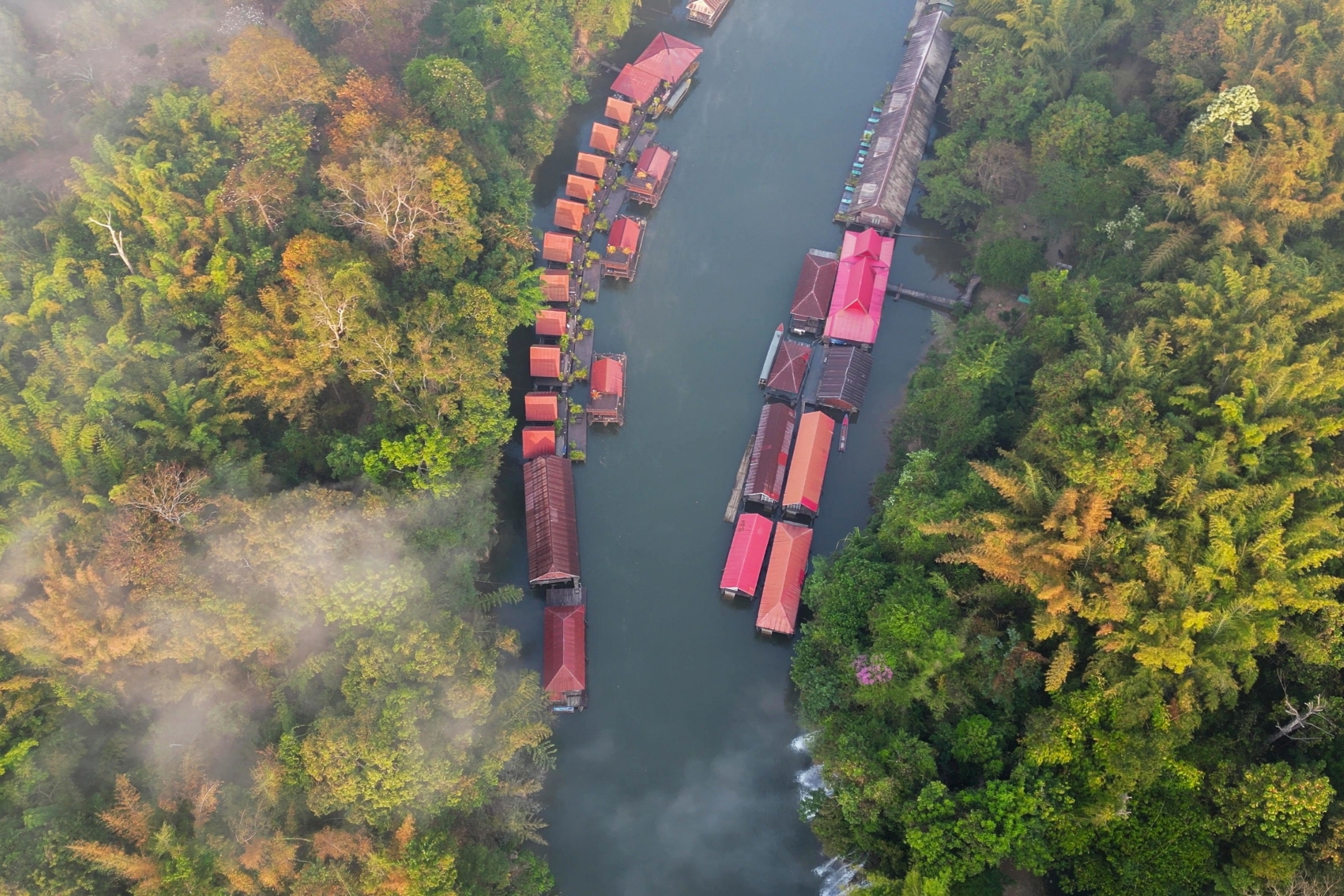
You spend the night in a floating hotel on the River Kwai. The rooms sit on pontoons moored to the bank. You have a traditional Thai dinner above the water, before falling asleep to the sound of the nearby waterfall.
 |  |
DAY 6
Start your day with an elephant encounter at an ethical sanctuary. We do not offer elephant rides, but you will be able to prepare their food, watch them from a reasonable distance and go with them down to the river for their bath.
Then it is time to visit a few highlights, including the spectacular Tham Krasae viaduct, where the railway line runs along the cliff. Trains still use it, but between two passages you can walk on the sleepers and take in the view. At the end of the day, enjoy a longtail boat ride down the River Kwai.
Phatthalung, 2 days
DAY 7
This day is devoted to the transfer south. First back to Bangkok (3 hrs by road), then a flight to Trang (1 hr 30) and a final hour by road to Phatthalung. The overland journeys are made in a private vehicle with driver, which allows you to stop whenever the children need it.
DAY 8
Phatthalung appears on almost no classic tour. It is a rural province set between the mountains and Songkhla Lake, where people come above all for the wetlands.
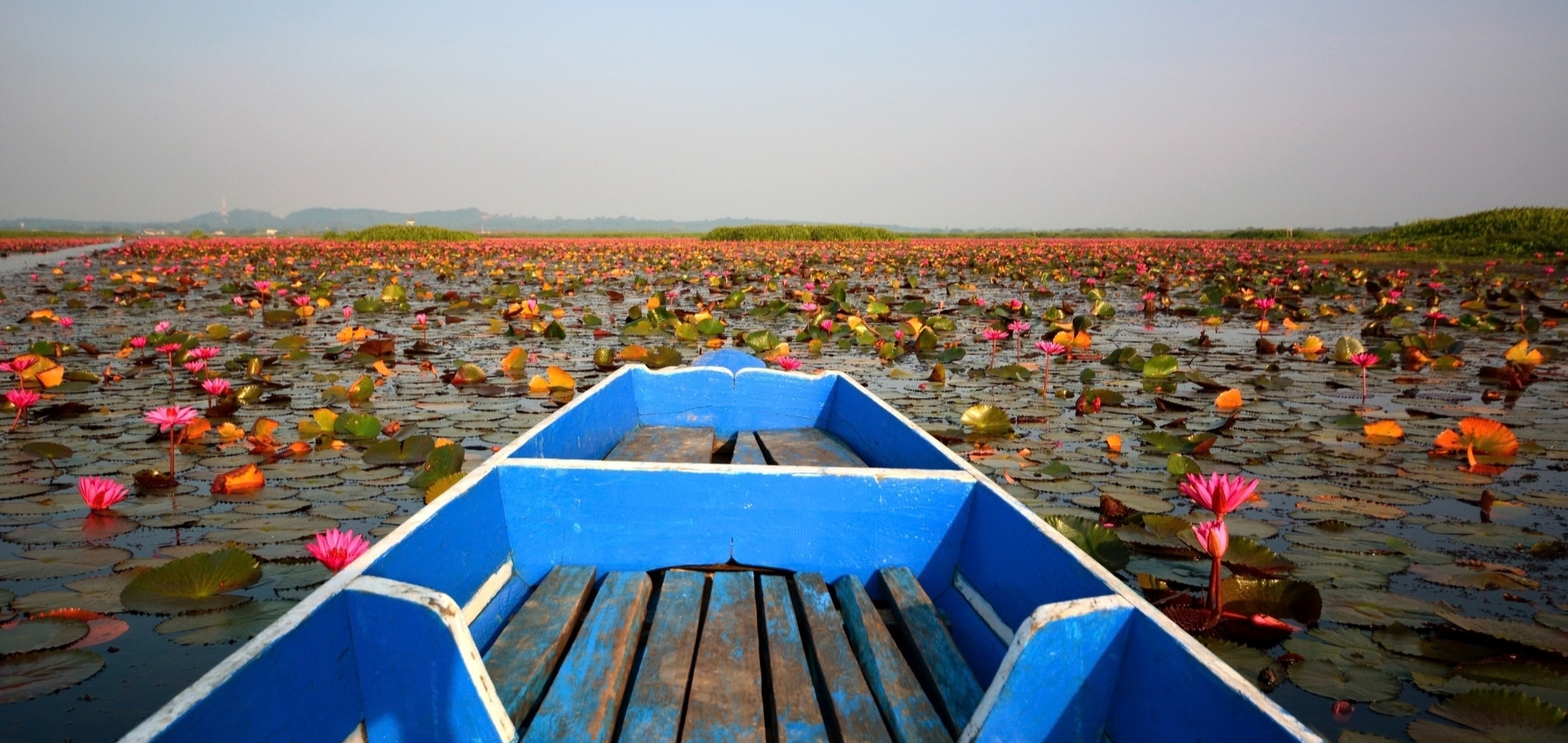
Your day starts very early. You board a longtail on Khlong Pak Pra before daybreak to see the net fishermen, perched on their wooden frames above the water (yor yak). Their silhouettes stand out against the sky as the sun comes up. The boat then continues towards Thale Noi, the country's first protected area back in 1975. You sail between fields of lotus and water buffalo that dip their heads below the surface to graze. Migratory birds are also present from November to March.
The afternoon is devoted to local crafts. In the villages around Thale Noi, families weave krajood, a grey rush that grows in the marshes, to make mats, baskets and bags. Several workshops welcome visitors and let children try their hand at weaving on small pieces.
Koh Lanta, 3 days
DAYS 9, 10 AND 11
You reach Koh Lanta by road, in about half a day. The afternoon and the two following days are free, with a programme to organise as you wish.
Among our recommendations: Lanta Old Town, on the east coast, is the island's former port. Fishing families still live there. The main street is lined with wooden stilt houses above the water, and small craft shops.
At the southern tip of the island, Mu Ko Lanta National Park protects a rocky headland topped by a white lighthouse. A short trail climbs up to the viewpoint, two beaches face each other on either side of the point, and macaques live around the rangers' station.
On one of these free days, we also suggest taking a private longtail excursion to the surrounding islands, including Koh Mook. The highlight is the Emerald Cave, an 80-metre tunnel cut into the cliff that opens onto a sandy beach surrounded by vertical walls, open to the sky. You swim through the tunnel wearing a life jacket, following a rope and the guide's torch.
The crossing is impressive and is not suitable for all children, especially the youngest. You can stay on the boat while the rest of the family goes in, and the day includes several snorkelling stops in any case.
Koh Ngai, 2 days
DAYS 12 AND 13
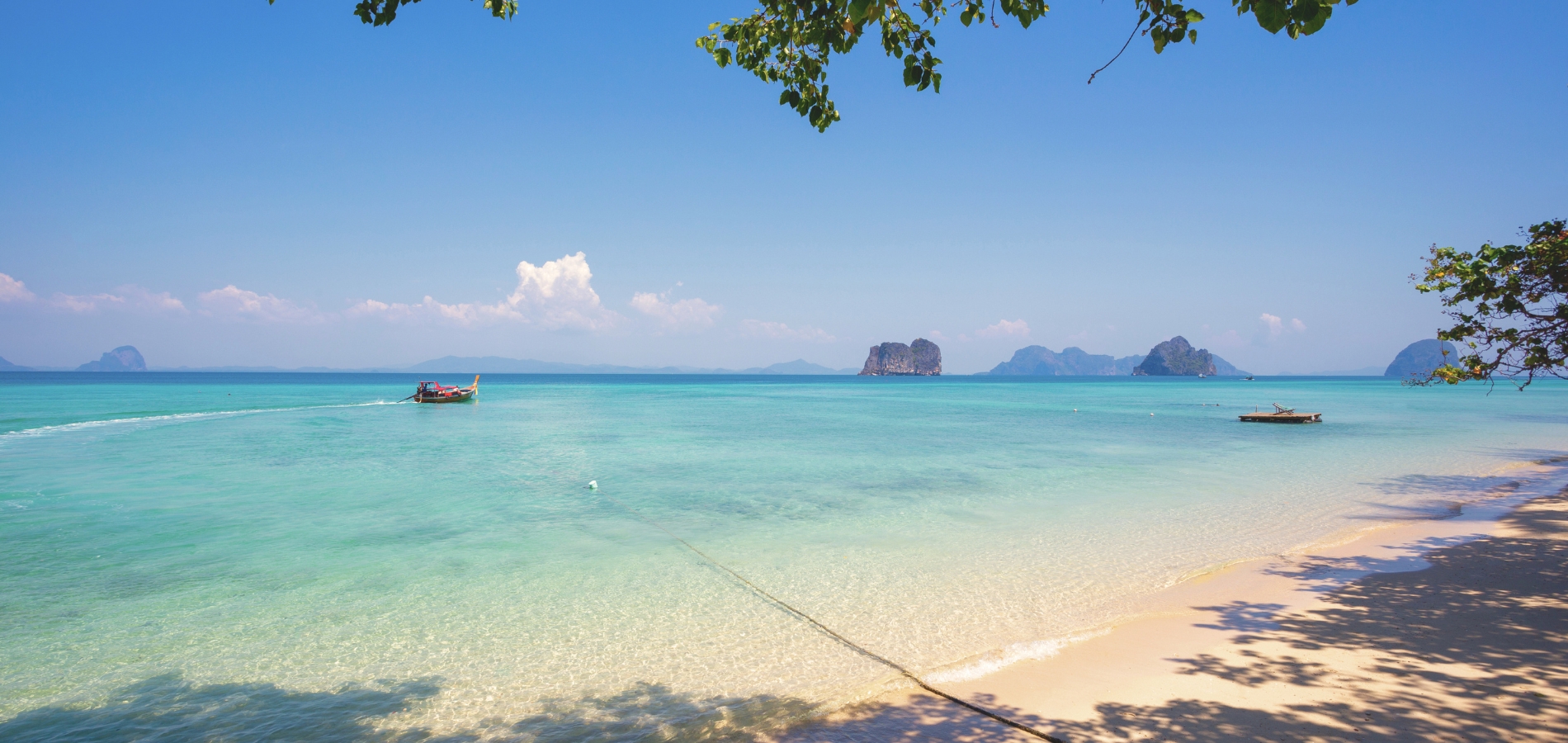
For the last two days, you travel to Koh Ngai (also called Koh Hai) by boat from Koh Lanta. Allow just under an hour for the crossing. The island is 4 kilometres by 2 and belongs to the Trang archipelago. There is no road, no car, no scooter and no village. A few resorts share the main beach.
The reef starts just a few metres from the shore on the east coast, which means you can snorkel straight from the beach. For a change of scenery, you can take the path that crosses the wooded interior to Paradise Beach, about twenty minutes' walk.
The two days are free, and that is deliberate, after twelve days at a sustained pace. They let you make the most of Thailand's turquoise waters before heading home.
DAY 14
It is your last day in Thailand! You take the boat again, then the road to Trang airport for the return flight to Bangkok and the international connection.
When to go on this itinerary?
This itinerary ends on the Andaman coast, and that is what dictates the calendar. The southwest monsoon affects Koh Lanta and the Trang islands from May to October, with a sea that is often rough. The dry season runs from November to April, so that is the window in which we recommend this circuit.
The best window is specifically between December and February. The sea is calm, the water is clear for snorkelling, and temperatures remain bearable for walking in Bangkok as well as in Kanchanaburi. It is also the period when migratory birds are most numerous at Thale Noi. The trade-off is that this is high season, so you need to book in advance, especially during the end-of-year holidays.
Our practical tips for travelling in Thailand with children
From what age can you travel with children in Thailand?
The itinerary as described here works well from the age of 5 or 6, when children walk easily and cope better with full days of sightseeing. With younger children, we generally lighten the Kanchanaburi programme and extend the time on the islands.
How to handle the flight and the time difference?
The direct flight from Paris takes around eleven hours. The time difference is five hours in summer and six hours in winter. That is why the afternoon of the first day is kept free in the programme. Sightseeing in Bangkok begins the next morning, once you have had a first proper night's sleep.
What about health?
No vaccination is required to enter Thailand from France. Several are recommended depending on age and type of trip, and we encourage you to consult your GP or an international vaccination centre around two months before departure. Once there, pharmacies are plentiful and well stocked in the cities. You will easily find insect repellent and sunscreen.
Can children eat Thai food that isn't spicy?
Fried rice, noodles, grilled chicken skewers, omelette and fresh fruit are everywhere. Chilli is almost always added at the end of cooking, so you just need to ask for a dish without chilli, which is "mai phet". On top of that, in hotel restaurants and on the islands, the menus always include Western dishes.
How to travel from one stage to the next?
On this itinerary, all overland journeys are made in a private vehicle with driver, which means you can stop whenever a child needs to and are not tied to fixed schedules. Car seats and booster seats are not common practice in Thailand and are not provided by default. We can book them, but you need to tell us when you book rather than on arrival.
Do you need to book far in advance?
For a departure between December and February, yes. The floating hotels on the River Kwai have few rooms and Koh Hai has only a handful of places to stay, all fully booked several weeks before Christmas. Domestic flights to the south also fill up quickly in this period.
This itinerary is a framework, not a closed circuit. We adapt it to the age of your children, to the actual time you have on the ground and to what you want to prioritise, whether that is more beach or more nature. Tell us about your project and we will build the version that suits you together.
