Visiting Isan: 5 stops to discover in northeastern Thailand

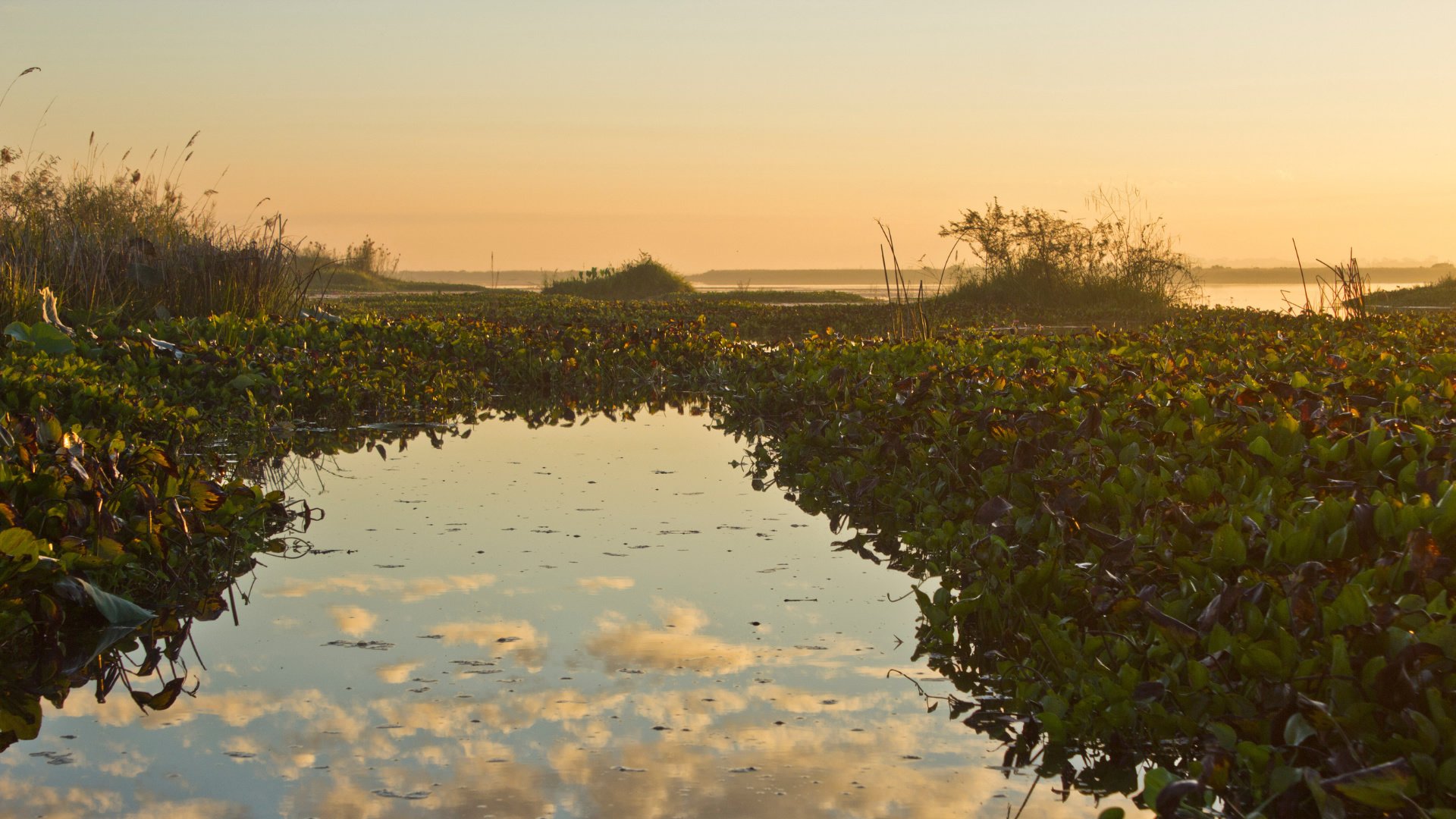
A few hours' drive northeast of Bangkok, another Thailand begins. Isan stretches from the Cambodian border to the Mekong, which separates it from Laos over more than 800 kilometres. Here you can visit Khmer sanctuaries that predate Angkor Wat, and cliffs that drop straight into the Mekong. Every dry season, the river uncovers a bed of stone hollowed out with thousands of cavities. On top of that, entrance fees cost a few dozen baht, and at most sites you will be surrounded by Thai visitors, which is perfect for travellers looking for authenticity.
We have selected five stops not to be missed in Isan:
Buriram: Phanom Rung and the Muang Tam sanctuary,
Ubon Ratchathani: Pha Taem and the rocks of Sam Phan Bok,
Nong Khai and the Sala Kaeo Ku sculpture park,
Bueng Kan: between the Phu Sing rocks and the Phu Tok temple,
Udon Thani: Ban Chiang, Phu Phrabat and the red lotus sea.
Where is Isan? And why does the region remain so little visited?
Isan refers to the twenty provinces of northeastern Thailand, set on the Khorat plateau. It covers close to a third of Thai territory and is home to around 22 million people, or one Thai in three. Isan is bordered by Laos, on the other side of the Mekong, and by Cambodia to the south.
The culture of the region owes a great deal to neighbouring Laos. The language spoken day to day, Isan, is very close to Lao, and the cuisine is built around sticky rice and river fish. And in the south of the region, the pink sandstone temples are a reminder that the Khmer empire extended well beyond today's borders.
If few foreign travellers come this way, it is first of all a matter of geography. No coastline, no islands, and distances that put off anyone with two weeks to see the country. Isan is also a farming region, one that has never built its economy on international tourism. You feel it once you are there: hotels and restaurants work for a local clientele, and prices follow accordingly.
But that is also what makes the region interesting today. You visit temples and natural sites with very few people around. And the Isan countryside has kept a pace you no longer find elsewhere in Thailand, with local villages that still live in a very traditional way.
5 stops not to be missed in Isan
Bueng Kan, between the Phu Sing rocks and the Phu Tok temple
Bueng Kan has only existed since 2011, when the province was split off from Nong Khai. It is the youngest of Thailand's 77 provinces, and one of the least visited. Yet two or three sites more than justify the detour!
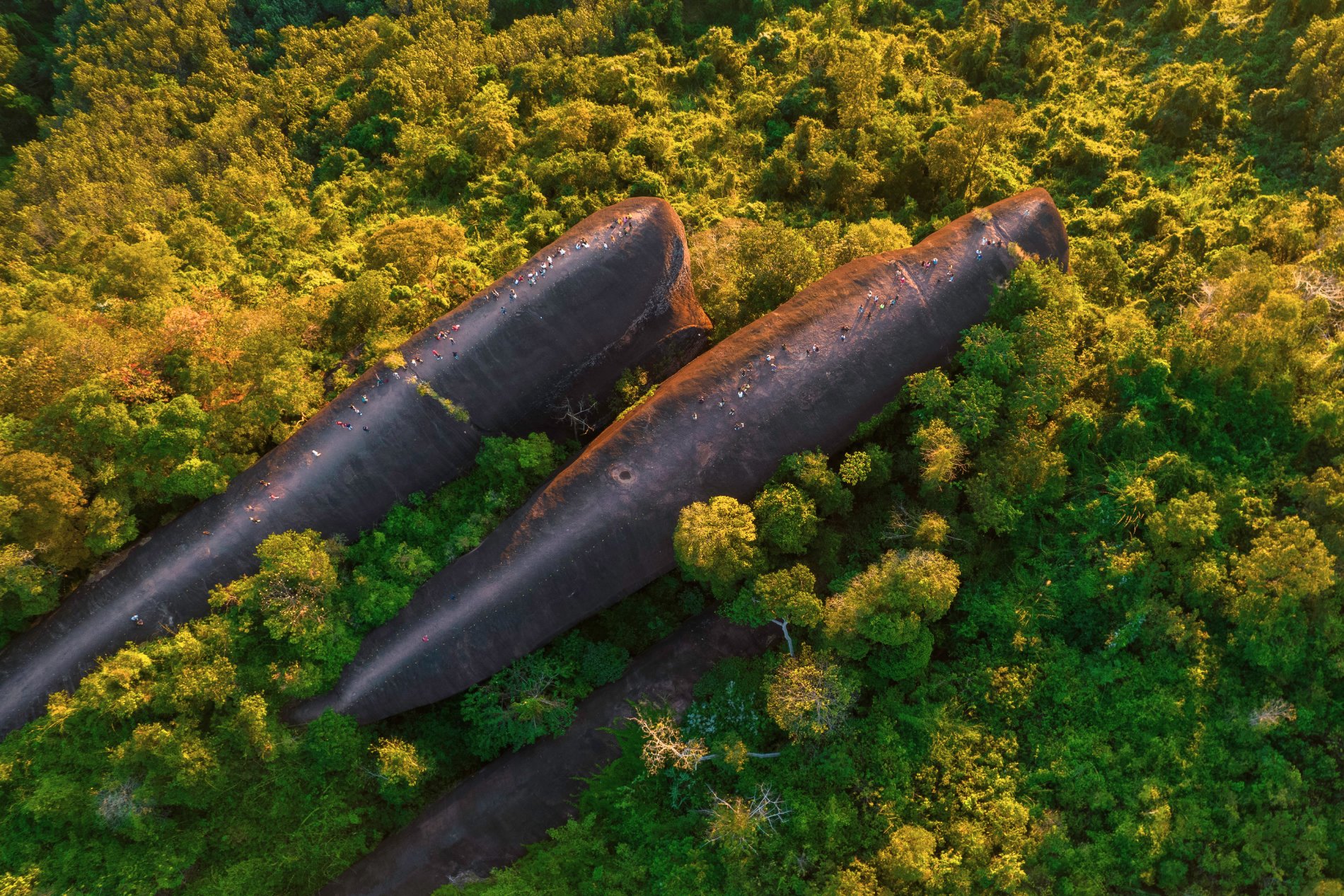
First comes Hin Sam Wan, the three whale back rocks. These are three large blocks of stone lined up on the edge of a cliff, in Phu Sing park, with forest all around. We also recommend going there at first light, when mist still hangs over the valley. To reach it, you have to take a 4x4. You leave your vehicle at the forest rangers' post and go up by pick-up with a driver, at a rate of around 500 baht per vehicle.
 | 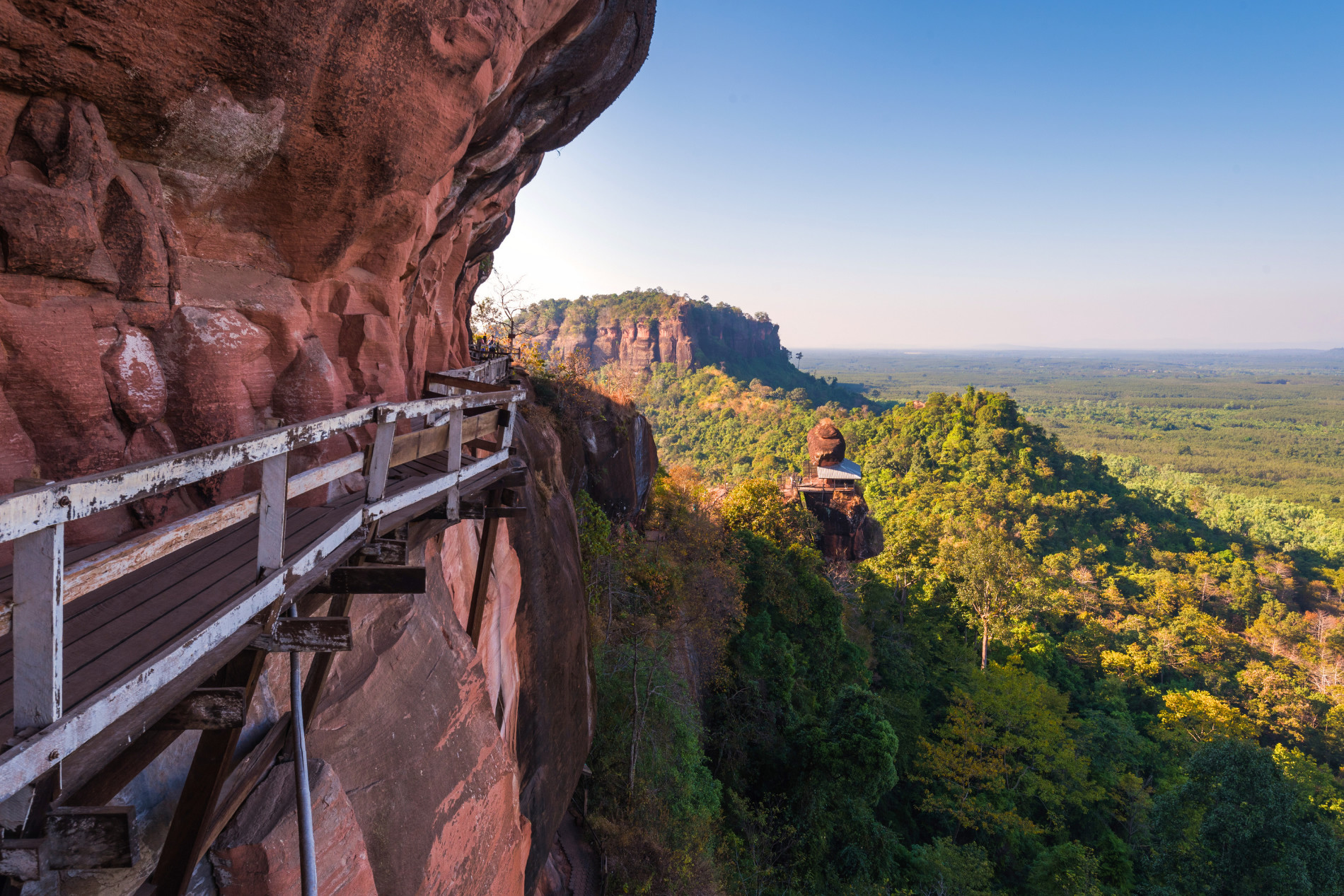 |
An hour's drive away, Wat Phu Tok is a 359-metre rocky outcrop wrapped in wooden walkways and staircases, built from 1969 onwards by the monks of a meditation centre. Seven levels represent the seven factors of awakening. The fifth, where a walkway runs all the way around the mountain above the void, is the most impressive. To visit it, you climb wooden stairs and walkways fixed to the rock face, with railings along most of the route. The whole thing takes about two hours there and back at an easy pace. Don't forget closed shoes and clothing that covers you for your visit to this sacred place. The temple is open from 6.30am to 5pm, and silence is essential, since it is a working meditation site.
A word of warning for anyone who suffers from vertigo, a few passages are narrow and open straight onto the drop.
For seasoned walkers, the province is also home to Naka Cave, in Phu Langka national park, where the rock has cracked into scales that call to mind the bodies of serpents. The climb takes 4 to 5 hours there and back, with metal stairs and a few rope sections. Access must also be booked in advance with the park, with a compulsory local guide and a limited number of visitors each day. And do check that the trail is open, as it closes for part of the year to let the vegetation recover, usually around May or June.
Ubon Ratchathani, Pha Taem and the rocks of Sam Phan Bok
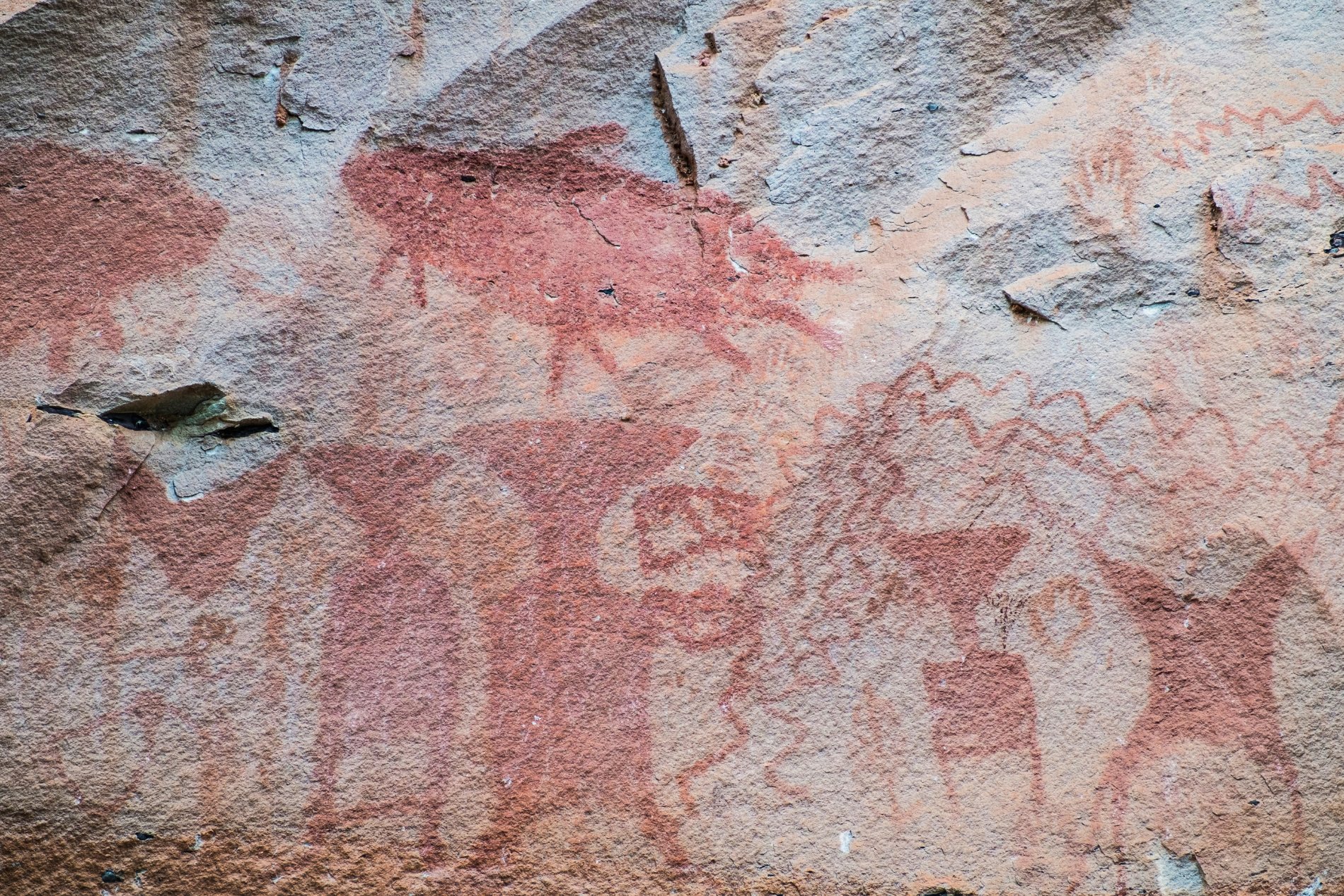
The province of Ubon Ratchathani occupies the southeastern corner of the country, where the Mekong separates Thailand from Laos. Pha Taem national park protects a cliff overlooking the river, and above all rock paintings around 3,000 years old. You can make out fish, hands and sticky rice baskets, painted in red ochre on the rock face.
 | 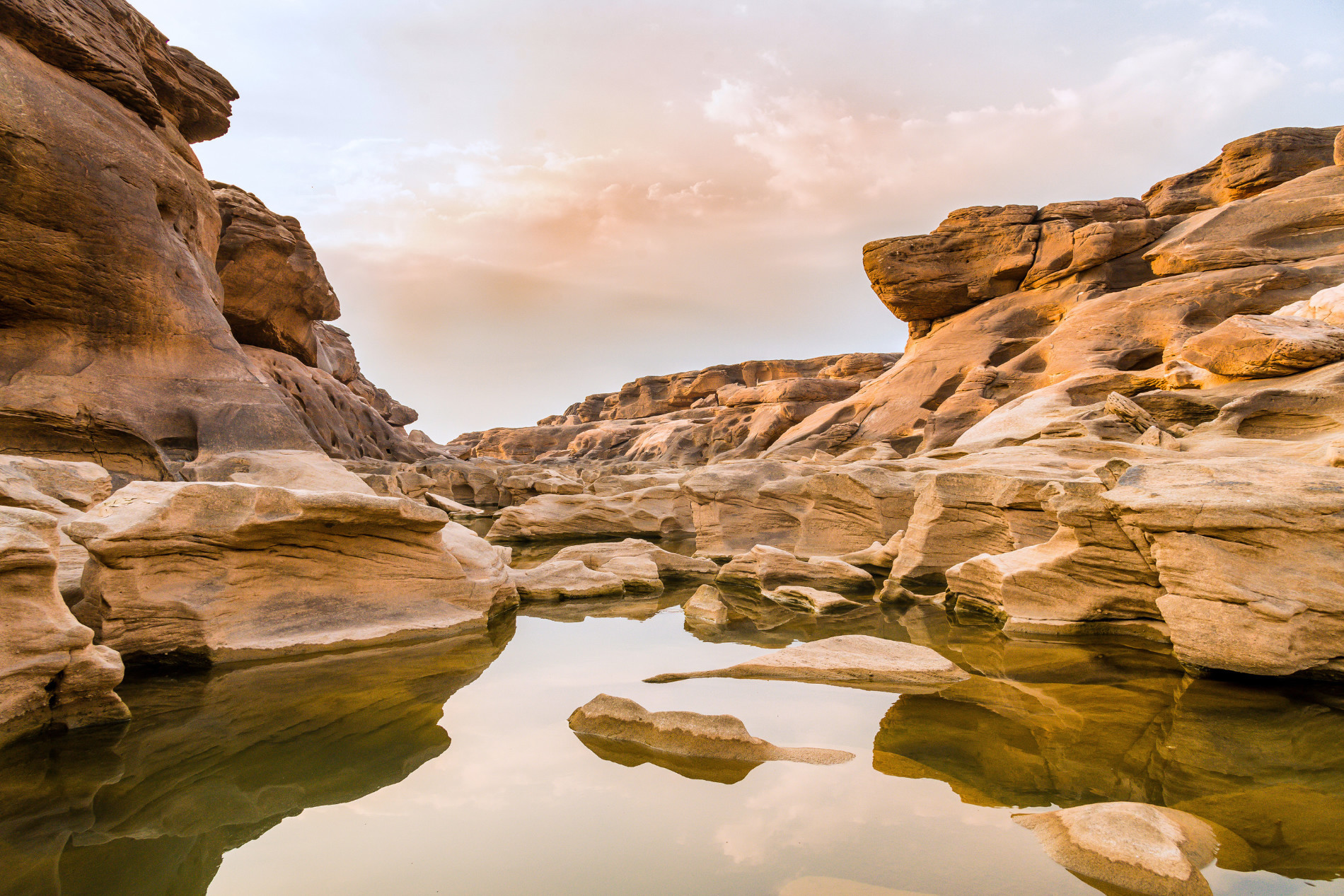 |
An hour further north, Sam Phan Bok is a bed of rock that the Mekong has hollowed out with thousands of rounded cavities. Some are the size of a basin, others are wide enough to climb down into, and many hold a little water for a good part of the dry season. Boats leave from nearby villages to follow the formations from the water, then the visit continues on foot, wandering freely over the rock.
The site only exists in the dry season, when the river level drops, roughly from December to May.
To the south, the village of Khong Chiam marks the confluence of the Mun and the Mekong. The two rivers are not the same colour, the Mun leaning towards dark blue and the Mekong towards brown, and they flow side by side without mixing for several hundred metres. The phenomenon is best seen in April, and from a boat rather than from the bank.
Udon Thani, Ban Chiang, Phu Phrabat and the red lotus sea
Udon Thani brings together two UNESCO World Heritage sites, something no other province in Thailand can claim. It is also the easiest of all Isan to reach, as its airport is only an hour's flight from Bangkok
The first is Ban Chiang, some fifty kilometres to the east and UNESCO-listed since 1992. This village has yielded burials and ceramics, some of them more than 4,000 years old. The national museum displays the pottery with red decoration on a beige background that has become the emblem of the site, and a former excavation pit can be visited in the grounds of a nearby temple. It is open from Wednesday to Sunday, from 9am to 4pm, and admission comes to around 150 baht for foreign visitors.
Phu Phrabat historical park, UNESCO-listed in July 2024, lies northwest of the city. There you walk among enormous balancing rocks, shelters decorated with prehistoric paintings and the largest known collection of Sema stones, slabs raised more than a thousand years ago to mark out the sacred space of a Buddhist temple.
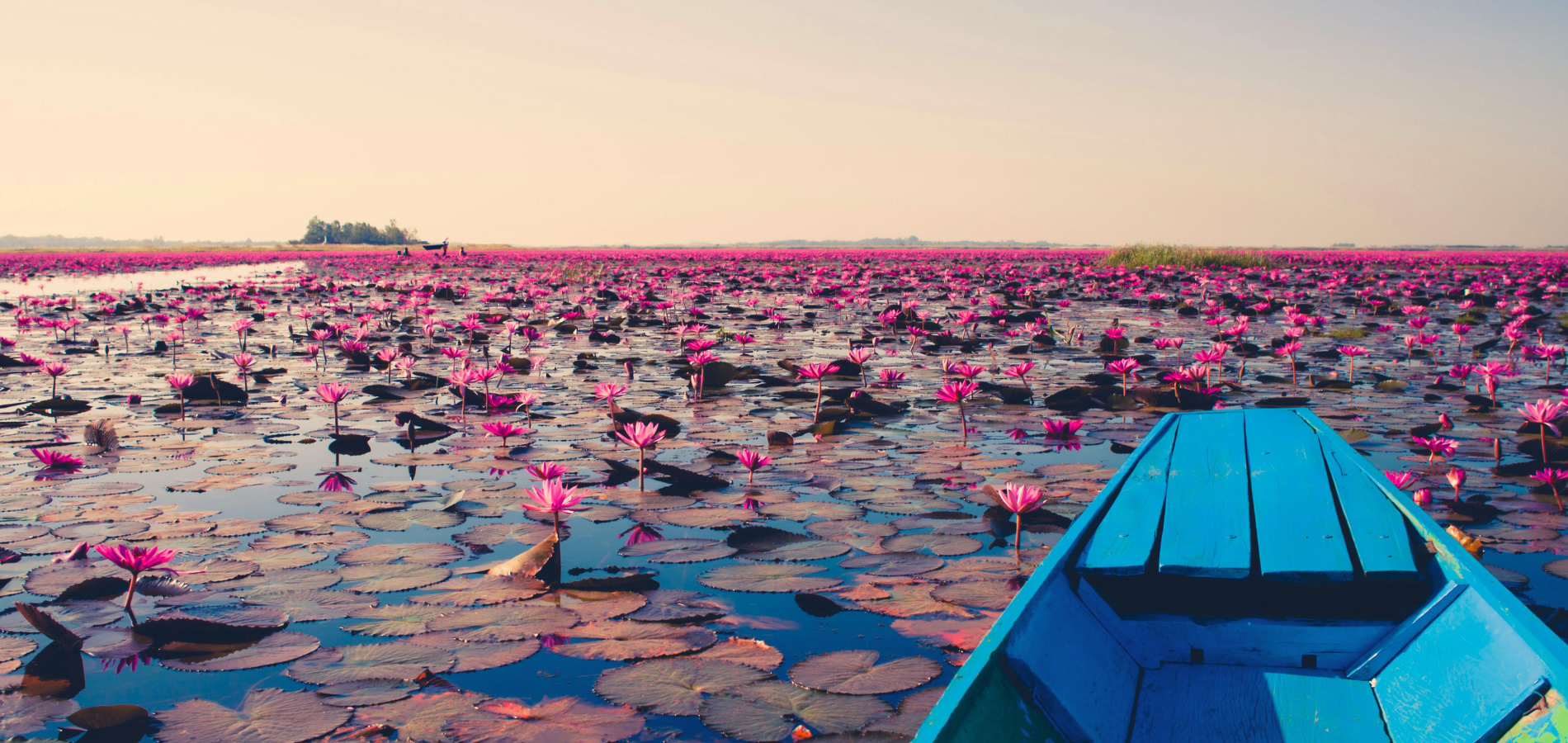
From December to February, don't miss the red lotus sea of Kumphawapi either, which fills with flowers at daybreak. Boats leave around 6am from the Ban Diem pier, for 1 to 1.5 hours on the lake. The flowers close up in the middle of the morning, so we recommend leaving Udon Thani before sunrise.
Buriram, Phanom Rung and the Muang Tam sanctuary
Buriram is a rural province in southern Isan, which Thais know mainly for its football team and its motor racing circuit. But travellers often come for another reason. This is where the finest Khmer temples in the country stand, an hour's drive from the city.
Phanom Rung sits on top of an extinct volcano, 386 metres above the rice fields. Before reaching the temple, you have to climb a 160-metre paved avenue, then cross a causeway guarded by nagas (the many-headed serpent, master of the waters in local beliefs, carved at temple entrances to protect the passage between the world of men and that of the gods). At the end of the causeway the main sanctuary opens up, built between the 10th and 12th centuries and dedicated to Shiva. Above the main entrance, on the east side, a large carved stone depicts Vishnu reclining on the waters. It is one of the finest Khmer sculptures preserved in Thailand.
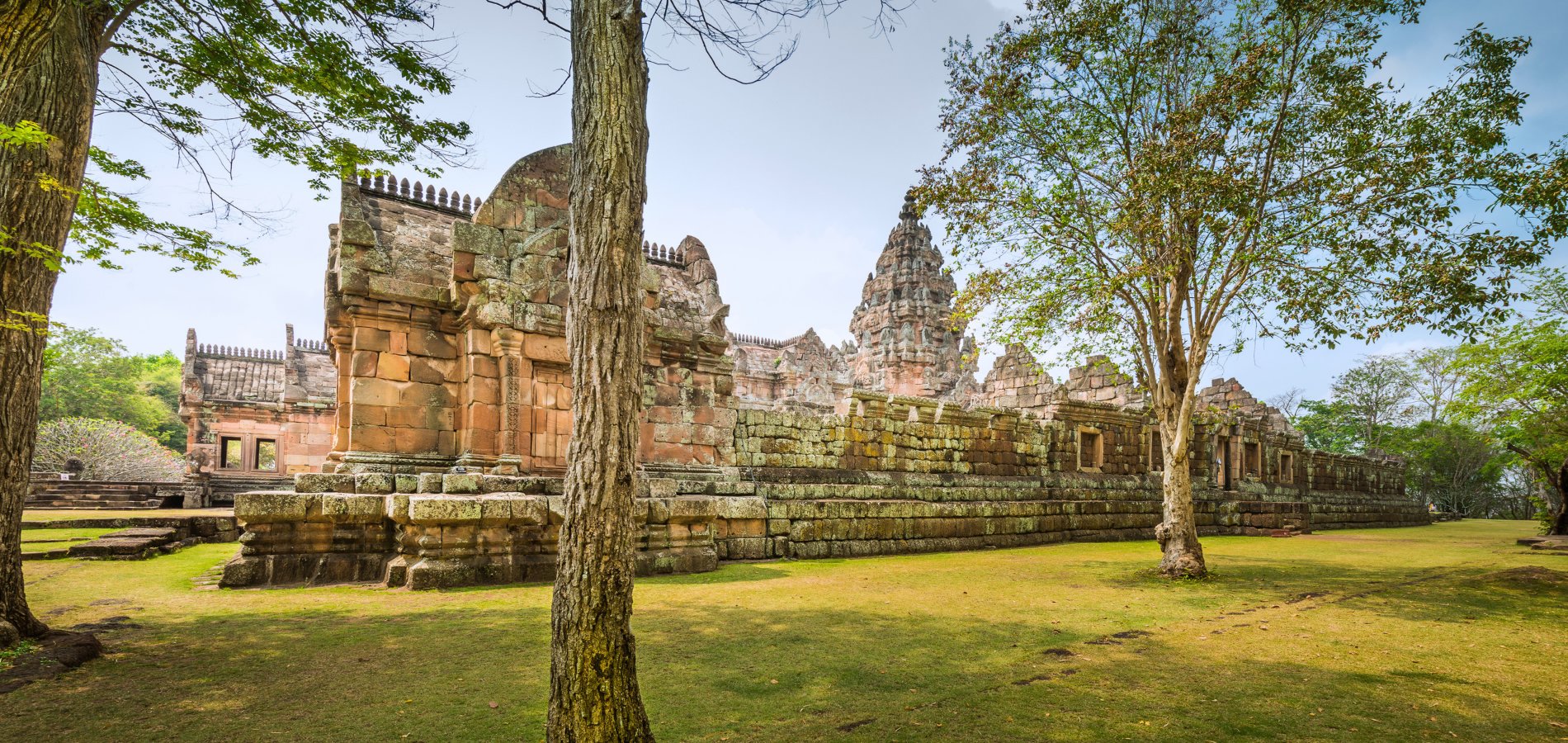
The site is aligned with the sun. Four times a year, its rays pass through the fifteen doorways of the temple in a single line: early April and early September (at sunrise) or early March and early October (at sunset). The Phanom Rung festival is timed to the spring alignment, in early April, and lasts three days. A procession in Khmer costume makes its way up the avenue to the temple at first light, with ceremonies in honour of Shiva, apsara dances and a sound and light show in the evening on the facades of the sanctuary.
Eight kilometres away, and included in the combined ticket, there is also Prasat Muang Tam. This temple is built on the flat, on the plain, and is surrounded by four L-shaped ponds. The rims are carved into naga bodies, with a five-necked head rising at each corner. One added bonus: the site is often deserted, even when Phanom Rung is busy.
Nong Khai and the Sala Kaeo Ku sculpture park
Nong Khai is a quiet town on the banks of the Mekong, facing Laos, with a riverside promenade and a market that serves as a crossing point towards Vientiane, some thirty kilometres away via the Friendship Bridge.
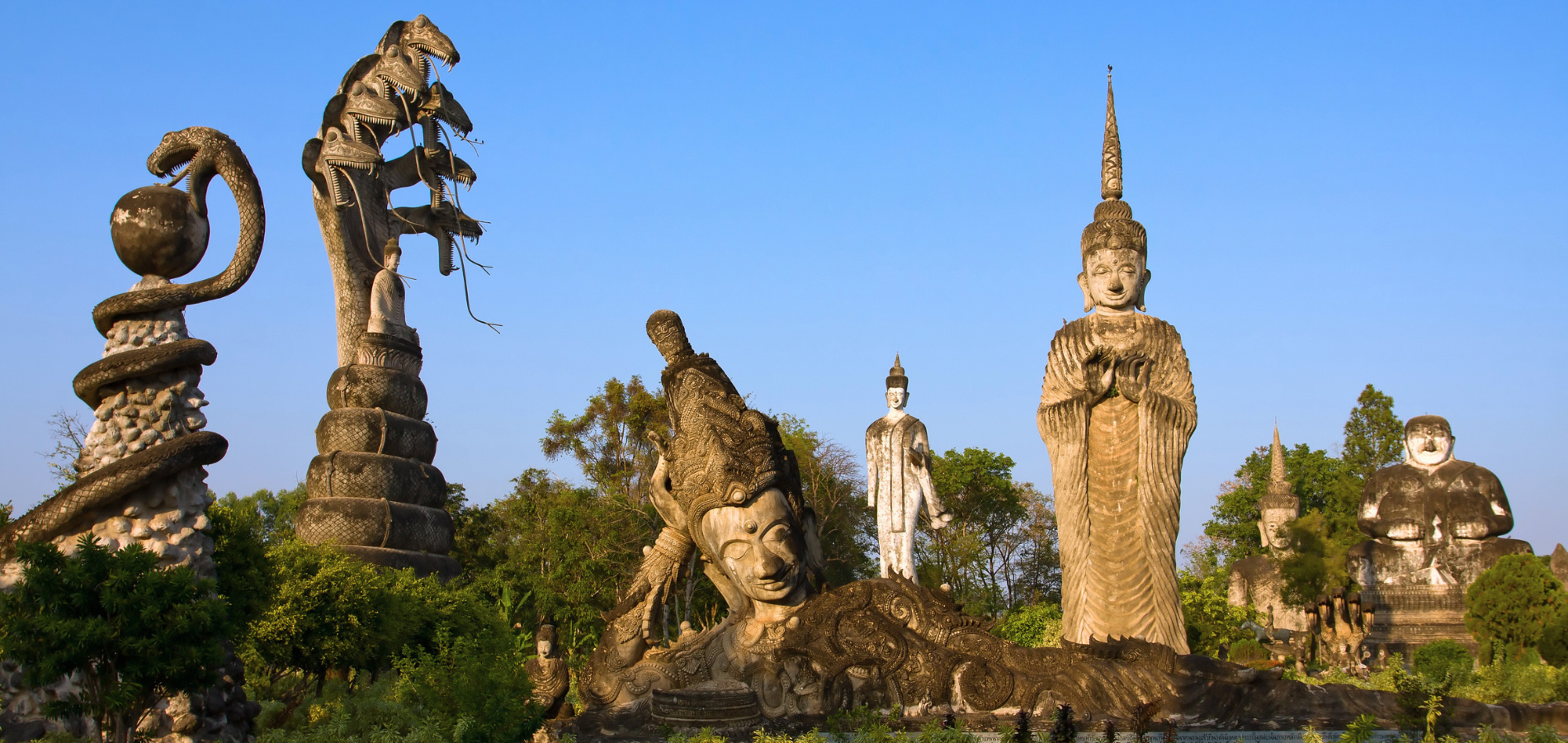
Sala Kaeo Ku is on the edge of town. The park was created from 1978 onwards by Bunleua Sulilat, a Lao mystic settled in Thailand, who spent close to twenty years having concrete sculptures built that blend Buddhism and Hinduism. You wander among Buddhas and Hindu deities, some of them more than twenty metres tall. The best known is a seven-headed naga rising above a seated Buddha. Admission costs 40 baht and the visit takes about an hour.
Even if this is the site not to be missed, the province does not stop there. In town, the Tha Sadet market stretches along the river, and Wat Pho Chai is home to the Luang Pho Phra Sai, a golden Buddha that people in the region revere above all others. And heading back up the Mekong to the west, the road crosses hills to Wat Pha Tak Suea, a temple perched on top of a cliff. A walkway with a glass floor juts out over the void, with the river and the mountains of Laos below. To get there, allow 1.5 hours' drive from Nong Khai.
When to go to Isan and which festivals to aim for
The best time to visit Isan in Thailand runs from November to February. The days are dry and warm, between 25 and 30 degrees. At night, on the other hand, temperatures often drop to around 15 degrees, and during cold spells it can fall below 10 degrees at dawn in the countryside. So don't forget to pack a jumper. This is also the lotus season, and the time when the Mekong starts to drop.
The region also hosts some of the most striking festivals in the country, and most of them fall during the hot season or the monsoon. Bun Bang Fai, the rocket festival, is held in Yasothon in May, when villagers launch homemade rockets to call for rain before sowing. Phi Ta Khon, the ghost festival, takes place in Dan Sai in Loei province, between mid-June and early July. At the end of July, Ubon Ratchathani brings out its carved wax floats for the candle festival, which marks the beginning of Buddhist Lent.
These festivals follow the lunar calendar, so their dates change from one year to the next and are often only confirmed a few weeks beforehand.
Practical advice for organising a trip to Isan
How long to allow?
For a first trip to Thailand, we recommend fitting Isan into a fuller itinerary, rather than devoting the whole stay to it. Four or five days are enough for one half of the region, the north around Udon Thani and Bueng Kan, or the south between Buriram and Ubon Ratchathani. It links up well with Bangkok and Ayutthaya, and leaves you time for the rest.
If you already know Thailand and are looking for more local regions, allow at least ten days to link the five provinces, around 1,200 kilometres of driving. It is a more demanding trip to organise. Distances are long and local people speak very little English.
How to get around the region?
Three airports serve Isan from Bangkok in about an hour's flight: Udon Thani, Ubon Ratchathani and Khon Kaen. The night train is another option, with air-conditioned sleeper berths as far as Nong Khai in the north or Ubon Ratchathani in the east.
Once there, public transport links the towns to each other but not the sites, which are almost all deep in the countryside. We recommend taking a car with a driver for the whole route, or renting a car yourself. The roads are quiet, but the distances add up quickly.
Where to stay in Isan?
Udon Thani, Ubon Ratchathani and Khon Kaen have comfortable international hotels. Along the Mekong, in Nong Khai, Khong Chiam or Chiang Khan, you will find small characterful places facing the river, often run by their owners. In rural provinces such as Bueng Kan, the choice is limited to simple, clean guesthouses with no great comfort.
Overall it remains considerably cheaper than in the rest of the country. On the other hand, family rooms and extra beds are rare, and the best addresses have few rooms. And during festivals, you need to book several weeks ahead.