Ethical elephant sanctuaries in Thailand: how to choose the right one?

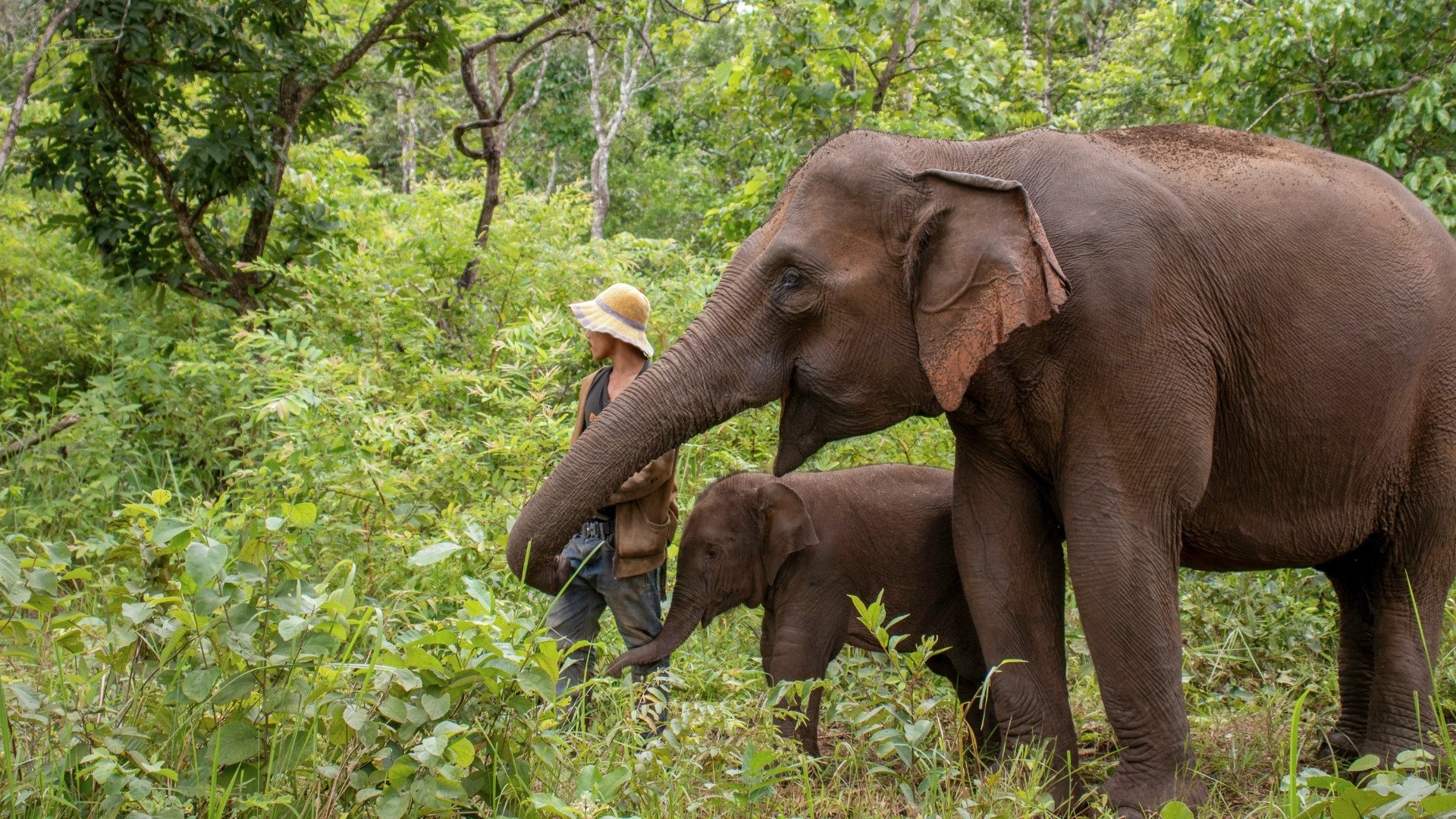
The elephant holds a special place in Thailand. A symbol of the country, present in temples, legends and even on the flag of kings of old, meeting one is an experience many travellers hope to have when they visit. In recent decades, a new generation of places has emerged to make this encounter possible in a different way: sanctuaries, designed to offer elephants a setting close to the life they would have in the wild, far from saddles and circus tricks.
Since the word "sanctuary" isn't governed by any official definition in Thailand, it now refers to places that can be quite different from one another. This article will help you understand what makes a sanctuary truly focused on elephant welfare, and how to choose the one that best fits your trip.
What is an ethical elephant sanctuary?
What sets a sanctuary apart from a traditional camp
For a long time, captive elephants in Thailand worked in the logging industry, alongside their mahout, the caretaker who looks after them day to day. When this activity was banned in 1989, some of these elephant-mahout pairs turned to tourism, offering elephant rides and shows.
It was in response to this model that, starting in the 1990s, the sanctuary concept was born: places organised around the elephants' pace rather than the visitors'. In practice, that means no saddles, no shows, but instead days shaped by feeding, bathing and forest walks.
Many of these sanctuaries started out with just one or two elephants taken in by a family of mahouts, before growing over the years. This history, often shared on site by the owners themselves, is part of what makes the visit so moving: you don't just meet elephants, you encounter individual stories, often marked by difficult beginnings.
What you can do on site
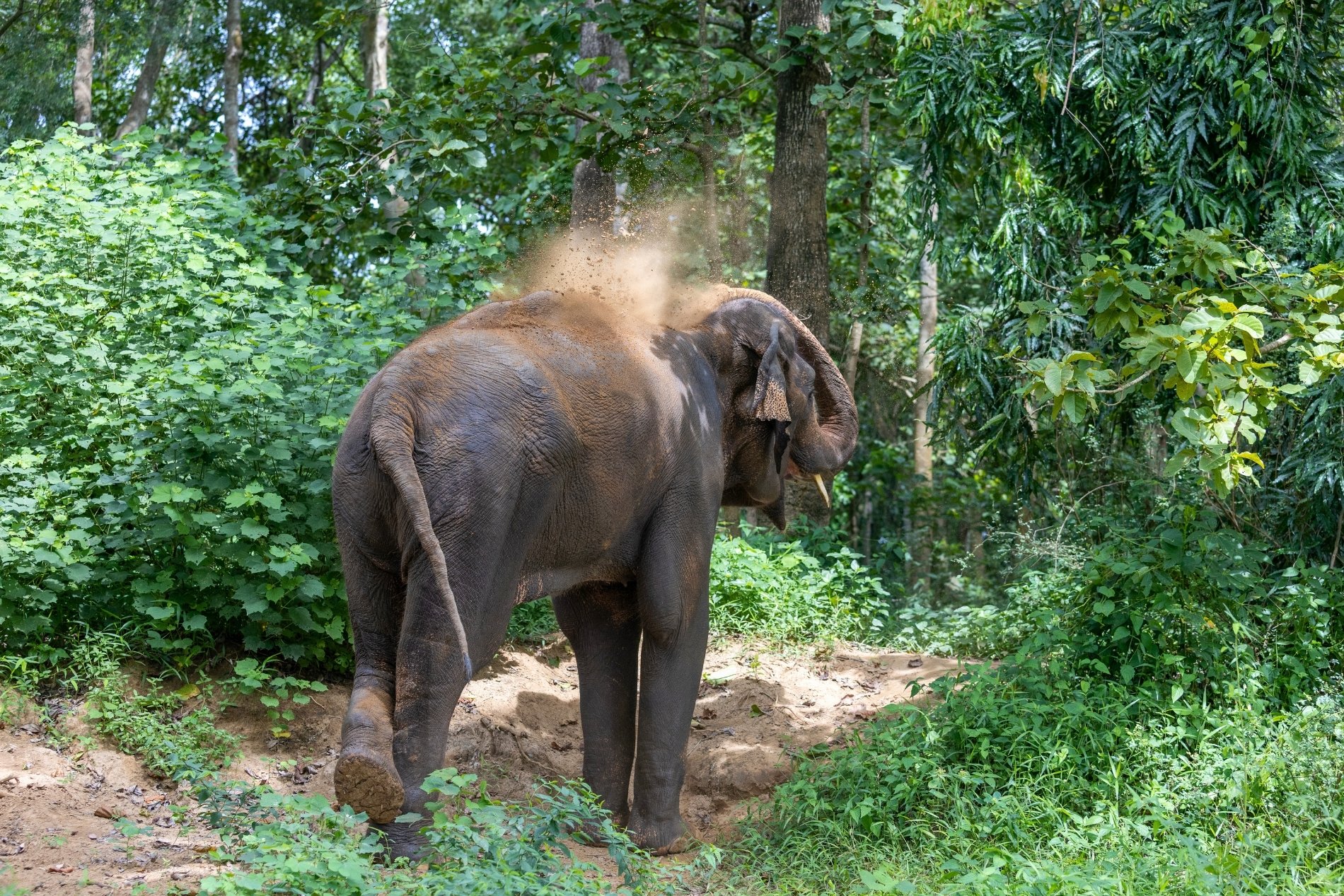
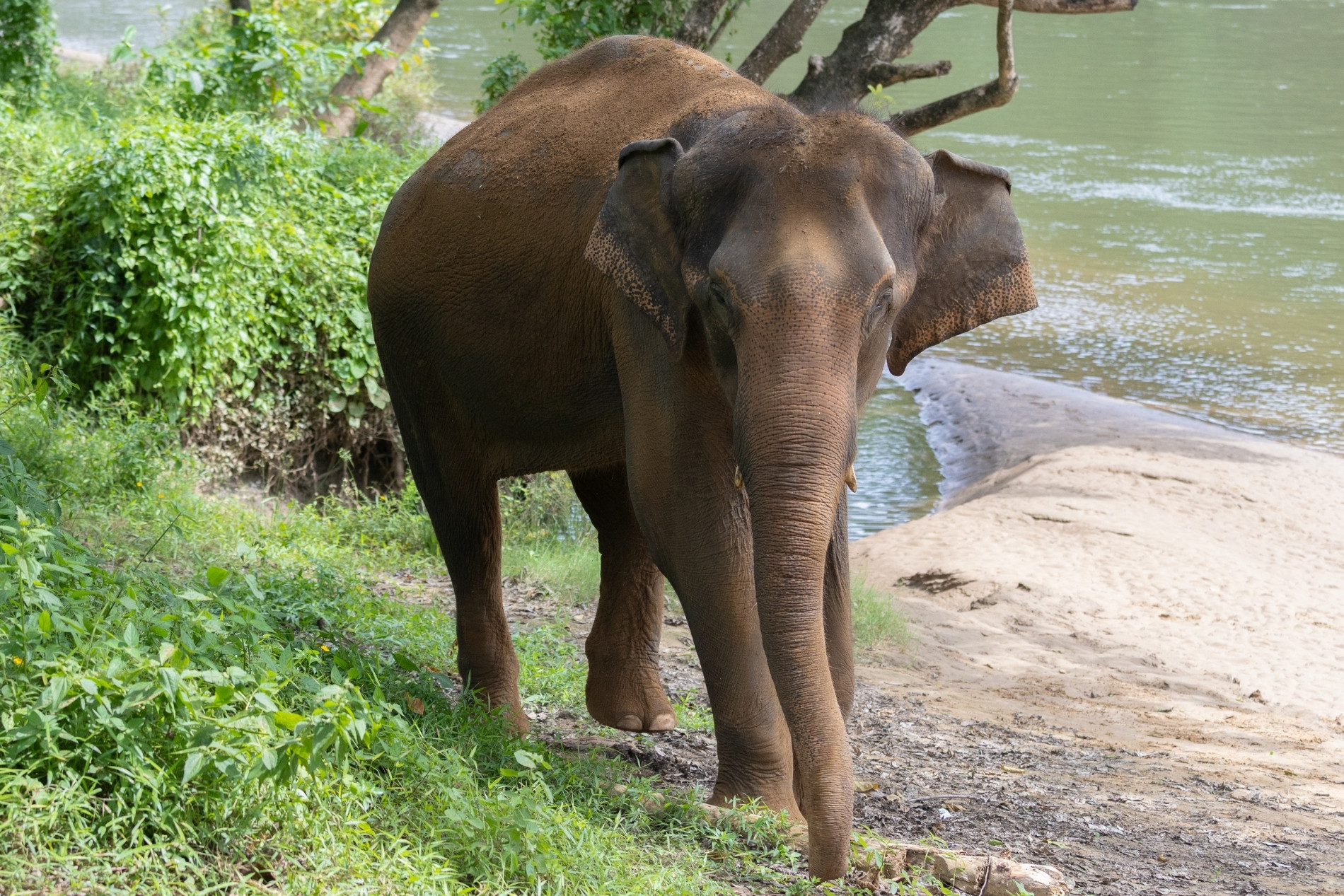
The structure of a visit tends to follow a fairly similar pattern from one sanctuary to another. The day begins with a welcome and an introduction to the resident elephants, each with their own personality and history. Next comes preparing the food: bananas, sugarcane, sticky rice depending on each animal's needs, cut or shaped by hand before feeding them.
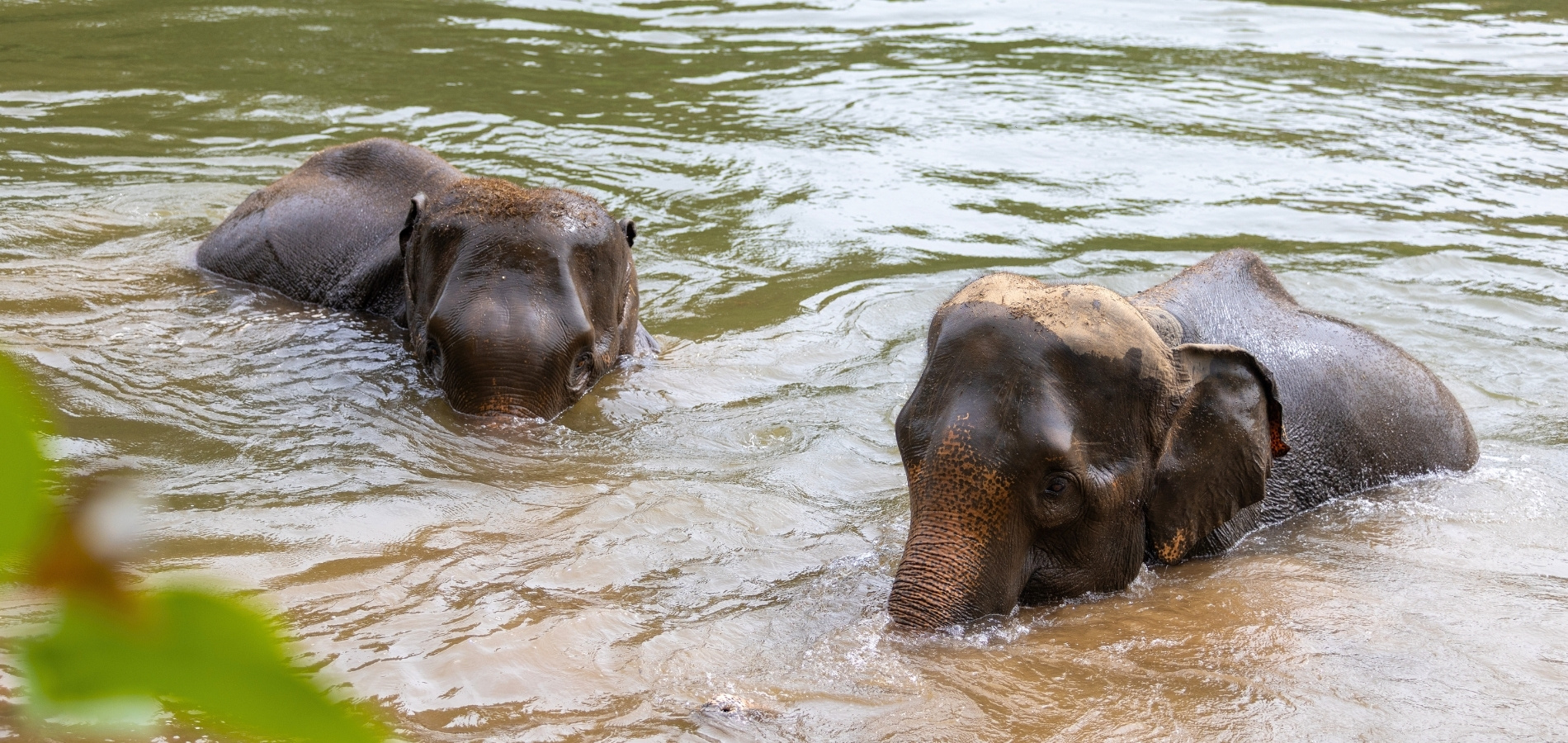
The forest walk that follows moves at the elephants' pace: they set the rhythm. Depending on the sanctuary, bathing in a river or watering hole rounds off the visit, a moment many visitors remember long after.
 |  |
The length of the visit you choose changes the experience quite a bit. A half day lets you take part in one full cycle: feeding and a walk. A full day leaves more time to observe the elephants interacting with each other, and usually includes lunch on site.
The practical criteria to check
Even though no single criterion is enough to judge a place on its own, together they give a good sense of the spirit in which a sanctuary operates. Available space is one of them. Elephants need room to walk, bathe and socialise with other elephants in the group. They are, after all, social animals that live in herds in the wild. A sanctuary that houses several elephants allows them to form real bonds with one another, not just cross paths with visitors throughout the day.
The elephants' background matters too. A good sanctuary knows, and is happy to share, the story of each animal, whether it came from a former trekking camp, the logging industry or a family-run breeding operation. This is often a sign of serious, long-term care.
Finally, the nature of the activities on offer says a lot about how genuine a sanctuary's status really is. Depending on the establishment, you might be asked to prepare the elephants' food, feed them, or even get into the water with them at bath time. There's no single right formula; what matters most is that there's no imposed programme of attractions for the elephants, but rather a visit that adapts to their life and natural rhythm. If in doubt, favour a sanctuary that offers only observation or a guided walk alongside them in the forest.
How to choose your sanctuary in practice
Questions to ask yourself before booking
Since the word "sanctuary" isn't backed by any official framework, a few simple questions can often help you see things more clearly, whether you ask the establishment directly or your travel agency.
Is elephant riding offered, even as an option? This is probably the most telling question. As soon as this activity is part of the offering, even presented as a minor add-on, it's a sign that the place is still built around visitor entertainment rather than elephant welfare.
How many visitors are there per group and per elephant? The smaller the groups, the more the visit feels like an encounter and the less it feels like a parade. A high ratio of visitors per elephant often points to a volume-driven approach rather than genuine individual care.
Where do the sanctuary's elephants come from, and how long have they lived there? An establishment that knows, and is happy to share, each animal's background generally shows real, ongoing care. A vague or evasive answer on this point, on the other hand, is a signal worth taking seriously.
Is bathing with the elephants part of the programme, and under what conditions? The answer here doesn't need to be a simple no to be reassuring. What matters is whether the elephant has the choice to take part or not, and whether the activity is imposed at a fixed time for every group of visitors, or depends on the animal's mood in the moment.
Reviews and reliable sources to check
There's no single official label for elephant sanctuaries in Thailand, but a few references let you rely on real, on-the-ground work rather than scattered reviews.
The best-known figure in this field remains Saengduean "Lek" Chailert, founder of Elephant Nature Park near Chiang Mai and of the Save Elephant Foundation. Since the 1990s, she has helped shape the very concept of the sanctuary in Thailand, and her foundation now supports a network of partner projects in Thailand, Cambodia and Laos, run according to the same core principles: no chains, no rides, no shows. This network isn't a label in the strict sense, but it's a good starting point for identifying places whose practices are documented over time, rather than simply claimed on a website.
Alongside this reference, a few additional habits can help you refine your research:
Check recent reviews (less than a year old), since a place's practices can change from one year to the next.
Go through a local agency that personally knows the sanctuaries and visits them regularly, giving you up-to-date, first-hand feedback rather than just an online listing.
Where and when to visit an elephant sanctuary in Thailand
The main regions to consider
There are several ways to see elephants responsibly in Thailand, including national parks such as Kui Buri, where you can observe these giants living wild and free. But ethical sanctuaries are a good option for making these encounters easier and better organised.
Chiang Mai, in the north, has the largest concentration of sanctuaries in the country, in a wide range of sizes: from large parks home to dozens of elephants to smaller, more family-run operations.
Chiang Rai, a little further north, is home to often smaller sanctuaries, run directly by a single family with just a few elephants, which allows for smaller visitor groups and a more personal visit.
Kanchanaburi, to the west, about two hours' drive from Bangkok, is a good option for travellers who won't be heading up north. Several former camps in the region have converted into sanctuaries in recent years.
If you're visiting the south of the country, there are a few ethical options in Koh Lanta, Krabi or Phuket. Even so, you'll need to stay quite alert, as elephant rides remain very common in these provinces.
Best time to visit
The cool, dry season, from November to February, is the most pleasant time to visit Thailand and meet elephants. Temperatures are mild, and elephants tend to be more active. During the hot season, from March to May, forest walks are done under more intense heat, so it's best to plan for early morning.
The rainy season, from June to October, has its own charm: the vegetation is vividly green, crowds are thinner, and the showers, usually brief and predictable in the late afternoon, don't get in the way of seeing the elephants.
Practical tips for your visit
What to wear
Lightweight, long-sleeved clothing works well for the forest walk, along with closed shoes that can handle mud and humidity, even in the dry season. A hat and sunscreen are useful, but it's best to avoid strong perfumes and cosmetics, which can disturb the elephants.
Indicative budget
Expect to pay roughly 1,500 to 3,500 baht per person (around 40 to 100 euros) for a half day or a full day, depending on the sanctuary and what's included. These amounts are indicative only and vary from one centre to another.
How to book
The most reputable sanctuaries fill up several weeks in advance during high season, especially on weekends. Booking early, or planning your visit outside peak periods, remains the best way to secure a spot.
You can book directly with the sanctuary if you've already found the place that suits you. Going through a local agency has another advantage: it has usually already visited the sites, keeps track of how they evolve over time, and can fit the visit into the rest of your Thailand itinerary without wasting time.