Safari at Kui Buri: the best national park to see wild elephants in Thailand


Thailand is home to nearly 3,500 wild elephants, spread across around twenty national parks. However, if there is one place where you can observe them roaming freely, it is Kui Buri National Park, in Prachuap Khiri Khan Province. With a wildlife sighting rate that often exceeds 95%, this little-known park offers one of the most reliable wildlife viewing experiences in Thailand. Here is everything you need to know to plan your safari in Kui Buri.
Why Kui Buri is the best national park to see wild elephants in Thailand
One of the highest wildlife sighting rates in the country
At Kui Buri, spotting a wild elephant is almost no longer a matter of luck. The official website of Thailand's national parks reports a success rate of around 95% during safari tours.
For comparison, in most other national parks in Thailand, seeing a wild elephant depends entirely on chance, sometimes even after several days of trekking. At Kui Buri, most visitors spot elephants during their very first safari, which usually lasts just a few hours. That is what makes this park truly unique.
It is important to keep in mind that these figures are not contractual guarantees, and nature always remains unpredictable. Some visitors only spot a single elephant 500 metres away, while others encounter entire herds crossing the track.
A truly wild and protected elephant population
The history of Kui Buri is closely linked to that of the Thai Royal Family. During the 1990s, the region experienced significant conflict between wild elephants and pineapple farmers, whose plantations had expanded into the elephants' natural habitat.
After being informed of the situation, King Bhumibol Adulyadej (Rama IX) launched an unprecedented partnership between the Thai government, WWF Thailand and local villagers through the Conservation and Restoration of Kui Buri National Forest Project. The initiative led to:
the official creation of Kui Buri National Park in March 1999,
the restoration of approximately 1,920 hectares of grassland to provide food for wildlife,
the construction of irrigation systems and small reservoirs to ensure a reliable water supply for the animals.
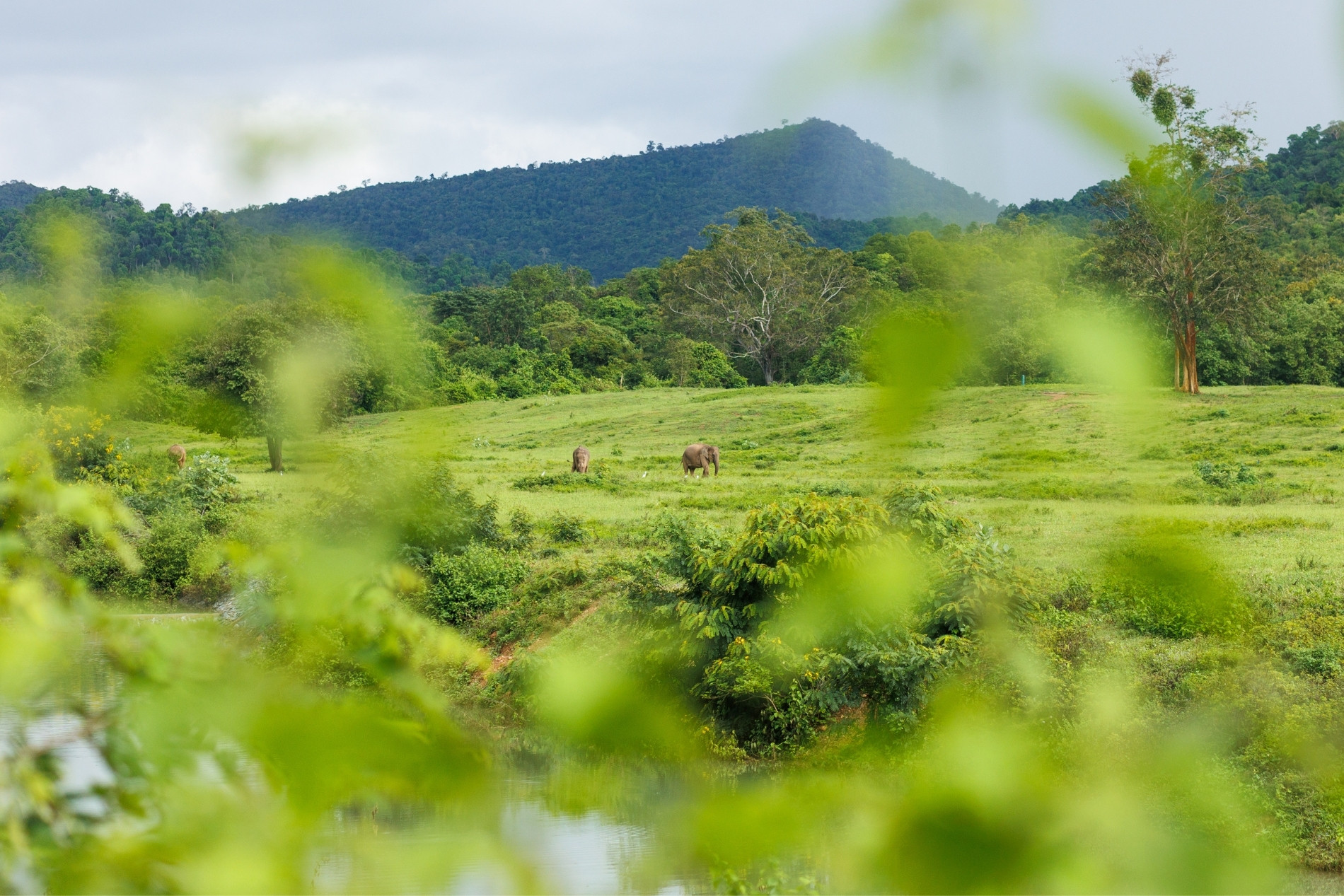
Today, the park is home to between 300 and 350 Asian elephants across an area of 969 km². It is also part of the Kaeng Krachan Forest Complex, which was designated a UNESCO World Heritage Site in 2021.
Kui Buri compared with other national parks
If you are hesitating between several national parks in Thailand to observe wildlife, here is how Kui Buri compares:
Khao Yai National Park: Thailand's oldest national park and by far the best known thanks to its proximity to Bangkok. Wild elephants live there, but sightings are much less predictable. It is an excellent destination for hiking, waterfalls and birdwatching, but it is not the best choice if your main goal is to see elephants.
Khao Sok National Park: A magnificent tropical rainforest in southern Thailand, famous for Cheow Lan Lake. Wild elephants are present, but sightings remain difficult because the dense vegetation makes observation unpredictable. Visitors generally only see elephants when they come to the lakeshore to drink.
Kaeng Krachan National Park: Thailand's largest national park and Kui Buri's direct neighbour. It is exceptionally rich in wildlife, including leopards, gibbons and hornbills, but elephants are spread over a much larger area, making them considerably harder to spot.
Kui Buri is the best option if your main objective is to observe wild elephants in their natural habitat. The other parks offer outstanding experiences through their landscapes, hiking opportunities and biodiversity, but none can match Kui Buri when it comes specifically to elephant sightings.
Planning your safari in Kui Buri: access, prices and how it works
Where is the park and how do you get there?
Kui Buri National Park is located in Prachuap Khiri Khan Province, approximately 85 km southwest of Hua Hin. We recommend including the safari as part of a road trip along the Gulf of Thailand.
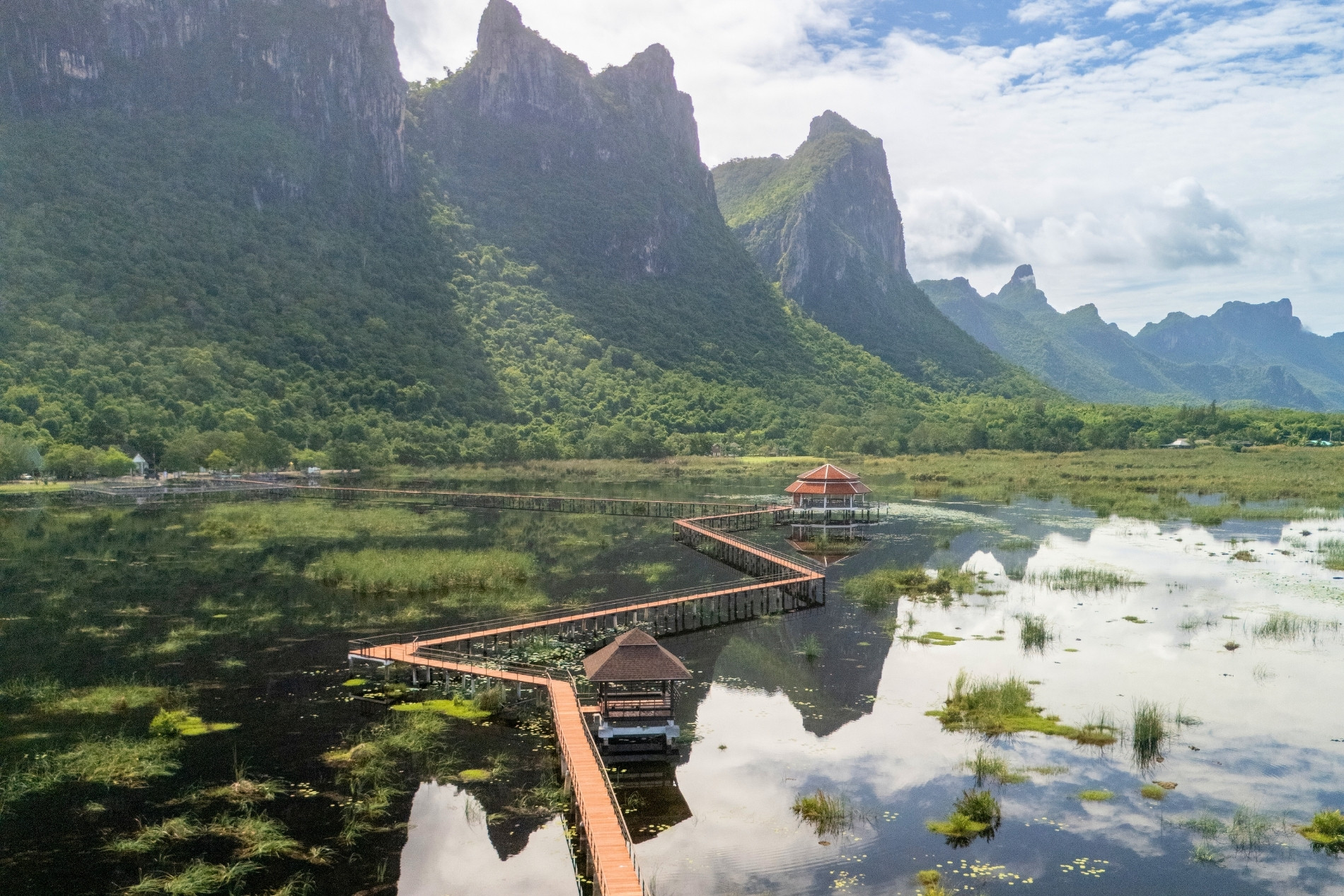
Our recommended itinerary is to leave Bangkok and spend 2 to 4 days in Pranburi. This seaside destination offers an excellent combination of beaches, culture and gastronomy. It is also the ideal base for visiting both Kui Buri (elephant safari) and Khao Sam Roi Yot and its beautiful lake (often nicknamed the "Narnia Lake"), two complementary national parks that are well worth combining.
 |  |
You will need to travel there by car, either by renting a vehicle or hiring a private driver. Allow approximately 4 hours from Bangkok if travelling directly, or 1 hour and 30 minutes from Hua Hin.
National park entrance fees
Below are the current entrance fees for Kui Buri National Park:
Category | Price |
|---|---|
| Foreign adult admission | 200 bahts |
| Foreign child admission (3 to 14 years old) | 100 bahts |
| Car parking | 30 bahts |
| Motorcycle parking | 20 bahts |
The pickup safari with a ranger: how does it work?
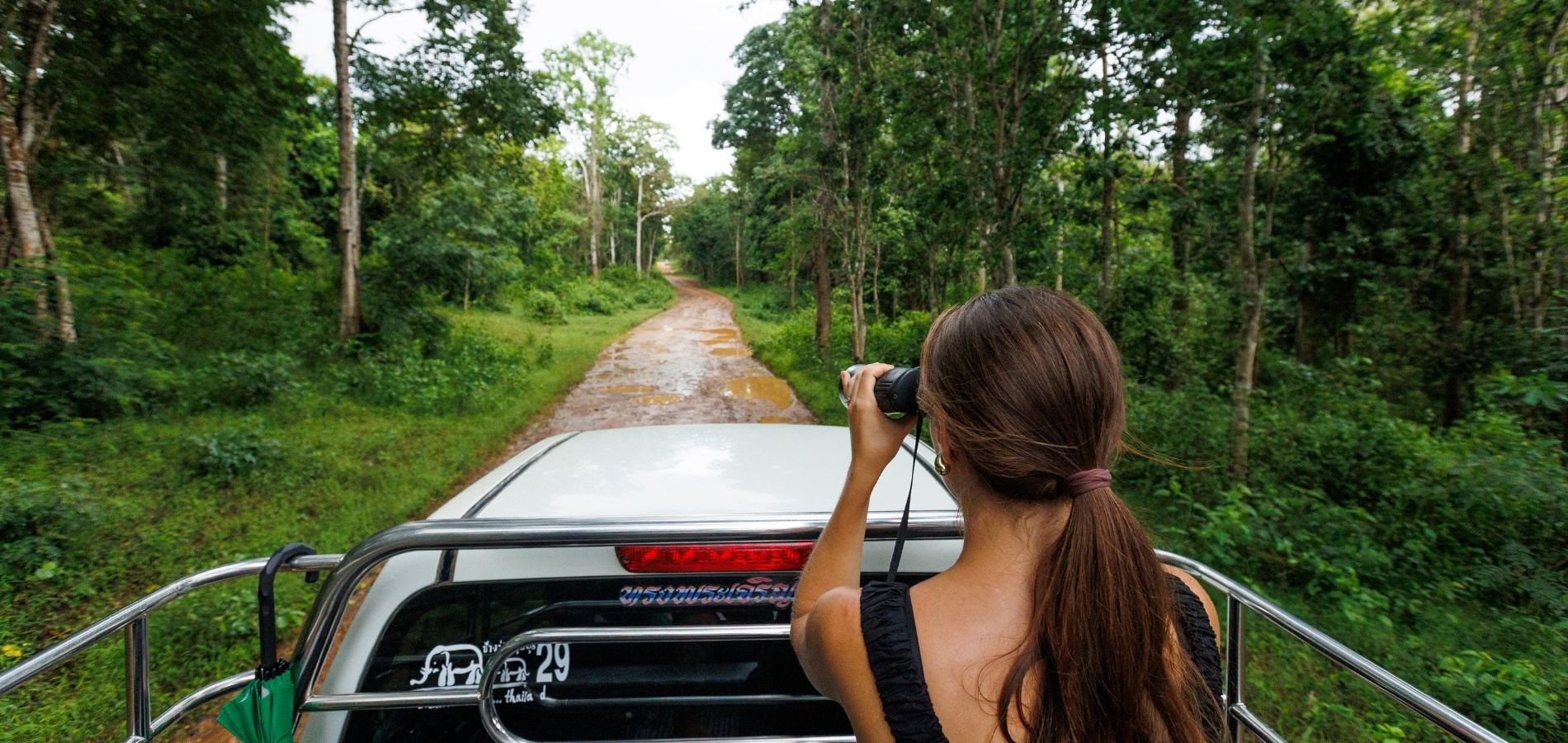
It is not possible to enter the wildlife observation area with your own vehicle, and walking is not permitted. The rules are simple: an open pickup truck, a driver and a local guide are mandatory. These guides are former farmers or residents of the nearby village of Ruam Thai who have retrained through the Kui Buri Wildlife Ecotourism Club programme. This means that the money from your visit directly benefits the local communities that share their land with the elephants.
The safari lasts approximately 3 to 4 hours. The pickup stops at several observation points overlooking the restored grasslands, where elephants come to feed in the late afternoon. Most guides speak basic English, sometimes with limited vocabulary, but they know the area exceptionally well and are highly skilled at spotting wildlife.
There are two types of safari available at Kui Buri, each with its own advantages:
Shared tours: you will share the pickup with other travellers (up to 6 or 8 people depending on the vehicle). This is the most affordable option and is ideal for solo travellers or those on a smaller budget. The atmosphere is often friendly, although you may need to wait for the vehicle to fill up before departure.
Private tours: you will have the pickup exclusively for your group. This is a more comfortable and flexible option, as you decide how much time to spend at each observation point. It is the option we recommend for families with children, couples and wildlife photography enthusiasts who want to take their time at the best viewing spots. Prices for a private safari only (excluding transfers and additional options) start at 1,300 baht per person, approximately €35.
Good to know: the wildlife observation area is open every day of the year from 2:00 pm to 6:00 pm, but new entries are generally no longer accepted after 5:00 pm.
What to bring
Binoculars: they are essential. Elephants are sometimes 200 to 500 metres away, and binoculars make a significant difference. You can rent a pair at the park entrance for around 100 baht.
A camera with a telephoto lens.
A hat and sunscreen: the pickup is open, and you will be exposed to the sun for several hours.
Long clothing in neutral colours (khaki, beige or green): avoid white and bright colours so that you blend into the natural surroundings.
Mosquito repellent: very useful in the late afternoon.
A bottle of water: temperatures remain high, even towards the end of the day.
A waterproof jacket or poncho during the rainy season.
Cash in Thai baht: there are no ATMs or card payment facilities nearby.
When is the best time to visit Kui Buri National Park?
The park is open all year round, but the experience varies depending on the season. The dry season, from November to April, is the ideal time to visit. The weather is pleasant, the landscapes are clear, and wildlife becomes more active in the late afternoon as the heat encourages animals to move around. The very best conditions are between December and February, when temperatures are cooler, although sunset comes earlier and some safaris finish by 5:30 pm.
The rainy season, from May to November, is more unpredictable. The heaviest rainfall usually occurs in August, September and October. Since the safari vehicles are open, you should be prepared to get wet if it rains towards the end of the excursion.
What to see at Kui Buri and tips for a successful visit
Asian elephants in their natural habitat
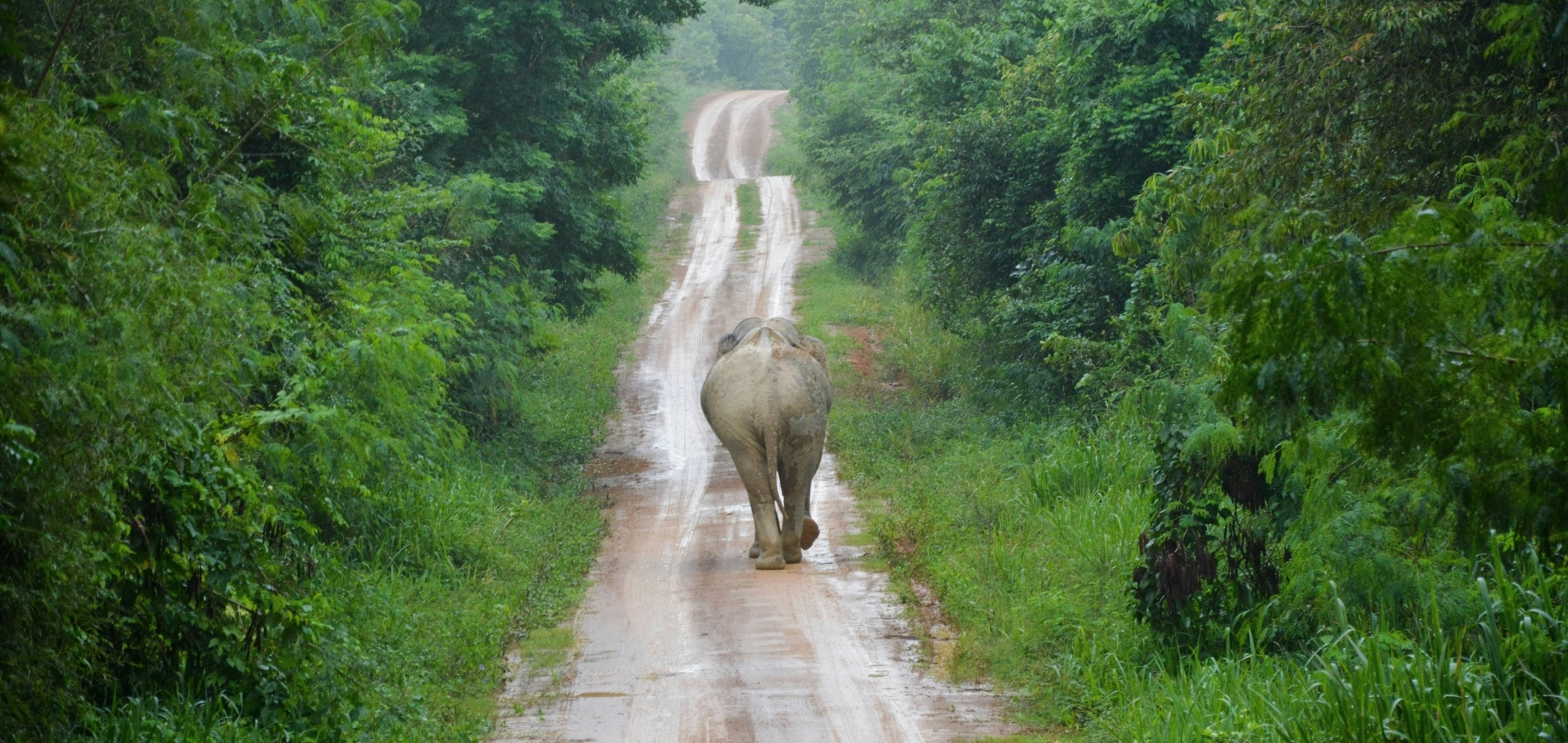
The Asian elephant, Thailand's national animal, is naturally the star attraction of the park. Kui Buri is home to several large herds, and it is not uncommon to see groups of 10 to 30 individuals, sometimes even more.
At Kui Buri, the elephants are truly wild. You may see them grazing, rolling in the dust, playing with their calves or crossing the track on their way to a watering hole. Their freedom and independence make this national park one of the rare places in Thailand where you can enjoy an ethical wildlife experience and observe elephants in their natural environment.
The best sightings usually take place between 3:30 pm and 5:30 pm, when the elephants leave the forest to feed in the grasslands. Keep your distance, remain quiet, and remember that these are wild animals.
Gaurs and other wildlife in the park
Kui Buri is also one of the best places in Thailand to see gaurs, the largest wild bovines in the world. The population is estimated at around 100 individuals. Impressive and sometimes aggressive, they generally remain even more elusive than elephants. However, it is still possible to spot them near the final observation area towards the end of the safari.
Besides these two iconic species, many other animals live in the park:
Banteng: another species of wild cattle, rarer and more discreet,
Sambar deer and barking deer,
Wild boars,
Hornbills: several species, including the great hornbill,
Various species of eagles and birds of prey,
Macaques,
Mongooses,
Monitor lizards.
The park is also believed to be home to tigers and leopards, although sightings are extremely rare.
Ethical wildlife observation
Visiting Kui Buri means choosing a form of responsible wildlife tourism, the complete opposite of traditional elephant camps where animals are trained, ridden or exhibited. Here, no direct interaction is allowed. Wildlife is observed from a distance, either from the pickup truck or from elevated viewing platforms.
Here are a few simple rules to follow for the best possible experience:
Stay inside the vehicle unless your guide instructs otherwise.
Do not shout or make sudden movements, as this may frighten or stress the animals.
Do not use flash photography.
Never feed the animals.
Do not leave any rubbish in the park.
If possible, leave a tip for your guide. It is not mandatory, but it is greatly appreciated (around 100 to 200 bahts, depending on the quality of the safari). It provides valuable additional income for the local families who work as guides.
By choosing Kui Buri, you are directly supporting a conservation model that truly works. It is probably one of the finest wildlife experiences Thailand has to offer, and it is also a meaningful way to support a living ecosystem.
