Giving alms to monks in Thailand: how to take part in tak bat?

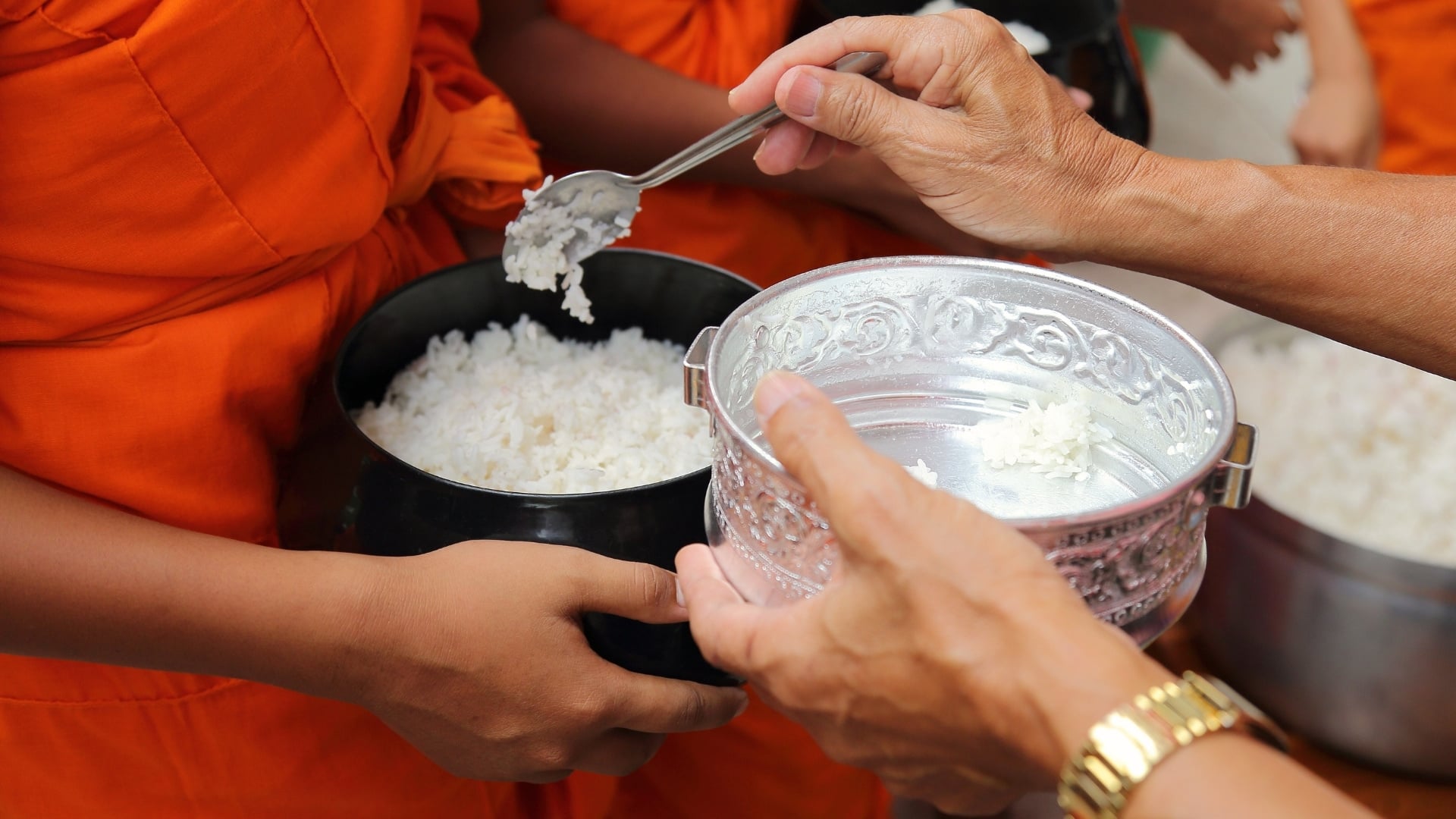
In many Thai towns and villages, the day begins before sunrise, to the rhythm of the silent footsteps of monks leaving their temple to receive offerings from local residents. This moment, known as tak bat (ตักบาตร), has been part of everyday life in the country for centuries. For travellers, witnessing or taking part in it is often one of the most memorable experiences of a trip to Thailand.
What is alms-giving to monks in Thailand?
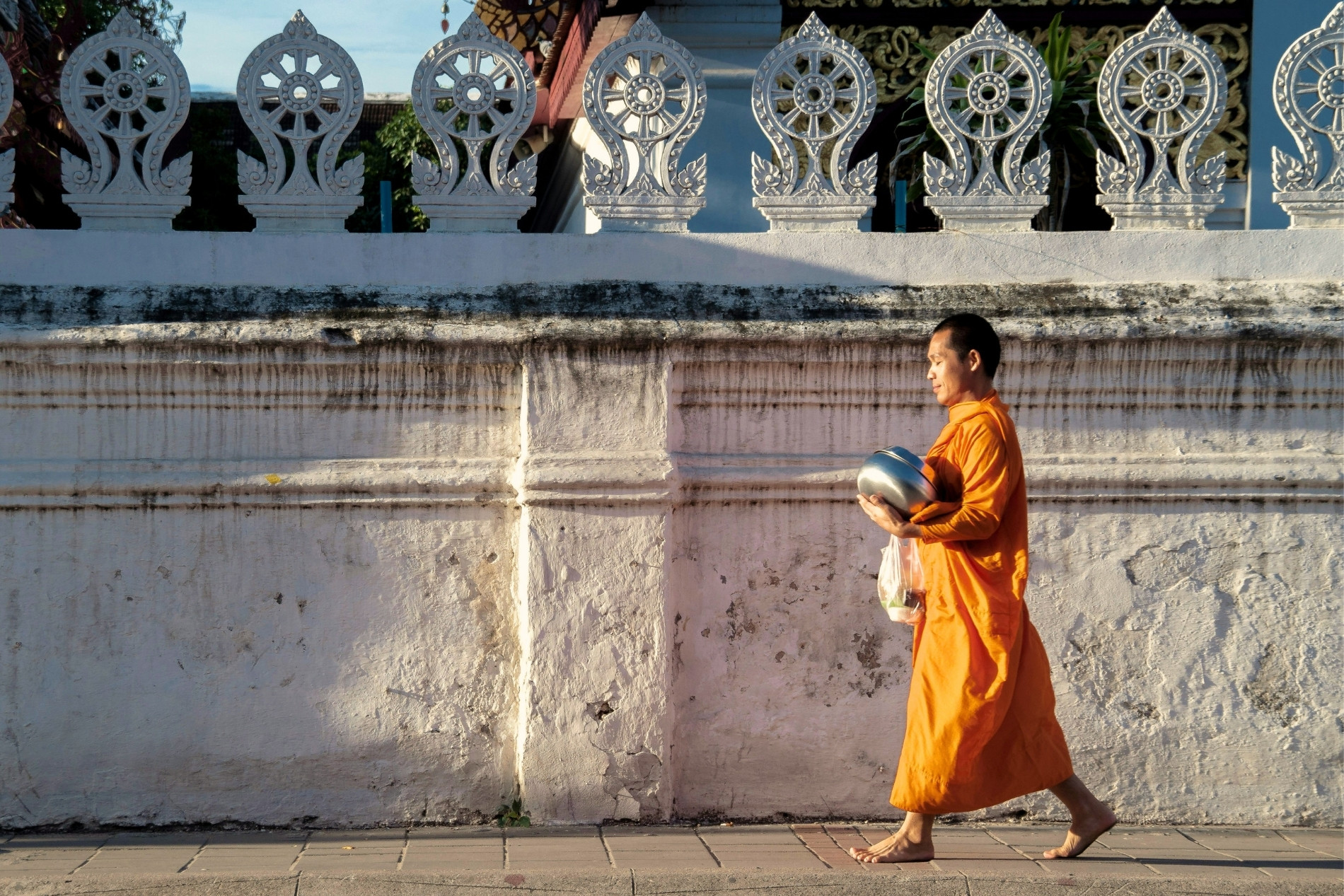
Tak bat is a daily Buddhist ritual, practised in countries where Theravada Buddhism is the majority religion, including Thailand. Every morning, early, monks leave their temple barefoot and walk in single file through the streets carrying their alms bowl (bat). Local residents, kneeling or simply standing outside their homes, place food prepared in advance into the bowl: sticky rice, cooked dishes, fruit, and sometimes a few everyday items. In Thailand, unlike what can be seen in other countries in the region, monks often move in small groups rather than long processions, and take different routes on different days to visit all the homes in their neighbourhood.
This gesture has a precise meaning within Buddhist tradition: it allows the donor to accumulate merit (tham bun), a central concept in Thai Buddhism that shapes conduct throughout one's life. The monk, for his part, owns almost nothing: a few robes, a bowl, a razor. He depends entirely on the generosity of laypeople for his food, and this morning meal is often the only one, or one of only two, he will have during the day.
Giving alms is therefore not an act of charity in the sense sometimes understood in the West. Rather, it is the donor who thanks the monk for giving them the opportunity to perform a good deed. The monk, in return, does not say thank you. He silently blesses the donor or recites a short formula in Pali.
It's important to keep this in mind before attending: tak bat is not a show staged for visitors. It is a religious practice that takes place every day. In some heavily visited locations, a degree of adaptation to tourism has emerged, with vendors set up along the route selling ready-made offerings. But the essence of the ceremony remains what it has always been: a moment of local life, quiet and silent, that visitors are invited to take part in with respect rather than watch as if it were an "attraction".
How to take part in alms-giving to monks
The best places in Thailand to experience this moment
Tak bat takes place every morning in almost every town and village in the country, since nearly every neighbourhood has its own temple. It isn't necessary to travel to one specific place to witness it: it's generally enough to head out early, near an active temple. Some places, however, are particularly well suited to this experience for travellers.
In Sukhothai's old town, the most striking scene takes place at Wat Traphang Thong. The temple sits on the edge of a small lake, connected to the shore by a wooden footbridge, and worshippers gather there early in the morning to give alms to the monks crossing it. The setting, with its calm water and the first light of day, makes it one of the most photogenic places in the country to experience this moment.
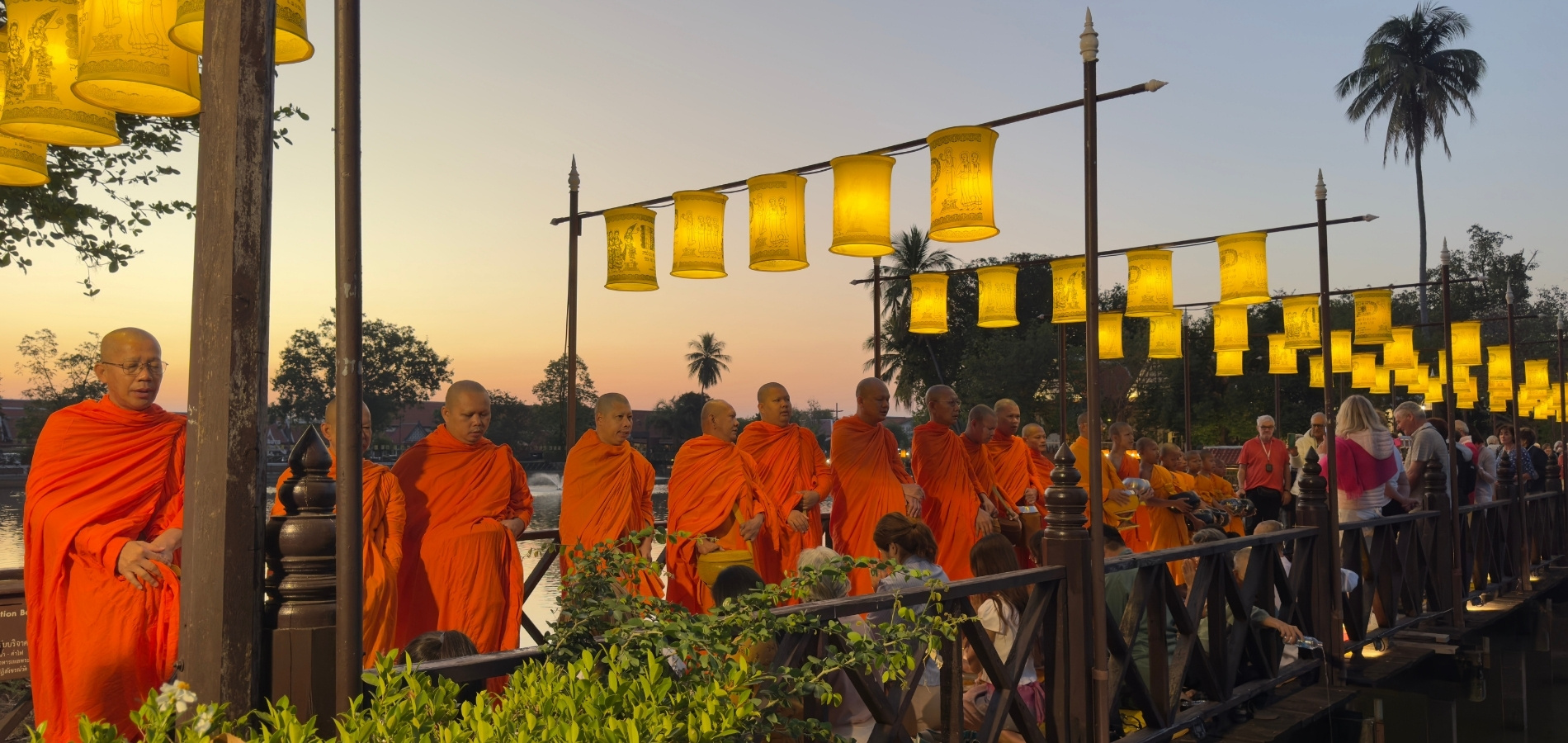
In Sangkhlaburi, in Kanchanaburi province, monks make their morning round on and around the famous wooden Uttamanusorn Bridge, better known as the Mon Bridge, which connects the town to the Mon village of Wangka. It is one of the few places in the country where monks can be seen walking directly across a bridge, in a lake-and-mountain setting that makes the moment especially memorable.
Chiang Mai has more than 300 temples, and monks pass by several must-see temples in the historic centre and surrounding neighbourhoods every morning. The city's old streets also offer a particularly calm and pleasant setting in which to take part.
Ayutthaya, the former capital of the Siamese kingdom, is also an excellent destination for experiencing tak bat. Its many still-active temples make it possible to witness this moment amid history-rich surroundings.
What time does tak bat take place?
Tak bat takes place very early, generally between 5:30 and 6:30 a.m., before the heat sets in and before shops open. Exact times vary from temple to temple and by season. Once on site, the simplest approach is to ask your accommodation or a local the day before. In many small towns, the monks' route follows a fairly stable path, well known to residents of the neighbourhood.
It's a fairly short experience, often lasting around twenty minutes, the time it takes the monks to cover their route. We recommend arriving a little early.
Should you join an organised experience or attend on your own?
It's entirely possible to attend tak bat on your own, simply by finding out the time and place beforehand. This is, in fact, the most discreet way to experience this moment.
Some agencies and accommodations, however, offer a guided experience, including preparing offerings and explaining how the ritual unfolds. This option can be useful for a first encounter with the practice, particularly if you wish to take an active part rather than simply observe. It helps avoid missteps and better understand what you are doing.
The right behaviour to adopt around monks
What can you offer the monks?
The most common offering is food: steamed sticky rice, prepared dishes, fruit, biscuits or sweets. Non-food offerings useful to temple life, such as basic hygiene products, are also occasionally given. If you wish to take part in tak bat, it's best to buy fresh offerings, ideally on the same day. In the most visited areas, vendors sometimes sell ready-made offering sets near the route: this is a convenient option, but nothing stops you from preparing a simpler offering yourself.
The gestures and postures to observe
The process is always the same: the monks walk in single file, stopping briefly in front of each donor, who places their offering into the alms bowl, without touching the monk. The gesture is made in silence, with a slight bow of the upper body. Kneeling is not systematic, but is recommended if you are seated on a mat at a specific spot. Avoid prolonged eye contact and conversation: this is not a moment for exchange, but a shared moment of quiet reflection.
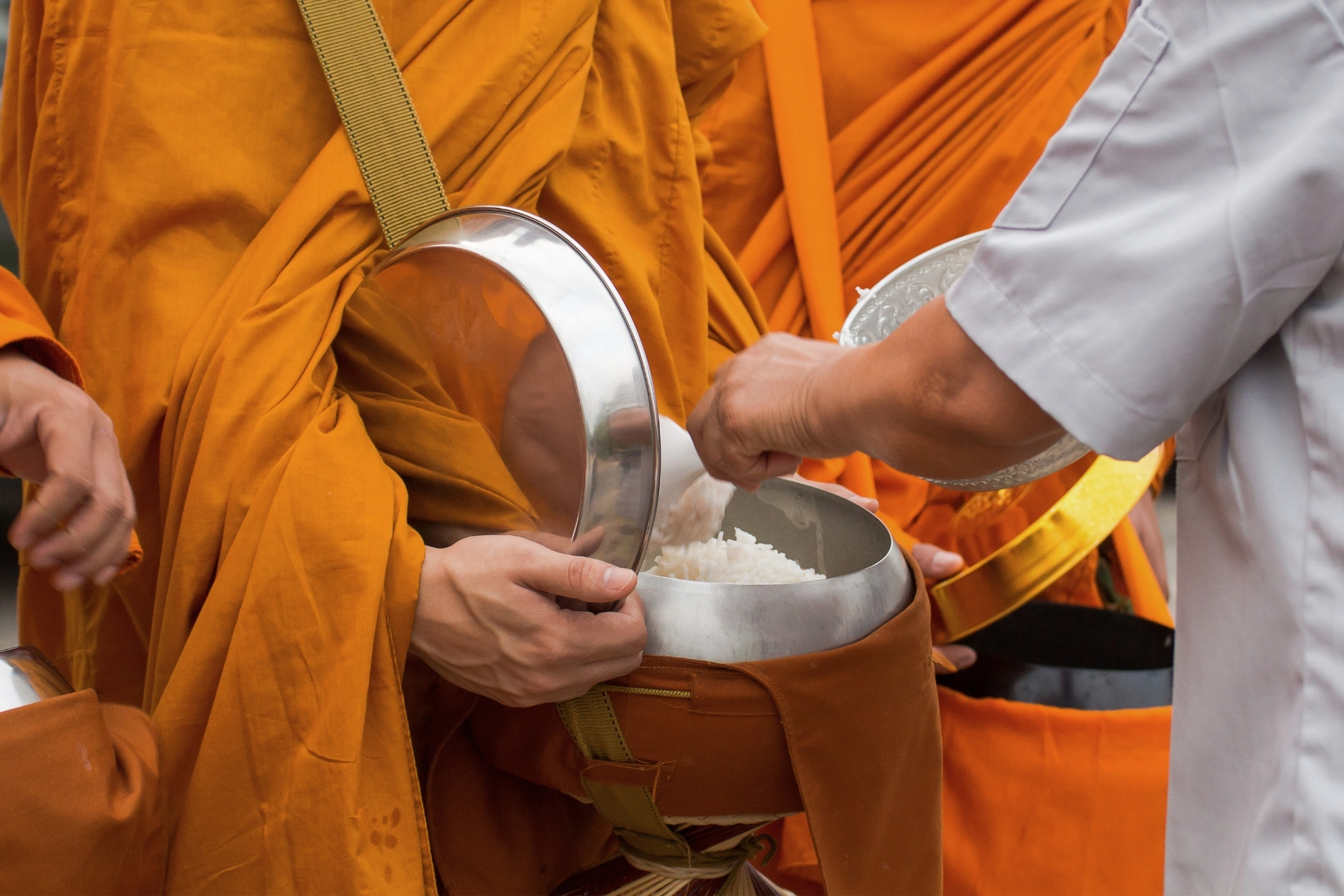 |  |
One rule is particularly strict and worth knowing: a woman must never touch a monk, nor even brush against his robe. During tak bat, this isn't an issue. The bowl acts as an intermediary, and food is placed directly into it, without any contact with the monk's hands. However, it's important to keep this rule in mind for other situations. For example, if a woman wishes to hand an object directly to a monk at the temple: the monk lays down a cloth on the ground or on a table, onto which she places her offering, which he then picks up himself. This rule is part of monastic vows and is not a local custom that varies from place to place: it applies throughout the entire country.
As with visiting any Thai temple, appropriate dress is required: shoulders and knees covered, and shoes removed if you sit on the ground to make your offering.
Mistakes to avoid at all costs
A few behaviours, often committed without any bad intention, should be avoided:
Standing too close to the route or cutting through the monks' line to take a photo.
Using flash or getting too close with a camera: stepping back slightly and using zoom is more than enough.
Talking loudly, laughing or joking during the ceremony, including while waiting for the monks to arrive.
Overall, the right attitude can be summed up in one simple idea: stay discreet, let the moment happen rather than force it, and remember that as a foreign visitor, you are witnessing a religious practice that belongs, first and foremost, to the people of this country.