Mae Kampong in Thailand: the authentic village near Chiang Mai


Would you like to explore northern Thailand during your trip, but prefer calm and serenity? Consider an off-the-beaten-path escape: head to the famous Chiang Mai region, but far from the tourist crowds, to the small village of Mae Kampong.
This village is a hidden treasure nestled in the mountains. Perched more than 1,300 meters above sea level, around 50 km east of Chiang Mai, this place surrounded by nature offers a magical experience not to be missed.
By visiting this typical village, you will discover a local northern Thai community that has preserved its traditional and authentic way of life. The inhabitants make their living through agriculture, especially tea and coffee cultivation, which thrive in this mountain climate. You may also witness ancestral customs preserved by the locals, such as traditional dances and local cuisine.
The villagers are always welcoming and will greet you with open arms! So, what are you waiting for? Follow our tips for the perfect discovery of this small village:
How to get there
What activities to do
Where to stay
When to visit
How to get to Mae Kampong ?
You will find the village of Mae Kampong east of Chiang Mai, the most famous province in northern Thailand. To reach the region from Bangkok, you can choose one of the following means of transportation: plane, bus, or train. Each has its advantages and disadvantages. The plane is the fastest, the bus the most economical, and the train the most authentic. The choice is yours!
Once you arrive in Chiang Mai, several options are available to reach the village of Mae Kampong:
Renting a car or scooter if you prefer to travel independently. After only one hour on the road, you will be free to manage your schedule as you wish.
A private taxi, recommended if you are traveling with family or in a small group for greater comfort.
A day trip excursion, which organizes guided visits and transportation for you. A simple and hassle-free solution, although it lacks a bit of freedom.
Which activities can you do in Mae Kampong ?
Hiking, waterfalls, and viewpoints
Nature lovers will be delighted. The village is the starting point for several jungle hikes: the perfect opportunity to combine physical activity with fresh mountain air. The trails wind between the trees, and depending on the season, you will walk through vegetation that is more or less dense and humid.
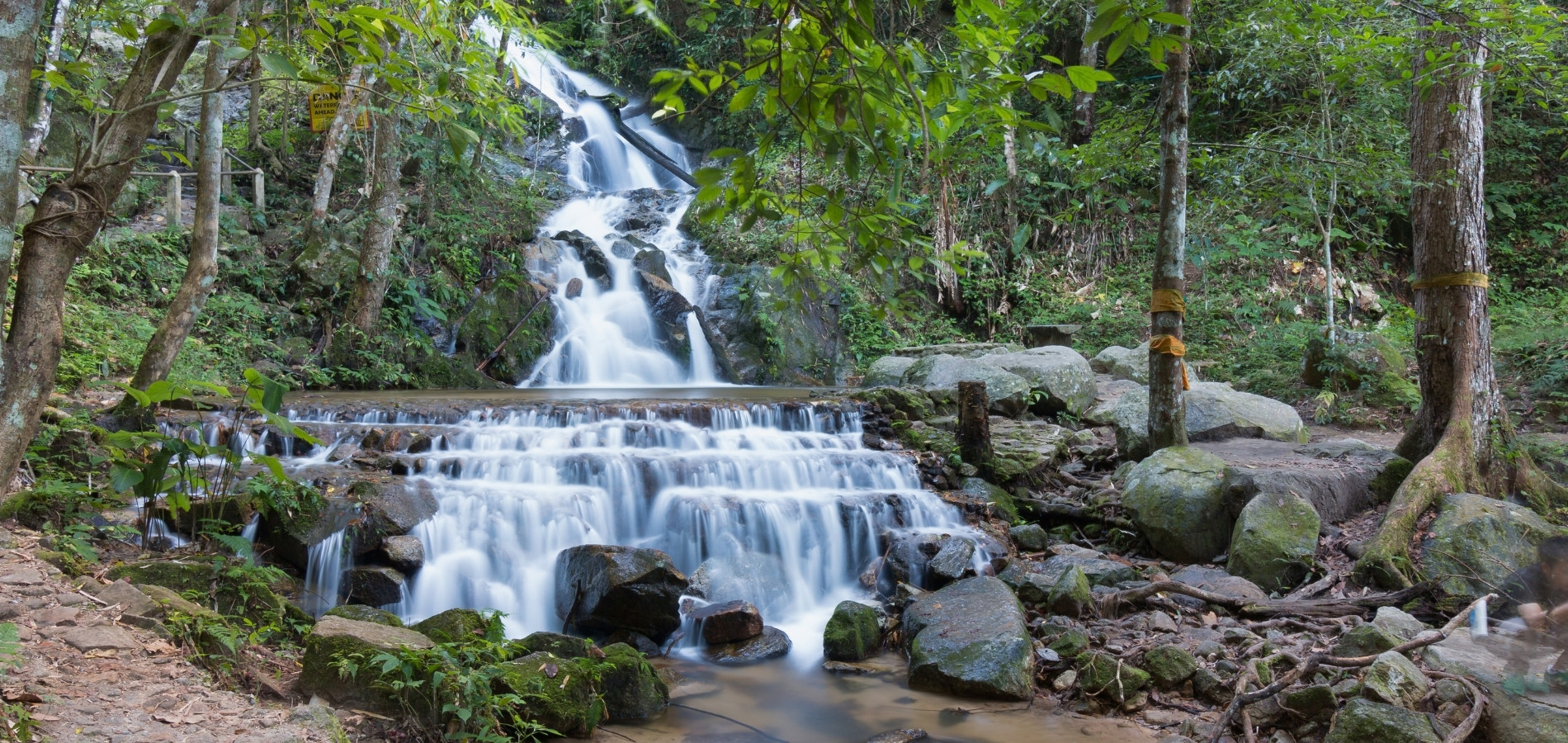
Along the way, you will come across refreshing waterfalls, starting with the Mae Kampong Waterfall, perfect for a short break with your feet in the water. For panoramic views, the Kew Fin Viewpoint offers breathtaking scenery over the surrounding mountains and valleys: an ideal spot at sunrise, when the mist still clings to the peaks.
Make sure to bring good walking shoes: the trails can be steep and slippery.
Tea and coffee plantations
Mae Kampong’s reputation largely comes from its tea and coffee plantations. Historically, the village mainly lived from tea production, especially miang (fermented tea leaves typical of the north), before coffee gradually became more important. The plantations are scattered throughout the hills: you can easily get close to them and learn more about these crops that shape the daily lives of the villagers.
Coffee shops with a view
Fancy a tasting session? The village and its surroundings are full of coffee shops, some perched in the middle of nature with spectacular jungle views. Exceptional drinks are served there, often made from locally harvested coffee beans. We recommend Teddu Coffee and The Giant Chiangmai. The latter, built inside a tree, is worth the visit as much for its setting as for its coffee. The perfect place to take a break and enjoy the surrounding tranquility.
Local culture and wellness
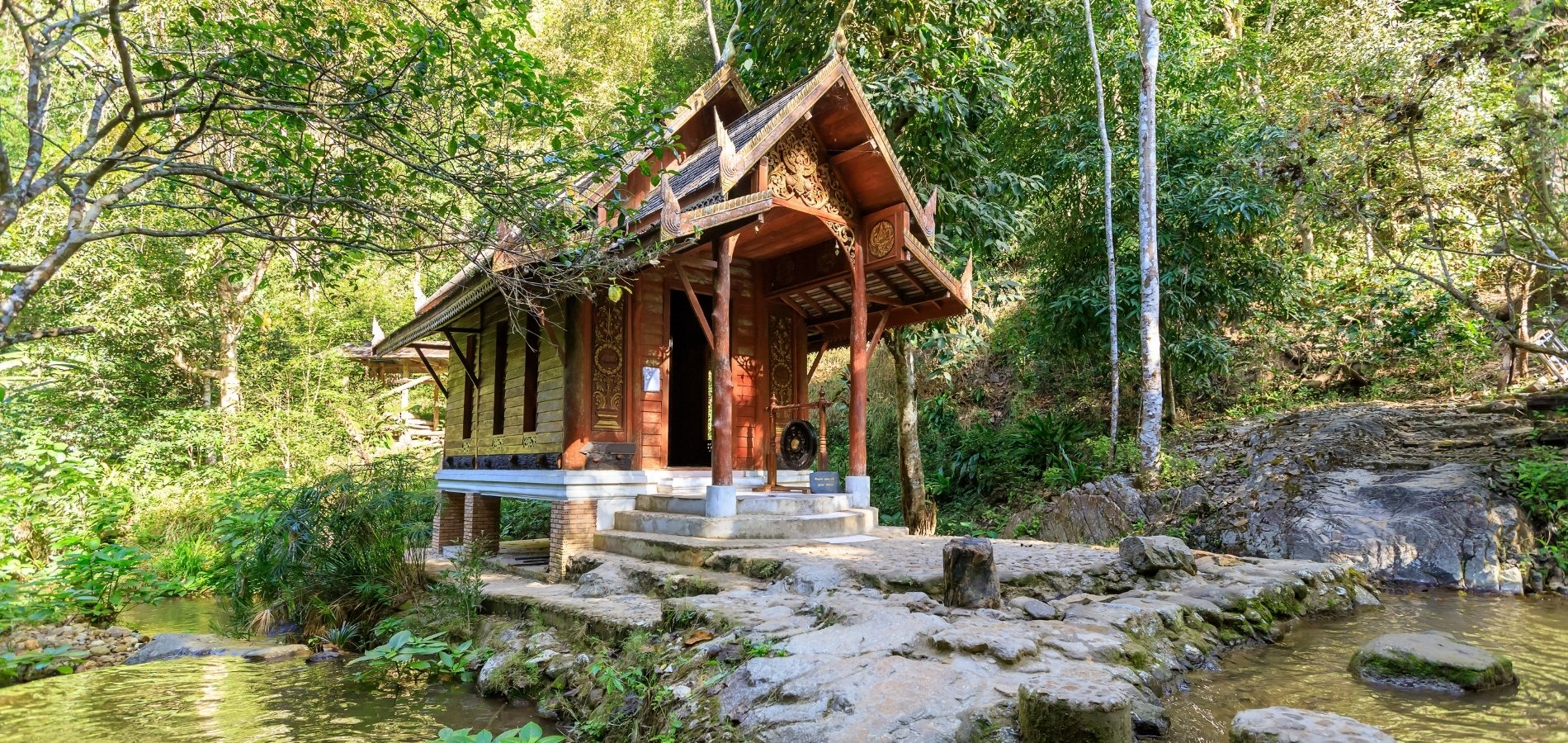
Mae Kampong is also a true cultural immersion. To discover Buddhist culture, make a stop at Wat Khantha Pruksa, the village’s only temple, nestled in the greenery. You can also take part in handicraft workshops: basket weaving and bamboo cushion making are local specialties still mastered by many of the village elders, or you can join a traditional Thai cooking class.
And for a relaxing family moment, head to the nearby hot springs, such as the San Kamphaeng Hot Springs, where you can relax in naturally heated baths surrounded by nature.
Where to stay in Mae Kampong ?
For a more immersive experience in the life of the village and its inhabitants, we recommend spending at least one night there. Despite its small size, this mountain village offers several accommodation options.
The community homestay program
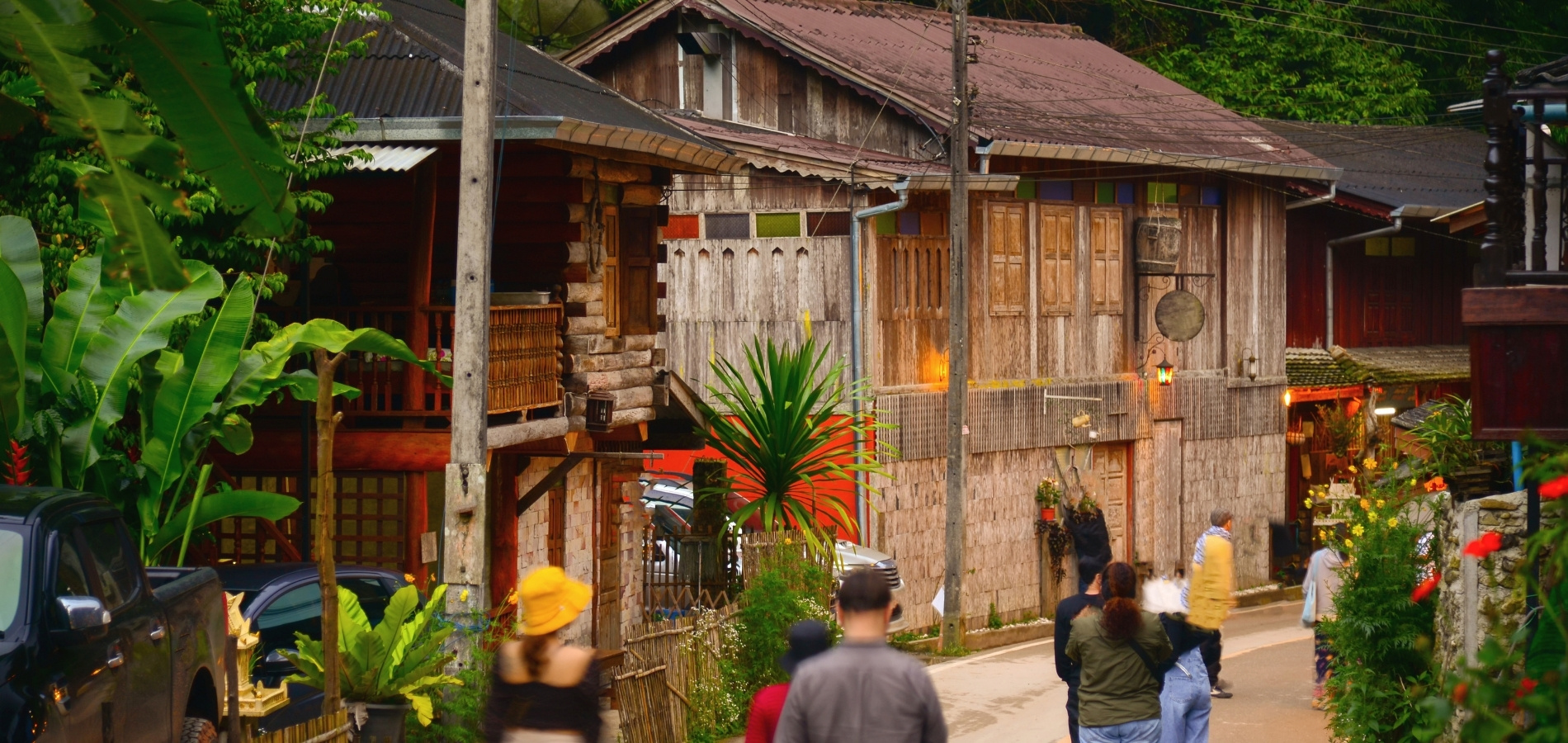
The great uniqueness of Mae Kampong lies in its community-managed homestay program. In practice, local families have adapted their homes to welcome travelers, and part of the income is redistributed to the community to fund local projects and preserve the village’s traditional way of life.
This model has made Mae Kampong an example of community-based ecotourism in Thailand: here, the villagers themselves manage the tourism offering and directly benefit from it. Staying in one of these homestays is therefore much more than just spending the night: it means sharing a family’s daily life, often around a shared dinner, in a traditional wooden house. Expect to pay generally between 500 and 700 THB per room per night (indicative prices, to be checked at the time of booking).
Our recommended places
Homestay MaeKampong Chiang Mai: certainly one of the village’s most well-known addresses for this immersive experience.
Baan Kidteng Maekampong: a homestay highly rated by travelers, located only a few minutes from Mae Kampong Waterfall, appreciated for its cleanliness, location, and hospitality.
April Cottage: a charming little wooden accommodation nestled in nature, with views over the jungle and the river. Please note: April Cottage is not part of the community cooperative, and its rates are slightly higher than the homestays included in the program.
The village spirit: there are no large hotel chains here, nor even a single 7-Eleven. That is exactly what preserves the charm of Mae Kampong. Let us not forget that it is our responsibility as travelers to protect the environment, its wildlife, flora, and inhabitants during our stay. Our ethical travel tips: support sustainable tourism initiatives (such as the community homestays), do not leave waste in nature, and respect wildlife.
When to visit Mae Kampong ?
Although Mae Kampong is an attractive destination all year round, each season offers a unique experience.
From November to February : this is the best period. The weather is cool but sunny, avoiding both rain and pollution. It is without a doubt the best time to visit northern Thailand, and nature is at its most beautiful.
From July to October : despite being the rainy season, it is still another great option. Nature becomes even greener and the waterfalls more abundant. However, be aware that hiking trails can become slippery.
From March to June : a period to avoid. A major wave of pollution caused by agricultural burning affects Chiang Mai and its surroundings. The air becomes hazy, making it less pleasant to visit this normally green and bright region.
Frequently asked questions about Mae Kampong
Is Mae Kampong worth visiting just for the day, or should you stay overnight? Both are possible, but spending one night there truly changes the experience. During the day, the village fills with visitors coming from Chiang Mai, and it is in the late afternoon, once they leave, that Mae Kampong reveals all its tranquility. One night, and therefore two days on site, is more than enough to fully experience what Mae Kampong has to offer.
Is there a 7-Eleven or an ATM in Mae Kampong? No, and that is precisely part of its charm: no large chains, no 24/7 convenience stores. Bring some cash before heading up, although most businesses and accommodations are used to adapting to travelers.
Should you book your homestay in advance? It is highly recommended, especially during high season (from November to February) and on weekends, periods when the village is very popular among Thai visitors themselves. During weekdays and off-season, you will have more flexibility. Booking in advance remains the safest option to avoid unpleasant surprises.
Do people speak English in Mae Kampong? Very little. Most villagers only speak limited English, which is part of the authenticity of the experience. A few Thai words, a translation app, or booking through an agency or a French-speaking guide can greatly facilitate communication. This should also be checked depending on the accommodation chosen: some homestays or tours provide English-speaking assistance.
Can Mae Kampong be combined with other visits? Absolutely. On the road between Chiang Mai and the village, you will notably find the San Kamphaeng Hot Springs and the nearby handicraft area of the same name. Many travelers combine these visits within the same day.
What is the best time to visit Mae Kampong? From November to February, for cool and sunny weather. Please note: nights can be cold at this altitude. Avoid the months from March to June, marked by pollution caused by agricultural burning.