The Khao Soi: northern Thailand’s curry

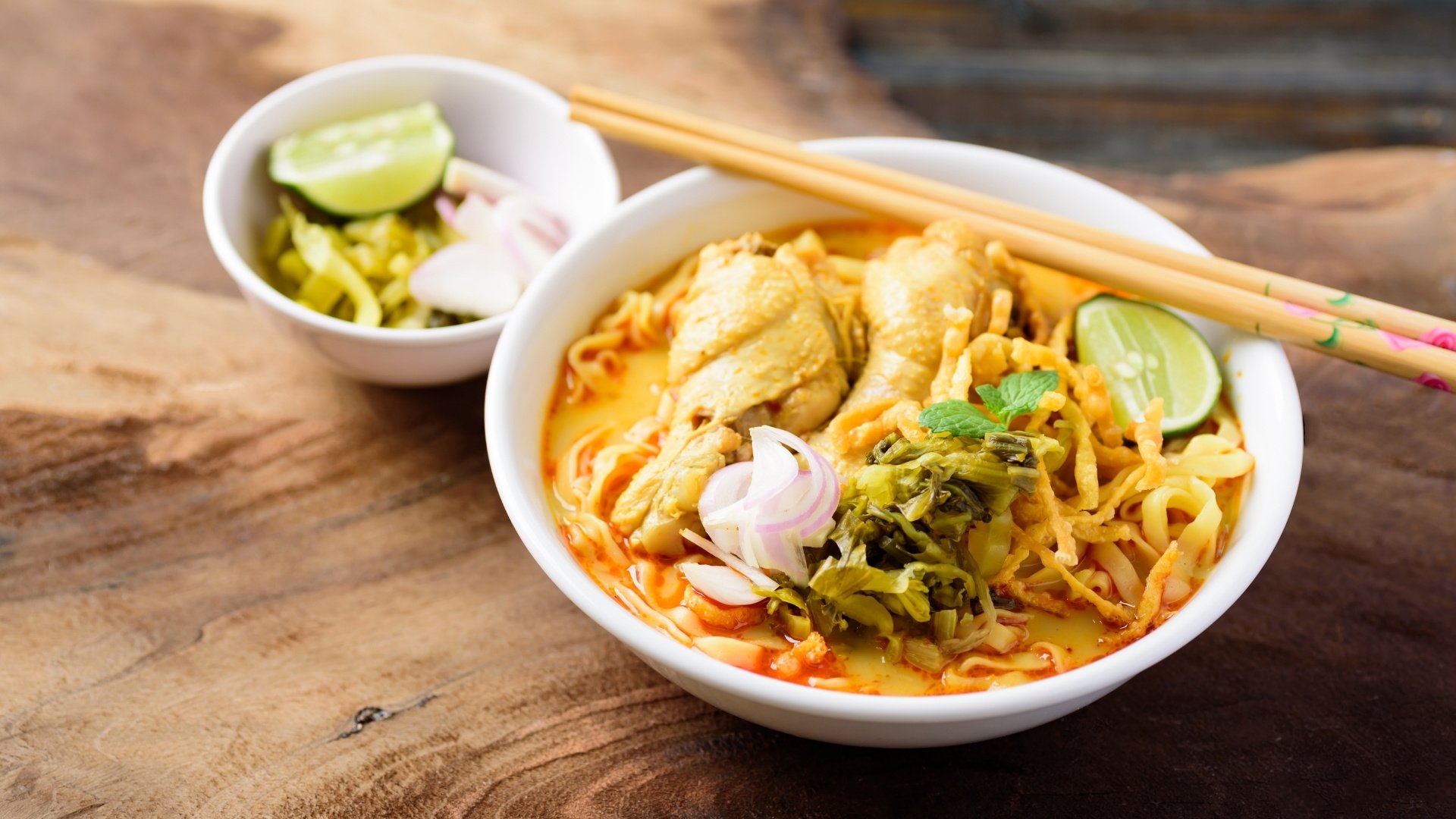
If you could only try one dish in Chiang Mai, Thailand, it would be Khao Soi. This creamy, fragrant coconut milk noodle curry, with that little crispy contrast on top that makes it so addictive. It is a far cry from the world-famous Pad Thai; here, you are diving into the authentic cuisine of northern Thailand.
What is Khao Soi?
Khao Soi is a curry noodle soup typical of northern Thailand. It is Chiang Mai’s signature dish, but it can also be found in other northern provinces, such as Chiang Rai. It is a popular dish, often served in small eateries rather than large restaurants.
Its base is a mild coconut milk curry, which gets its yellow color from turmeric. It is most often served with chicken or beef, but there are also pork and sometimes vegetarian versions, although these are less common.
A good Khao Soi is recognizable at first glance. The broth is rich and slightly orange. Inside, you have tender yellow egg noodles, and on top, a handful of crispy fried noodles that give the dish all its charm. On the side, you are always served several condiments. Usually: shallots, lime, pickled mustard greens and chili paste. You can then adjust the soup yourself according to your taste.
Where does Khao Soi come from?
Khao Soi has its origins in the trade routes that connected Yunnan, Burma, Laos and northern Thailand. The dish is said to have originated from the culinary traditions of the Chin Haw, Muslim Chinese communities from Yunnan who traveled along these trade routes. Their noodle-based cuisine gradually evolved through encounters and regional influences. Once it reached northern Thailand, the dish adapted to local tastes and ingredients to become one of the specialties of Thai cuisine.
And beware of a fairly common confusion: Khao Soi also exists in Laos, but it is a completely different dish. In northern Laos, particularly in Luang Prabang, Khao Soi is a rice noodle soup served with a broth and a preparation made with meat, tomatoes and fermented soybeans. Nothing like Chiang Mai’s creamy curry!
The ingredients that make all the difference
What makes Khao Soi unique is the balance between a few simple elements. The curry paste, first of all. It is the heart of the dish. It generally combines turmeric, ginger, garlic, shallots, dried chilies and spices. Turmeric gives it its distinctive yellow color. Coconut milk then softens everything. It adds creaminess and coats the noodles. The broth should be neither too thin nor too thick.
The noodles offer two different textures. Some are boiled until tender and sit at the bottom of the bowl. The rest are fried and placed on top. This contrast between soft and crispy is the dish’s signature. And then there are the toppings. Raw shallots, a wedge of lime, pickled mustard greens and chili paste. They add acidity, heat and crunch that bring the curry to life.
Where to eat it and how to cook it
A few tips for choosing the right bowl of Khao Soi
Good places can change quickly in Chiang Mai. Some eateries close, others open, and owners come and go. Rather than giving you specific names, here are a few reliable tips:
Look for places that are full of locals at lunchtime; it is often a good sign.
Check whether the fried noodles are added at the last minute rather than being left to soften in advance.
Make sure the bowl comes with a small plate of condiments on the side.
A simple homemade version
You can make a decent Khao Soi at home, even without all the traditional Thai equipment.
Fry some yellow curry paste in a little oil. Add ground turmeric, pour in coconut milk, then add a little chicken stock. Add your chicken (or tofu for a vegetarian version) and let it simmer. Season with fish sauce and a little sugar.
Cook your egg noodles separately and fry a small portion of them for the crispy topping. Assemble your bowl: tender noodles, broth, meat, then the fried noodles on top. Serve with shallots, lime and chili.
It will not be exactly the same as the one in Chiang Mai, but you will get the essentials: the creaminess, the aroma of the curry and that famous contrast of textures.
